




Best Warm-Up Routines for Young Football Players to Prevent Injuries and Boost Performance
Proper warm-up routines for young football players are essential to tackle a common problem: many young athletes start matches or training sessions cold, risking injury and poor performance. Understanding how to warm up effectively helps players prepare their bodies, enhance focus, and reduce the chance of pulls or strains. This article explains the best warm-up exercises designed specifically for youth football, offering practical advice for players, parents, and coaches involved in grassroots settings.
What Is a Warm-Up Routine in Football?
A warm-up routine is a sequence of exercises performed before training or matches to prepare the body physically and mentally. It gradually increases heart rate, warms muscles, improves joint mobility, and primes the nervous system for the demands of football.
For young football players, a warm-up must focus on controlled movement, injury prevention, and gradual exposure to football-specific actions such as running, turning, and kicking.
Key Benefits of Structured Warm-Up Routines for Youth Football
Structured warm-ups serve several important functions: they reduce the risk of strains and sprains, improve muscle elasticity, and enhance coordination. Players often experience better control of their movements during matches when they warm up consistently. This physical preparation also supports mental focus and confidence before competition or demanding drills.
For parents and coaches, ensuring a well-planned warm-up routine encourages disciplined habits and shows young players how professional preparation supports long-term development.
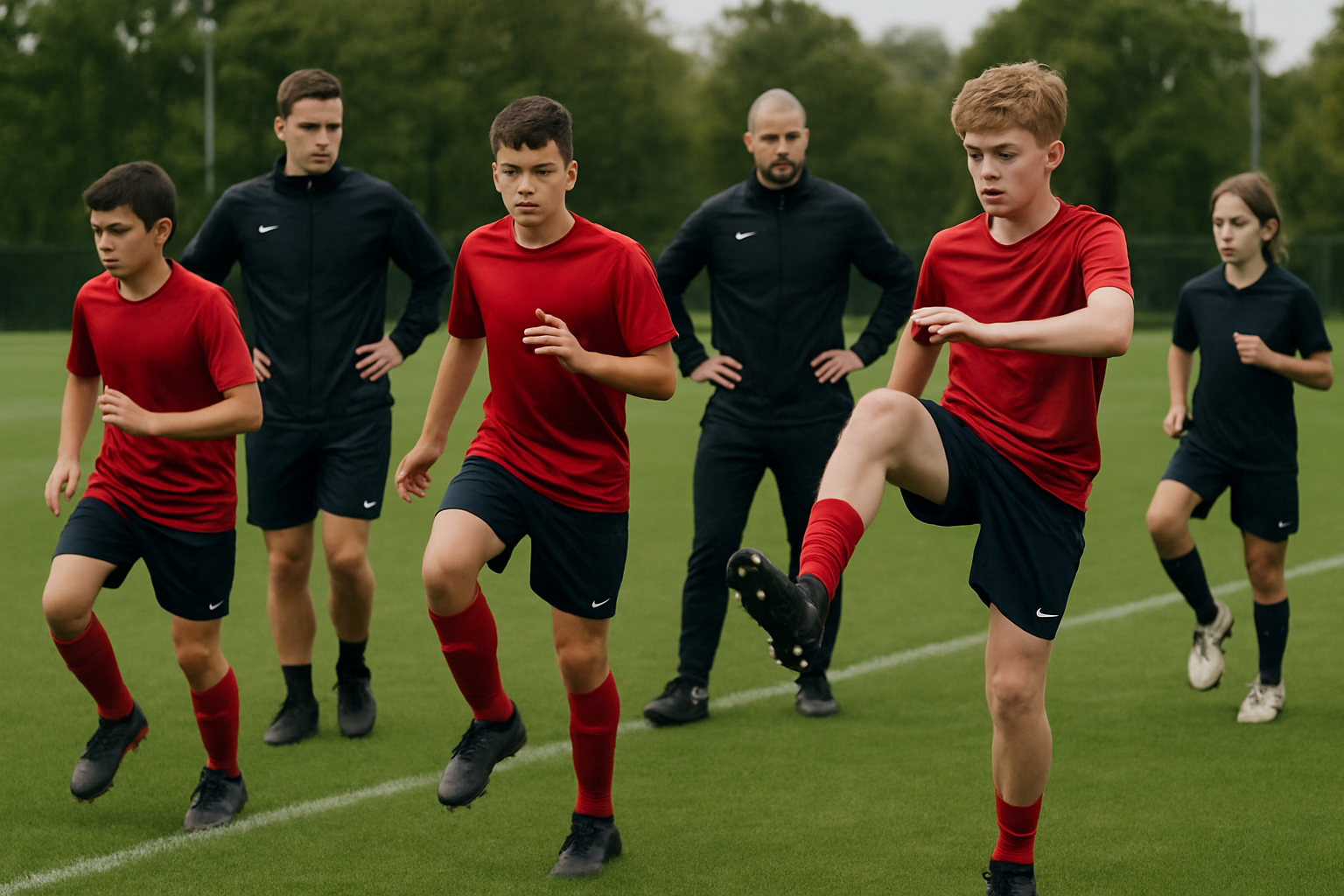
Best Warm-Up Exercises for Young Football Players
Effective warm-up routines combine cardiovascular movement, dynamic stretching, and football-specific drills. Here is a basic sequence suitable for U10 to U21 players:
- 1. Light jogging and side shuffles (5 minutes): Start with steady jogging around the pitch combined with side shuffles to increase blood flow and activate key muscle groups.
- 2. Dynamic stretches (5 minutes): Include leg swings, hip circles, lunges with rotation, and high knees to improve joint mobility and flexibility relevant to football movements.
- 3. Football-specific drills (5 minutes): Drills such as passing in pairs, moving with the ball, and short sprints mimic game conditions and help players mentally prepare.
This routine balances general warm-up with technical preparation, promoting injury prevention and performance improvement through movement quality rather than intensity.
Why Players Struggle with Warm-Ups and How to Fix It
One common challenge is skipping warm-ups or rushing them, especially when players feel eager to start training or matches. This often leads to injuries or underperformance because muscles and joints aren’t ready.
Another issue is performing static stretching too early, which can reduce muscle power and delays readiness. Instead, dynamic stretching and movement should come first to properly prepare the body.
Consistent warm-ups are a small time investment that significantly reduce injury risk in youth football.
Practical Implementation for Grassroots Clubs
Grassroots coaches should design warm-up routines that fit their training schedules and player age groups, emphasizing repetition and progression over complexity. Start sessions with consistent warm-ups led by coaches to build structure and routine.
Using basic football training drills for beginners during warm-ups can double as technical development moments while reducing injury risks. Parents can support by encouraging adherence and helping players understand the purpose behind warm-ups.
Common Development Mistakes in Youth Warm-Ups
A frequent mistake is focusing only on stretching without movement progression or neglecting warm-ups entirely in favor of tactical talking or ball games. This affects player readiness and increases injury risk.
Another issue is treating warm-ups as one-size-fits-all. Tailoring warm-ups to different ages, development stages, and training intensity is vital. For example, younger players need more gentle activation, while older youth can handle faster-paced drills.
Best Way to Maintain Warm-Up Habits for Long-Term Development
To embed warm-up routines as part of a young player’s discipline, clubs should encourage habits through consistent repetition and feedback. Tracking progress using player development resources enables coaches to adjust warm-up complexity and intensity as players mature.
Parents and coaches together should emphasize warming up as an essential step, not an optional phase, contributing to recovery and performance cycles within structured training programs.

Conclusion
In grassroots football, the value of effective warm-up routines for young players cannot be overstated. These routines serve as the foundation for injury prevention, improved movement quality, and better on-pitch performance. Players, coaches, and parents must work together to prioritize warm-ups tailored to age and ability, promoting disciplined habits that support long-term development. Incorporating dynamic movement, football-specific drills, and gradual physical activation into every session equips young athletes to engage fully and safely in their progression. By embedding these routines into the regular training environment, grassroots clubs create a culture that emphasizes player longevity and structured growth.
What is a good warm-up routine for young football players?
A good warm-up includes light jogging, dynamic stretches like leg swings and lunges, plus football-specific drills like passing and short sprints to prepare the body progressively.
How does warming up help prevent injuries in youth football?
Warming up increases muscle temperature and joint mobility, reducing strain risk during matches or training by preparing muscles and nerves for movement.
How to improve football skills at home with warm-ups?
Use dynamic stretches and ball control drills in a small space, focusing on coordination and movement precision while gradually increasing activity intensity.
Why am I not improving despite warming up before games?
Improvement may stall if warm-ups lack football-specific drills or if static stretching is done too early, reducing muscle readiness and delaying peak performance.
Best training routine for young footballers to prevent injuries?
Include consistent warm-ups that combine cardio, dynamic stretching, and skill drills along with adequate recovery and progressive training loads.
Why do young players sometimes skip warm-ups?
Players may skip warm-ups due to impatience, lack of understanding of their importance, or insufficient coaching guidance emphasizing routine.
How long should a warm-up be for youth football training?
A warm-up should typically last 10 to 15 minutes, balancing enough physical preparation without causing fatigue before training or matches.

Related Articles
 Read More about Best Solo Football Training Drills at Home: Boost Your Skills Without a Coach
Best Solo Football Training Drills at Home: Boost Your Skills Without a Coach
 Read More about Midfielder Positioning Improvement: How to Control the Game Better
Midfielder Positioning Improvement: How to Control the Game Better
 Read More about How to Improve Shooting Accuracy in Football: Techniques and Drills for Grassroots Players
How to Improve Shooting Accuracy in Football: Techniques and Drills for Grassroots Players
Latest Articles
 Read More about How Sports Academies Can Reduce Admin Work for Coaches
How Sports Academies Can Reduce Admin Work for Coaches
 Read More about How to Build Age-Wise Player Development Pathways in Football and Cricket
How to Build Age-Wise Player Development Pathways in Football and Cricket
 Read More about Tournament Management Software for Football and Cricket Organizers: A Practical Guide
Tournament Management Software for Football and Cricket Organizers: A Practical Guide
Ready to Bring Structure to Your Academy?
Let’s walk through your current setup and show you how 8lete can improve it.


