



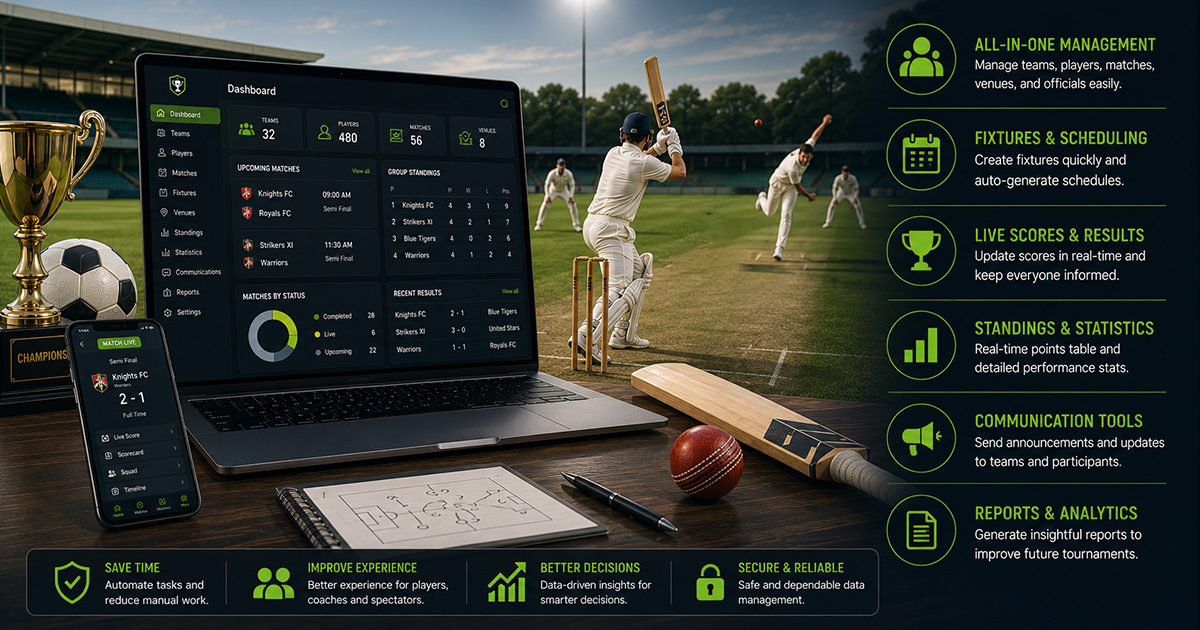
Tournament Management Software for Football and Cricket Organizers: A Practical Guide
Tournament management software for football and cricket organizers is a digital tool designed to streamline the complex tasks of scheduling matches, managing registrations, tracking results, and communicating with stakeholders during grassroots sports tournaments. Organizers, academies, and coaches often struggle with last-minute changes, manual scorekeeping, and unclear communication, which disrupts tournament flow and player visibility. This article presents practical frameworks and checklists for managing grassroots tournaments effectively using software, ensuring consistent match schedules, transparent results, and smooth operations essential for long-term player and organizer success.
Framework for Effective Tournament Management Using Software
Organizers can follow a structured framework to maximize software benefits and reduce operational challenges.
This framework consists of seven key points, each addressed through practical software features:
- 1. Registration and Enquiry Management: Use a centralized system to track team/player registrations and manage inquiries efficiently, avoiding lost information and double bookings.
- 2. Automated Fixture Generation: Generate balanced, conflict-free match schedules automatically, accounting for batch availability and venue use to reduce manual errors.
- 3. Attendance Tracking: Monitor player and team attendance for every match or session to ensure discipline and accurate participation records.
- 4. Match Result and Performance Tracking: Record and update match results digitally in real-time to maintain score transparency and enable performance analysis.
- 5. Communication and Notifications: Send timely alerts about schedule changes, match timings, and results to coaches, players, and parents to improve engagement and reduce confusion.
- 6. Reporting and Analysis: Generate reports on fixtures played, player attendance, and team performance to guide coaches’ feedback and organizer planning.
- 7. Stakeholder Access and Transparency: Provide different access levels for coaches, parents, and academy owners to maintain trust and long-term involvement.
Implementing these points with dedicated tournament software reduces operational load and supports structured, transparent grassroots tournaments.

What Is Tournament Management Software for Football and Cricket?
Tournament management software is a comprehensive platform that automates and organizes all administrative aspects of sports tournaments—including registrations, scheduling, scoring, and communication—specifically tailored for football and cricket events.
By replacing spreadsheets and manual methods, this software helps grassroots organizers maintain consistent schedules, transparent scoring, and structured reporting essential for long-term development and trust among players, coaches, and parents.
Role-Wise Guide: Players, Coaches, Parents, and Academy Owners
Players benefit by having clear match timings, knowing their attendance status, and accessing performance statistics to understand progress and areas for improvement.
Coaches can plan sessions around fixed fixtures, track player participation and performance during tournaments, and communicate smoothly with teams about schedules and results.
Parents gain visibility into their child’s participation, receive timely updates on match schedules and results, and trust that their player’s development is being monitored transparently.
Academy Owners and Organizers can build operational efficiency by managing enquiries, registrations, match scheduling, attendance, and reporting within one system—reducing errors and improving credibility.
Weekly Implementation Plan for Tournament Management
Week 1 – Registration Setup: Open digital registrations, confirm teams or players, and validate details with clear communication protocols.
Week 2 – Schedule Creation and Venue Allocation: Use automated fixture generators to create balanced schedules and assign venues per availability.
Week 3 – Confirm Attendance and Pre-Tournament Briefings: Track confirmations from teams and hold briefing sessions for coaches and parents on tournament rules and structure.
Week 4 – Tournament Execution and Real-Time Result Updates: Manage matches, record scores digitally, and communicate results promptly to all stakeholders.
Week 5 – Review and Reporting: Generate post-tournament reports on participation, match outcomes, and areas for operational improvement.
Structured tracking and clear communication transform tournaments from chaotic events into platforms for growth.
Practical checklist
Use this checklist to ensure smooth grassroots sports tournament management using software:
- Are registrations centralized and digitally tracked to avoid errors?
- Is automated fixture generation used to prevent scheduling conflicts?
- Is player and team attendance monitored consistently for every match?
- Are match results updated in real-time and visible to necessary parties?
- Are communication channels set up for coaches, parents, and players to receive timely alerts?
- Are reports generated to analyze match outcomes, attendance, and player participation?
- Is there role-based access control to maintain data transparency and privacy?
- Are venue and batch management features used to handle multiple simultaneous events?
- Is there integration with other academy systems for player development tracking and parent communication?
- Are software workflows regularly reviewed and improved based on feedback and tournament learnings?
Five Grassroots Examples of Tournament Management Challenges and Software Solutions
Example 1: A local football academy struggled with manual fixture clashes. Using scheduling software, they generated conflict-free match timings in minutes.
Example 2: Cricket tournament organizers manually tracked scores, leading to reporting delays. Switching to a digital match result tracking system allowed instant score updates to all teams.
Example 3: Parents of young players complained about lack of schedule updates. Automated notifications through the software improved communication and attendance.
Example 4: Coaches had difficulty tracking player participation across tournaments. Using attendance management integration, they could identify irregular attendance and address it directly.
Example 5: An academy owner faced operational chaos with multiple batches and venues. A software tool with batch management and venue allocation streamlined daily tournament planning.

Common mistakes
Mistake 1: Relying on manual scheduling causes fixture clashes and confusion. Fix: Use automated fixture generation software to produce balanced, conflict-free schedules quickly.
Mistake 2: Poor communication of schedule changes leads to low attendance and frustration. Fix: Implement automatic notifications and alerts to keep all stakeholders updated in real-time.
Mistake 3: Not tracking match results digitally results in delays and lack of transparency. Fix: Use digital result tracking to update scores instantly and maintain records for analysis.
Mistake 4: Neglecting attendance management undermines player discipline and record-keeping. Fix: Integrate attendance tools that allow easy marking and reporting for every match.
Mistake 5: Ignoring stakeholder roles creates access issues and confusion. Fix: Ensure role-specific access controls so coaches, parents, players, and organizers view relevant information securely.
8lete-Aligned Workflow for Tournament Management
A sample workflow tailored to grassroots academies organizing tournaments:
- Registration: Players/teams register via digital forms included in the academy’s system.
- Batch and Venue Assignment: Organizers assign batches and venues within the software to prevent overlap.
- Automated Fixture Generation: The system creates match schedules considering availability and tournament format.
- Attendance Tracking: Coaches mark player attendance per match directly through the platform.
- Result Entry: Match officials or coaches enter scores in real-time, updating standings and statistics.
- Parent Communication: Notifications on schedules, results, and updates are sent automatically.
- Reporting and Insights: Organizers generate reports to evaluate tournament flow, participation rates, and performance trends for improvement.
This workflow fosters transparency, accountability, and long-term growth for grassroots football and cricket tournaments.
Comparison: Manual Tournament Management vs. Software-Based Management
Manual management relies heavily on spreadsheets, phone calls, and physical notices. This leads to errors in scheduling, slow communication, and delayed score updates.
Software-based management automates scheduling, instant result tracking, attendance monitoring, and communication—reducing errors and speeding up operations. It also creates reliable records for post-event analysis and development planning.
For grassroots academies balancing limited staff and multiple events, the software approach ensures smoother and more trustworthy tournaments.
Conclusion
Efficient tournament management software for football and cricket organizers is more than just a convenience—it is an operational necessity in grassroots sports. Using structured, automated tools to handle registrations, fixture scheduling, attendance, and match result tracking minimizes human error and streamlines communication. This clarity improves trust among players, coaches, and parents, supporting consistent participation and long-term player visibility. Without such systems, academies risk operational chaos and stakeholder frustration, which can hamper player development. Embracing software-driven workflows combined with disciplined execution creates a foundation where grassroots tournaments become well-managed platforms for growth. For organizers, coaches, parents, and players, prioritizing structured tournament management ensures every match serves both competitive and developmental goals with transparency and reliability, fueling solid progress from the ground upward.
What is tournament management software for football and cricket organizers?
Tournament management software is a digital tool that automates tasks like scheduling matches, managing registrations, tracking scores, and communicating updates specifically for football and cricket events, helping organizers run smooth grassroots tournaments.
How does automated fixture generation help football tournament organizers?
Automated fixture generation quickly creates balanced match schedules that avoid conflicts in timing or venues, reducing manual errors and last-minute changes that disrupt tournaments.
How can cricket tournament organizers track match results efficiently?
By using match result tracking software, cricket organizers can input scores in real-time, instantly update leaderboards, and maintain accurate historical records for reviews and player analysis.
Why are communication tools important in grassroots sports event management?
Communication tools ensure players, coaches, and parents receive timely updates on match schedules, result changes, or venue shifts, reducing confusion and improving attendance and engagement.
How should academies implement attendance tracking during tournaments?
Academies should use digital attendance management integrated with tournament software, allowing coaches to mark player presence quickly, enabling reliable records to monitor discipline and participation.
What common mistakes do grassroots organizers make when managing tournaments manually?
Common mistakes include fixture clashes, delayed result updates, lack of timely communication, attendance oversight, and absence of role-based access—all leading to operational inefficiency and stakeholder frustration.
What is the best weekly plan to implement tournament management software?
A best practice is to open registrations in week one, set up automated fixtures in week two, confirm attendance and communicate rules in week three, conduct the tournament with real-time score updates in week four, and review outcomes with reports in week five.
Related Articles
 Read More about Cricket Academy Management Software India: A Practical Guide for Grassroots Academies
Cricket Academy Management Software India: A Practical Guide for Grassroots Academies
 Read More about How to Convert Trial Players to Academy Students: A Practical Guide for Grassroots Academies
How to Convert Trial Players to Academy Students: A Practical Guide for Grassroots Academies
 Read More about How Sports Academies Can Build Effective Sponsorship Profiles for Sustainable Funding
How Sports Academies Can Build Effective Sponsorship Profiles for Sustainable Funding
Latest Articles
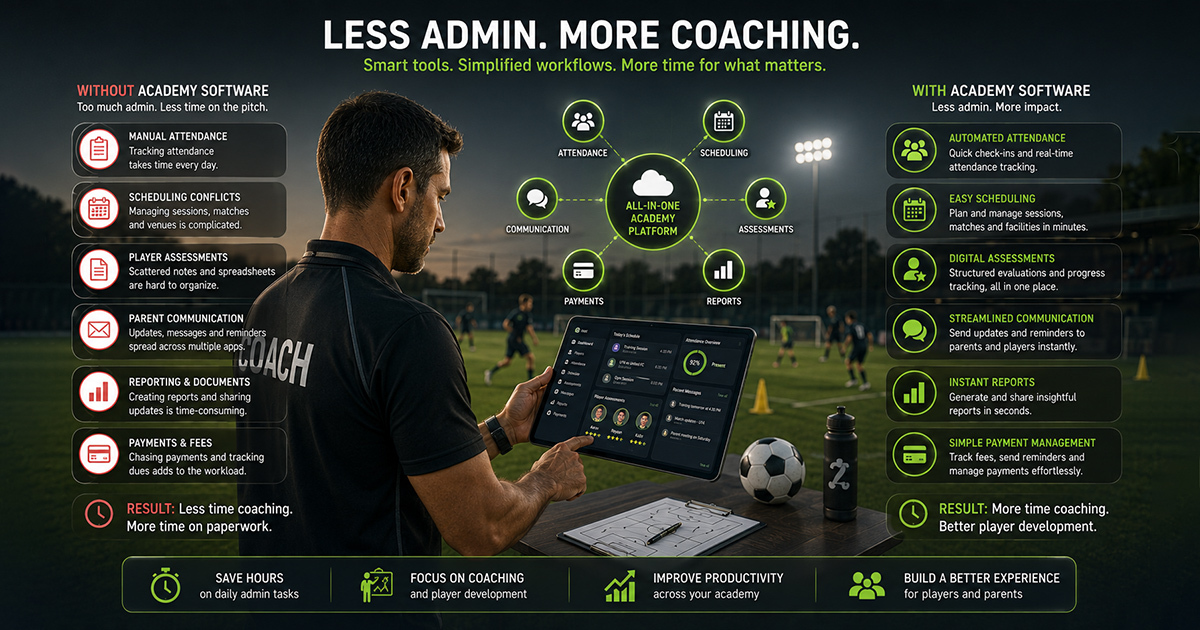 Read More about How Sports Academies Can Reduce Admin Work for Coaches
How Sports Academies Can Reduce Admin Work for Coaches
 Read More about How to Build Age-Wise Player Development Pathways in Football and Cricket
How to Build Age-Wise Player Development Pathways in Football and Cricket
 Read More about How Match Analytics Can Help Young Cricketers Improve Faster
How Match Analytics Can Help Young Cricketers Improve Faster
Ready to Bring Structure to Your Academy?
Let’s walk through your current setup and show you how 8lete can improve it.


