



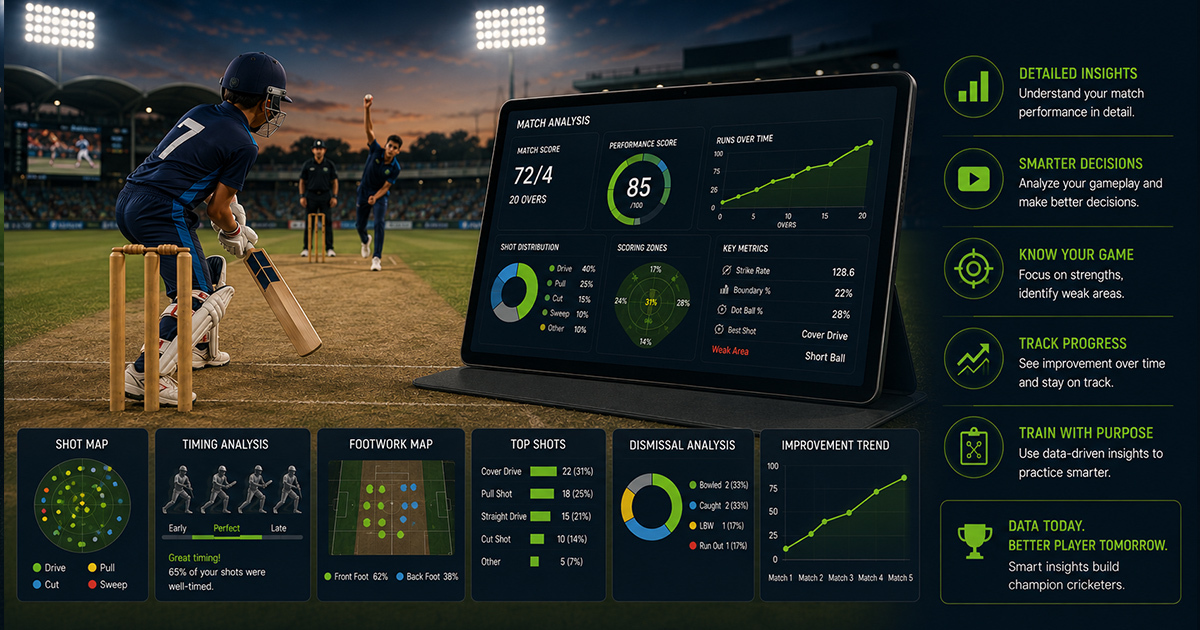
How Match Analytics Can Help Young Cricketers Improve Faster
Match analytics for young cricketers refers to the process of systematically collecting and analyzing detailed data from matches to understand player performance, strengths, and weaknesses. For young players, coaches, and parents, this data-driven approach is essential to identify specific skill areas that need improvement, track progress over time, and build a focused development plan that leads to faster and more consistent growth on the cricket field.
Why Match Analytics Matters for Long-Term Cricket Development
Young cricketers often struggle with vague feedback and unstructured training that fail to address their core weaknesses. Match analytics brings clarity by breaking down each element of match performance—batting shot selection, bowling line and length, fielding efficiency, and temperament under pressure.
When players and coaches use match insights, training becomes more targeted, improving key cricket skills such as shot timing, bowling rhythm, and decision-making in game scenarios. This structured method avoids guesswork and builds confidence through measurable progress.
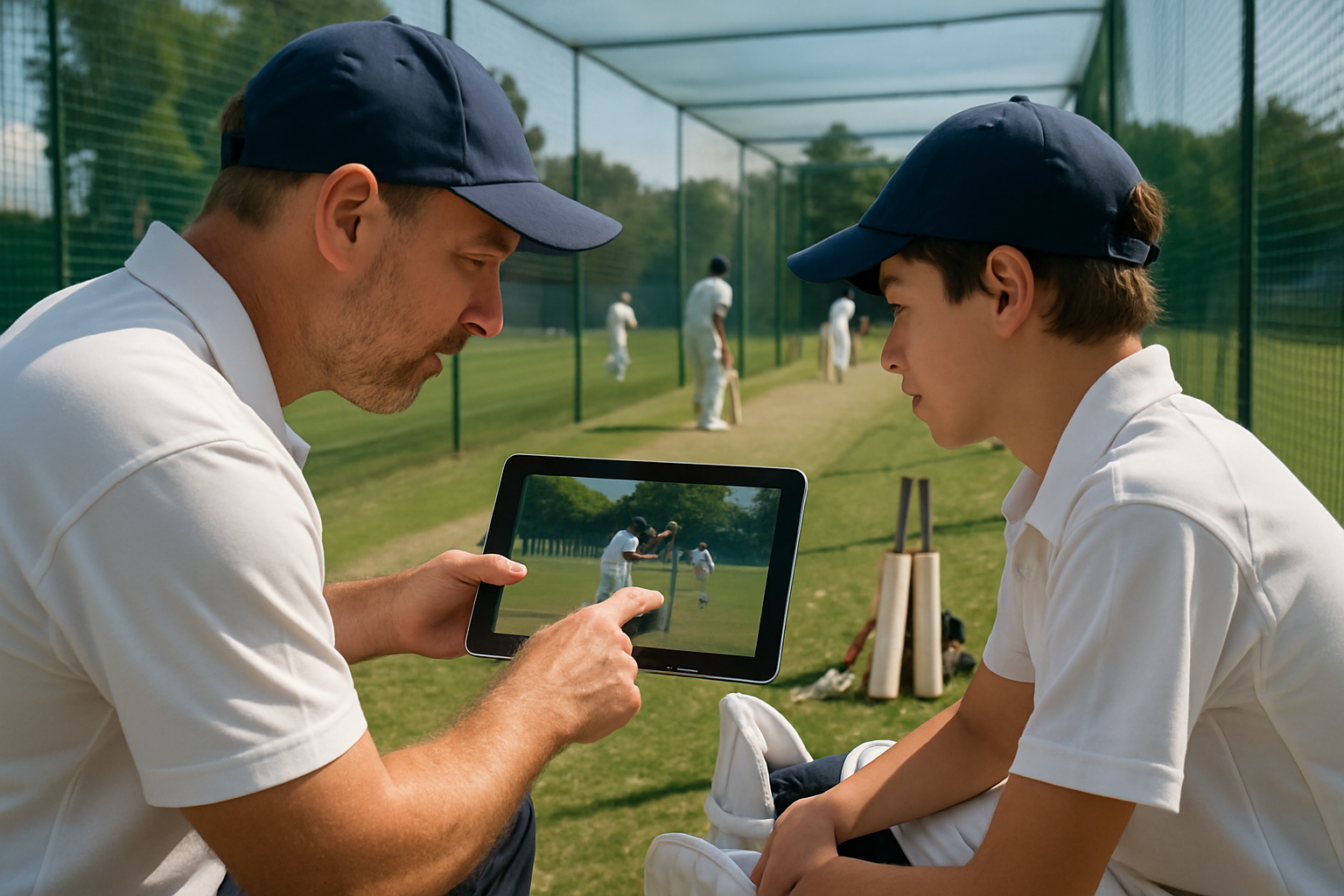
A Practical Framework for Using Match Analytics with Young Cricketers
Successful integration of match analytics follows a clear framework that connects data to player improvement:
- Data Collection: Use video footage, scoring software, or manual note-taking during matches to capture detailed performance data—balls faced, shot types, bowling line/length, fielding actions, and behavioral responses.
- Performance Breakdown: Segment player actions by skill areas such as batting footwork, bowling consistency, or fielding agility for focused analysis.
- Identifying Patterns: Highlight recurring strengths and weaknesses. For example, a batter's struggle with bowling outside off stump or a bowler’s inconsistency in line.
- Coach Interpretation: Translate data into actionable feedback during practice, using drills tailored to correct issues identified in match scenarios.
- Player Review and Reflection: Engage players in reviewing their own statistics and videos to build awareness and self-correct habits.
- Progress Tracking: Regularly update analytics to monitor improvement trends and adjust training goals accordingly.
- Parent Communication: Share clear, data-backed reports with parents to keep them informed of real progress and areas needing patience and discipline.
This framework ensures match data translates directly into measurable player development rather than remaining abstract numbers.
How Young Cricketers Benefit from Match Analytics
Players gain concrete insights to make training more efficient. For instance, a young batter noticing a low scoring rate against spin bowling can focus net sessions on mastering spin techniques.
Feedback from real match contexts motivates players to practice deliberately, developing better shot selection, shot timing, and bowling control while understanding their match temperament.
Role-Wise Perspectives: Players, Coaches, Parents, and Academy Owners
For players: Take ownership of your growth by reviewing match data and setting specific skill goals. Use this to focus your nets and avoid aimless practice.
For coaches: Use analytics to provide precise correction cues and design targeted coaching drills. Track player progress over multiple matches to identify development plateaus early.
For parents: Understand the importance of patience and context in development. Request regular progress reports and support consistent attendance and disciplined practice rather than just match day results.
For academy owners: Incorporate match analytics into academy systems to improve the quality of player evaluations, coach workflows, and parent communication. Use technology for seamless attendance tracking, assessment recording, and report sharing.
Consistent, data-driven feedback transforms practice into meaningful improvement for young cricketers.
Stage-Wise Implementation of Match Analytics for Young Cricketers
U10–U13 (Foundations): Focus on recording basic metrics like balls faced, runs scored, and types of shots played. Begin simple video reviews with coaches highlighting strengths and technical areas.
U14–U16 (Skill Refinement): Introduce advanced analysis such as bowling consistency in line and length, footwork against different bowling types, and fielding effectiveness. Coaches track multiple matches to identify patterns needing correction.
U17–U21 (Performance Integration): Use detailed player reports combining match stats, fitness, and psychological aspects like temperament. Players engage in reviewing their analytics to develop tactical awareness and self-coaching abilities.
Common Mistakes When Using Match Analytics and How to Fix Them
Mistake 1: Overloading Players with Too Much Data–Young players get overwhelmed by raw statistics without clear explanation or focus. Fix: Coaches should translate data into simple, actionable feedback focusing on one or two key improvement points per session.
Mistake 2: Inconsistent Data Collection–Missing match data or unreliable inputs reduce the value of analytics. Fix: Establish standardized match reporting systems using scorecards, video, or apps for consistent tracking.
Mistake 3: Ignoring Behavioral and Mental Aspects–Focusing solely on numbers misses crucial temperament and decision-making issues. Fix: Combine data analysis with coach observations and player self-reflection on match pressure handling and focus.
Mistake 4: Lack of Communication with Parents–Parents often feel left out or misunderstand progress metrics. Fix: Share regular simplified reports and explain improvement areas, setting realistic expectations.
Mistake 5: Treating Analytics as a One-Time Activity–Seeing it as a post-match afterthought limits long-term benefits. Fix: Incorporate analytics into a continuous development cycle linked with training plans, attendance, and progress reviews.

Practical Checklist for Using Match Analytics with Young Cricketers
- Is match data collected every game using a consistent and reliable method?
- Are key skills like batting shot selection, bowling control, and fielding actions tracked separately?
- Do coaches provide tailored feedback to players based on analytics findings?
- Are players regularly reviewing their own performance data and video footage?
- Is parent communication clear, regular, and focused on development over results?
- Are training sessions adjusted to address weaknesses identified from match data?
- Is progress tracked longitudinally to confirm improvement or identify plateaus?
- Are mental and behavioral factors discussed along with technical data?
- Does the academy use integrated systems to manage attendance, assessments, and reports?
An 8lete-Aligned Workflow to Leverage Match Analytics Efficiently
Using technology-supported workflows optimizes the impact of match analytics on player development. After every match, coaches enter performance data into a digital system that integrates attendance records and player assessments. This triggers coach notes highlighting key feedback, which get compiled into structured player progress reports. These reports are shared with parents to improve visibility and trust. Next training goals are then set based on analyzed match weaknesses, maintaining a continuous improvement loop.
This kind of structured process ensures data-driven decisions are not lost in manual management or forgotten after matches.
Real Grassroots Examples of Match Analytics Impact
A 14-year-old batter in a local academy was struggling against spin bowling during matches. After detailed match analytics highlighted shot selection weaknesses, the coach implemented specific net drills for spin mastery. The next few matches showed clear improvement in strike rotation and scoring, validating the analytics approach.
A young fast bowler’s inconsistent line and length were recorded over several matches. Using bowling charts and video, the coach identified a flaw in run-up rhythm causing control issues. Targeted exercises improved rhythm, leading to better match consistency and confidence.
Parents of an academy player appreciated regular match reports showing progress in fielding catches and stamina. This transparency increased parental support for disciplined attendance and practice sessions, positively affecting the player's development trajectory.
FAQ
Q: What is match analytics for young cricketers and why is it important?
Match analytics involves tracking and analyzing detailed player data from games to identify strengths and improvement areas. It helps young cricketers grow faster by focusing training on actual match challenges, leading to targeted skill development and confidence.
Q: How can coaches use analytics to improve youth cricket training?
Coaches can use analytics to break down specific skill elements like shot selection or bowling line and design drills addressing exact weaknesses. Continuous tracking reveals progress or plateaus, enabling data-driven coaching adjustments rather than guesswork.
Q: How should parents interpret match analytics reports for their children?
Parents should focus on developmental trends rather than match results alone. Understanding detailed feedback fosters realistic expectations and supports consistent practice and attendance, which are crucial for long-term progress.
Q: Why do some young cricketers struggle despite training hard?
Without match-based feedback, training might miss core weaknesses. For example, a player may practice shots incorrectly or fail to address bowling control issues due to lack of targeted analytics, slowing meaningful improvement.
Q: What is the best age to start incorporating match analytics?
Basic data collection can start from U10 with simple metrics. More detailed analysis should begin by U14 when players develop technical consistency, allowing useful pattern recognition and focused coaching.
Q: How long does it take to see benefits from match analytics?
Improvements can start appearing within weeks if feedback is acted upon consistently. Long-term tracking over months confirms genuine progress and helps adjust training goals as players mature.
Q: How can academies implement match analytics without adding operational burden?
Using streamlined digital solutions that integrate attendance, assessments, and reporting reduces manual effort. Clear workflows connecting match data to coaching notes and parent communication are essential.
Conclusion
Match analytics for young cricketers is a powerful tool to bring clarity and structure to player development. Rather than relying on generic practice or subjective feedback, detailed match data provides coaches, players, and parents with actionable insights that directly impact training focus and improve performance consistency. By embedding analytics within a systematic workflow—collecting match data, analyzing specific skills, communicating progress, and adjusting coaching plans—academies can ensure players develop more efficiently and sustainably. This approach fosters discipline, patience, and measurable growth, creating an environment where young cricketers understand their strengths and weaknesses clearly and receive the right guidance to improve faster over time. Ultimately, structured match analysis builds trust between players, coaches, and parents, emphasizing long-term progress rather than short-term results, making it an essential pillar of modern grassroots cricket development.
What is match analytics for young cricketers and why is it important?
Match analytics involves tracking and analyzing detailed player data from games to identify strengths and improvement areas. It helps young cricketers grow faster by focusing training on actual match challenges, leading to targeted skill development and confidence.
How can coaches use analytics to improve youth cricket training?
Coaches can use analytics to break down specific skill elements like shot selection or bowling line and design drills addressing exact weaknesses. Continuous tracking reveals progress or plateaus, enabling data-driven coaching adjustments rather than guesswork.
How should parents interpret match analytics reports for their children?
Parents should focus on developmental trends rather than match results alone. Understanding detailed feedback fosters realistic expectations and supports consistent practice and attendance, which are crucial for long-term progress.
Why do some young cricketers struggle despite training hard?
Without match-based feedback, training might miss core weaknesses. For example, a player may practice shots incorrectly or fail to address bowling control issues due to lack of targeted analytics, slowing meaningful improvement.
What is the best age to start incorporating match analytics?
Basic data collection can start from U10 with simple metrics. More detailed analysis should begin by U14 when players develop technical consistency, allowing useful pattern recognition and focused coaching.
How long does it take to see benefits from match analytics?
Improvements can start appearing within weeks if feedback is acted upon consistently. Long-term tracking over months confirms genuine progress and helps adjust training goals as players mature.
How can academies implement match analytics without adding operational burden?
Using streamlined digital solutions that integrate attendance, assessments, and reporting reduces manual effort. Clear workflows connecting match data to coaching notes and parent communication are essential.
Related Articles
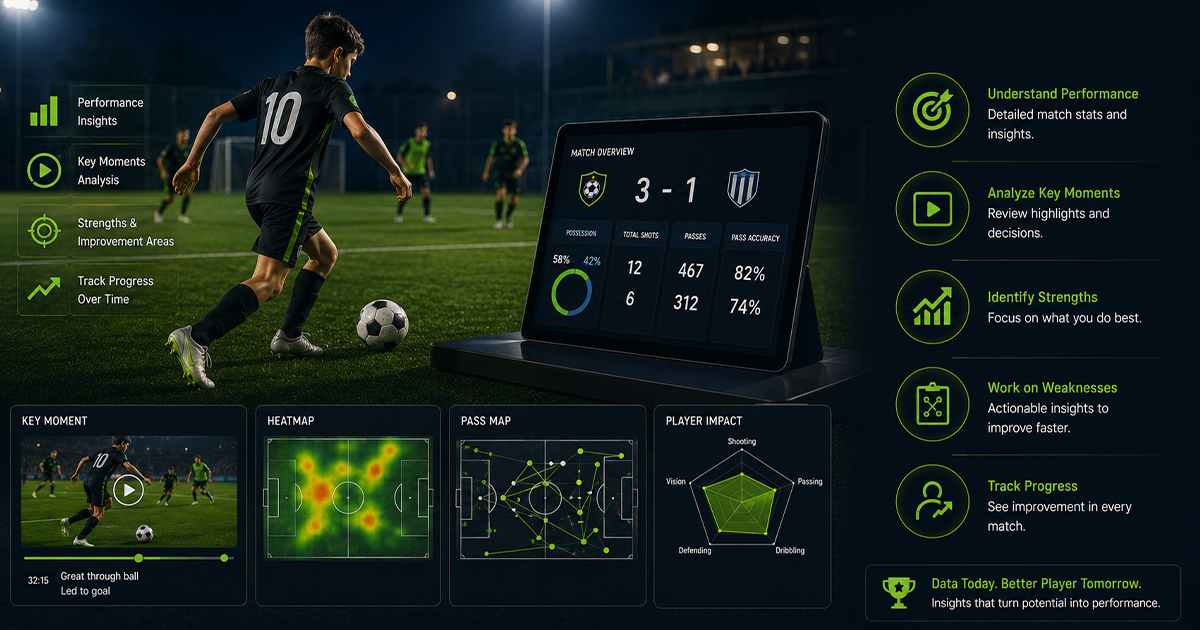 Read More about How Match Analytics Can Help Young Footballers Improve Faster
How Match Analytics Can Help Young Footballers Improve Faster
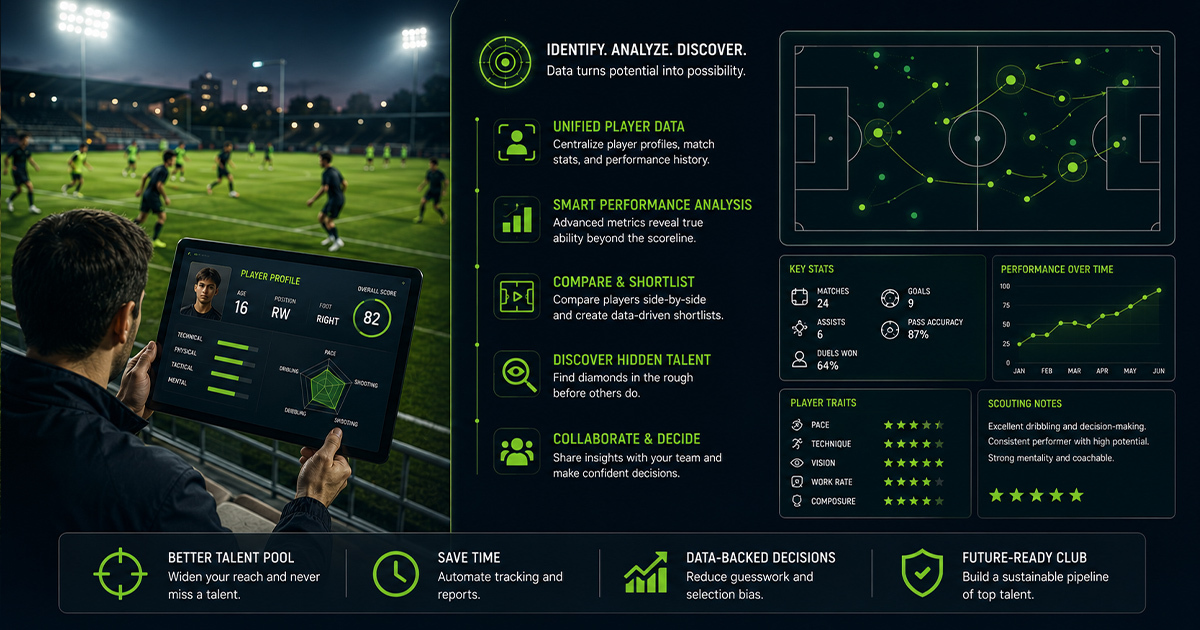 Read More about Football Scouting Platform: How Data Can Improve Talent Discovery
Football Scouting Platform: How Data Can Improve Talent Discovery
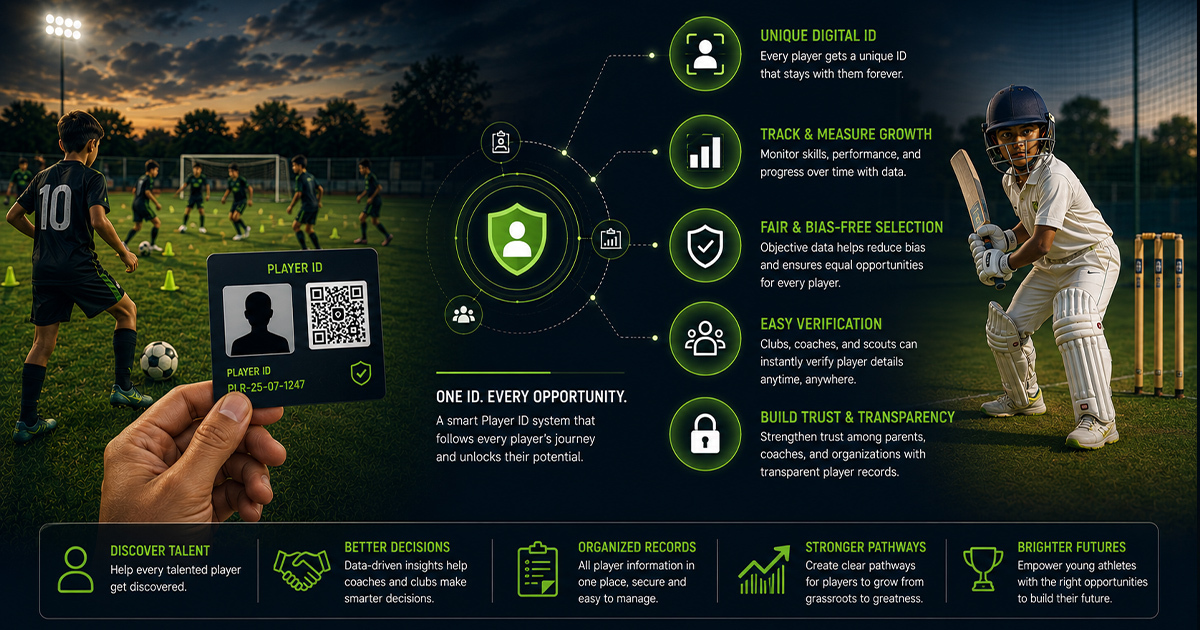 Read More about Player ID System in Grassroots Football and Cricket: Why It Matters for Long-Term Development
Player ID System in Grassroots Football and Cricket: Why It Matters for Long-Term Development
Latest Articles
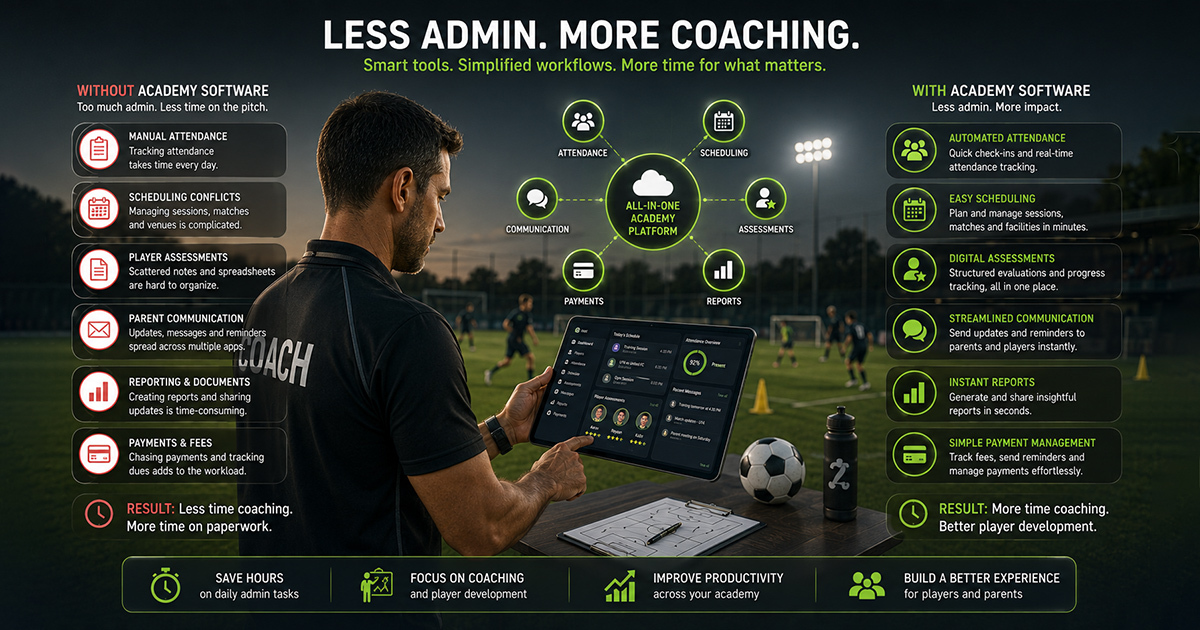 Read More about How Sports Academies Can Reduce Admin Work for Coaches
How Sports Academies Can Reduce Admin Work for Coaches
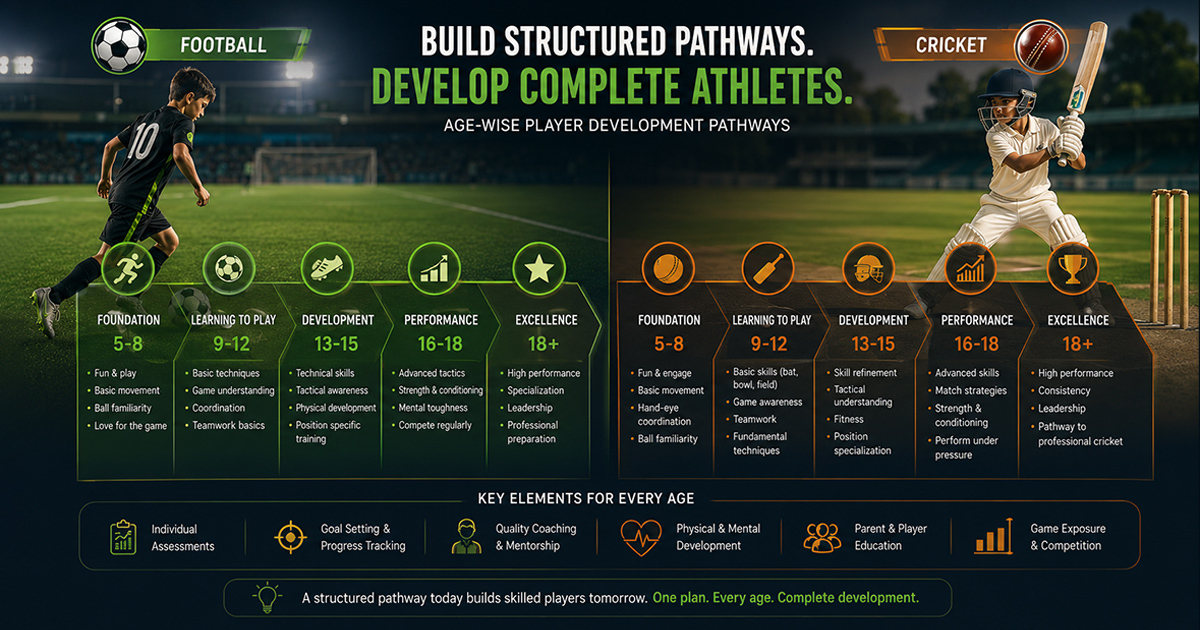 Read More about How to Build Age-Wise Player Development Pathways in Football and Cricket
How to Build Age-Wise Player Development Pathways in Football and Cricket
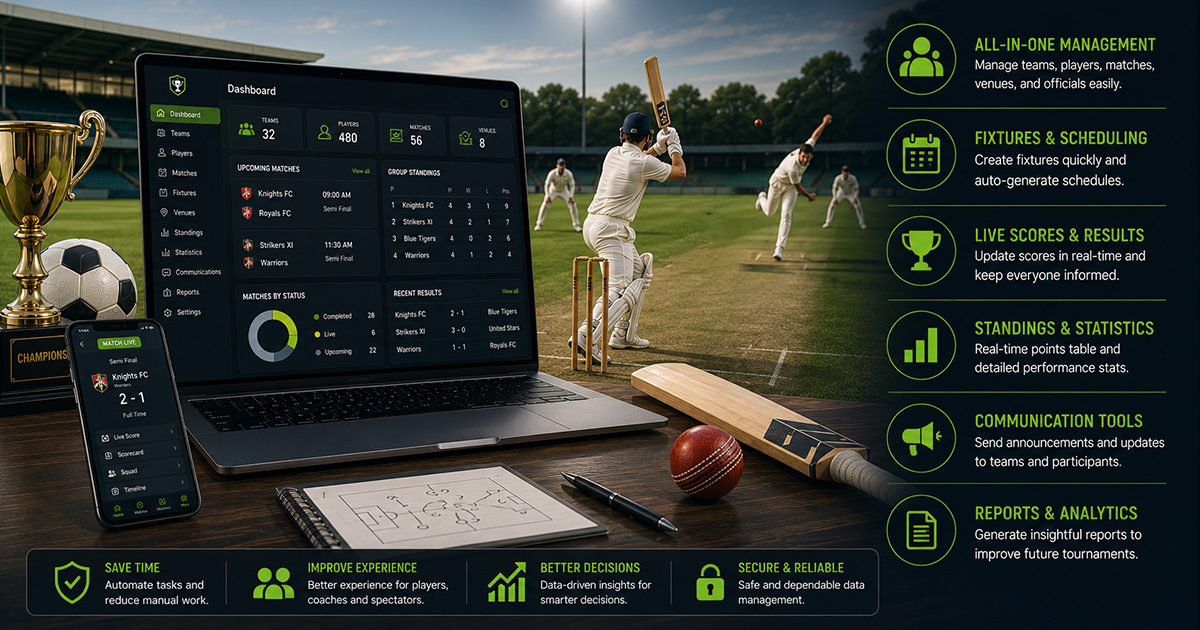 Read More about Tournament Management Software for Football and Cricket Organizers: A Practical Guide
Tournament Management Software for Football and Cricket Organizers: A Practical Guide
Ready to Bring Structure to Your Academy?
Let’s walk through your current setup and show you how 8lete can improve it.


