



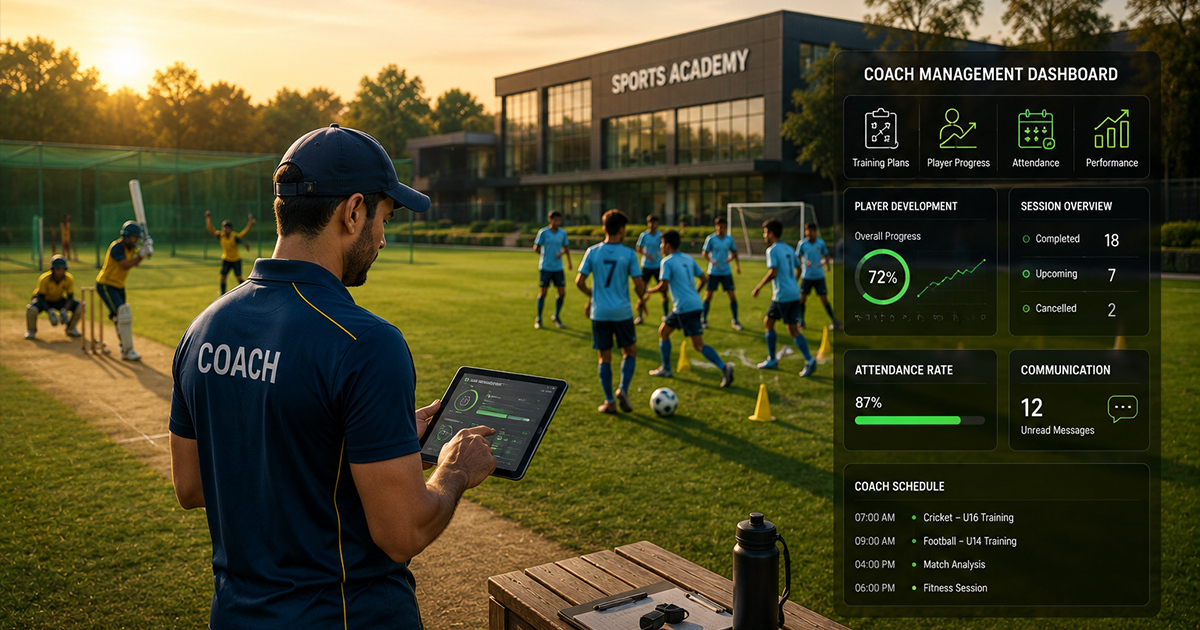
Coach Management Software for Sports Academies: Streamlining Football and Cricket Coaching Operations
Coach management software for sports academies is a digital solution designed to simplify and structure the complex tasks involved in managing coaches across football and cricket academies. Academies often face challenges like scheduling conflicts, inconsistent coach-player communication, manual attendance records, and fragmented performance tracking, which can hinder long-term player development. This article explores practical ways coach management software can address these challenges by improving scheduling, communication, assessment, and reporting workflows to build a more organized and effective coaching environment.
Defining Coach Management Software for Sports Academies
Coach management software is a specialized platform that integrates scheduling, communication, attendance, training plans, and performance tracking for coaches within sports academies. It enables academy owners to coordinate coaching activities efficiently, ensures coaches stay informed and accountable, and supports consistent player development through documented feedback and assessments.
By centralizing operations such as batch management and coach assignments, this software reduces administrative overhead, eliminates manual errors, and creates a transparent environment for players and parents to track progress. Its relevance to football and cricket academies lies in managing complex schedules and maintaining consistent coaching standards across multiple age groups and skill levels.
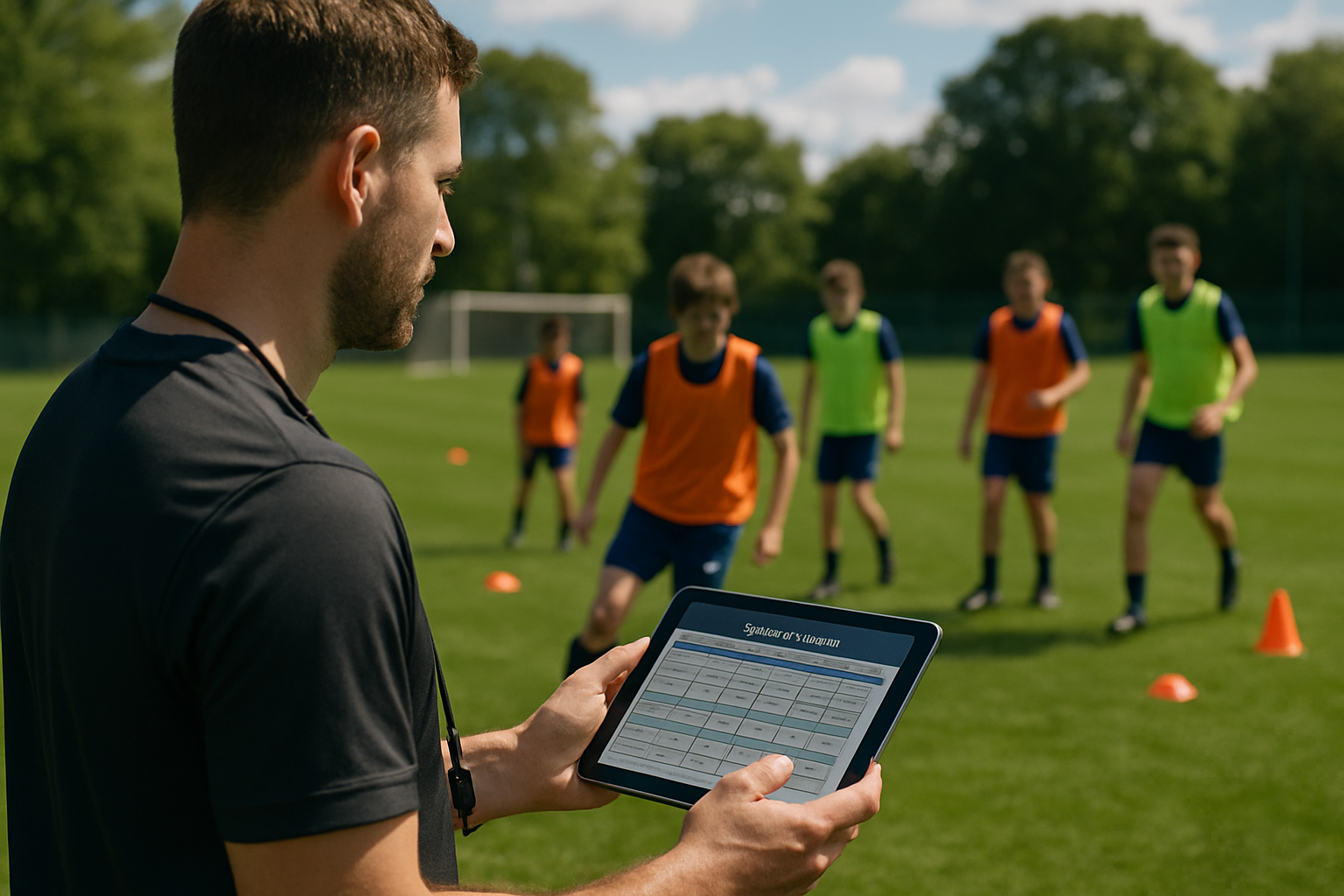
A Practical Framework for Using Coach Management Software Effectively
Implementing coach management software successfully requires a clear process. Here is a 6-step framework that academies can use to maximize software benefits:
1. Coach and Batch Setup: Assign coaches to specific age-group batches or skill-level squads. For example, a football U14 batch led by Coach A with specific training objectives. Structured batch management ensures clarity and accountability.
2. Scheduling and Session Planning: Create training sessions and match fixtures with assigned coaches. Use the software to avoid clashes and automatically notify coaches and parents. For instance, cricket net sessions for bowlers and batsmen scheduled alongside fielding drills.
3. Attendance Tracking: Record coach and player attendance digitally for every session. This allows monitoring of discipline and consistency, which directly impact development.
4. Player Assessments and Coach Feedback: Coaches enter structured player performance data after sessions, covering skills, fitness, and mental readiness. This step transforms subjective feedback into measurable reports.
5. Parent Communication and Reporting: Automated progress reports based on coach assessments help keep parents informed. This transparency builds trust and aligns parent expectations realistically.
6. Continuous Planning and Adjustment: Use data insights from sessions to revise training plans and coach assignments regularly, ensuring a dynamic development process.
Benefits of Coach Management Software for Football and Cricket Academies
Football academy coach software and cricket academy management tools provide multiple operational advantages. For example, automated scheduling prevents overlaps between football tactical drills and cricket technical nets, keeping each coach’s work focused and timely.
Digital attendance records help identify late or irregular training patterns, which coaches can address early with specific players. Using a coach communication platform fosters quicker resolution of player challenges, such as technical correction or mental support before key matches.
Role-Wise Guide: Maximizing Coach Management Software
Players should actively track their attendance and engage with feedback to focus on specific improvement areas. For example, a cricket player reviewing coach notes on batting footwork after each session can tailor personal practice better.
Coaches must consistently update session plans, attendance, and player assessments within the software. For football coaches, noting decision-making progress during small-sided games can enhance report accuracy and guide training adjustments.
Parents benefit by accessing regular performance reports through communication platforms, enabling them to understand development without undue pressure. For instance, seeing a parent's dashboard that tracks player discipline and progress keeps expectations aligned with actual growth.
Academy Owners should implement workflows integrating coach scheduling, attendance, feedback, and reporting for operational transparency. A system that links session planning with coach assignments and parental updates reduces manual coordination errors and resource wastage.
Stage-Wise Implementation of Coach Management Software
U10–U12 (Foundation Stage): Prioritize simple scheduling and attendance tracking. Coaches focus on fundamental skills, with software enabling clear batch assignments and parent updates.
U13–U16 (Development Stage): Emphasize detailed player assessments and session planning. Coaches should document skill progress and behavioral aspects using the software to inform personalized training plans.
U17+ (Performance Stage): Leverage advanced communication and performance tracking features to align coaching with potential scouting and competitive exposure. Automated reports help parents and academy staff stay informed about player readiness and focus areas.
Consistent coach feedback and structured tracking build the foundation for lasting player development.
Concrete Grassroots Examples of Coach Management Software Benefits
1. A football academy in Mumbai faced repeated scheduling conflicts between coaches managing U14 and U16 batches. Using software, they automated batch coaching schedules, reducing conflicts and improving coach availability by 25%.
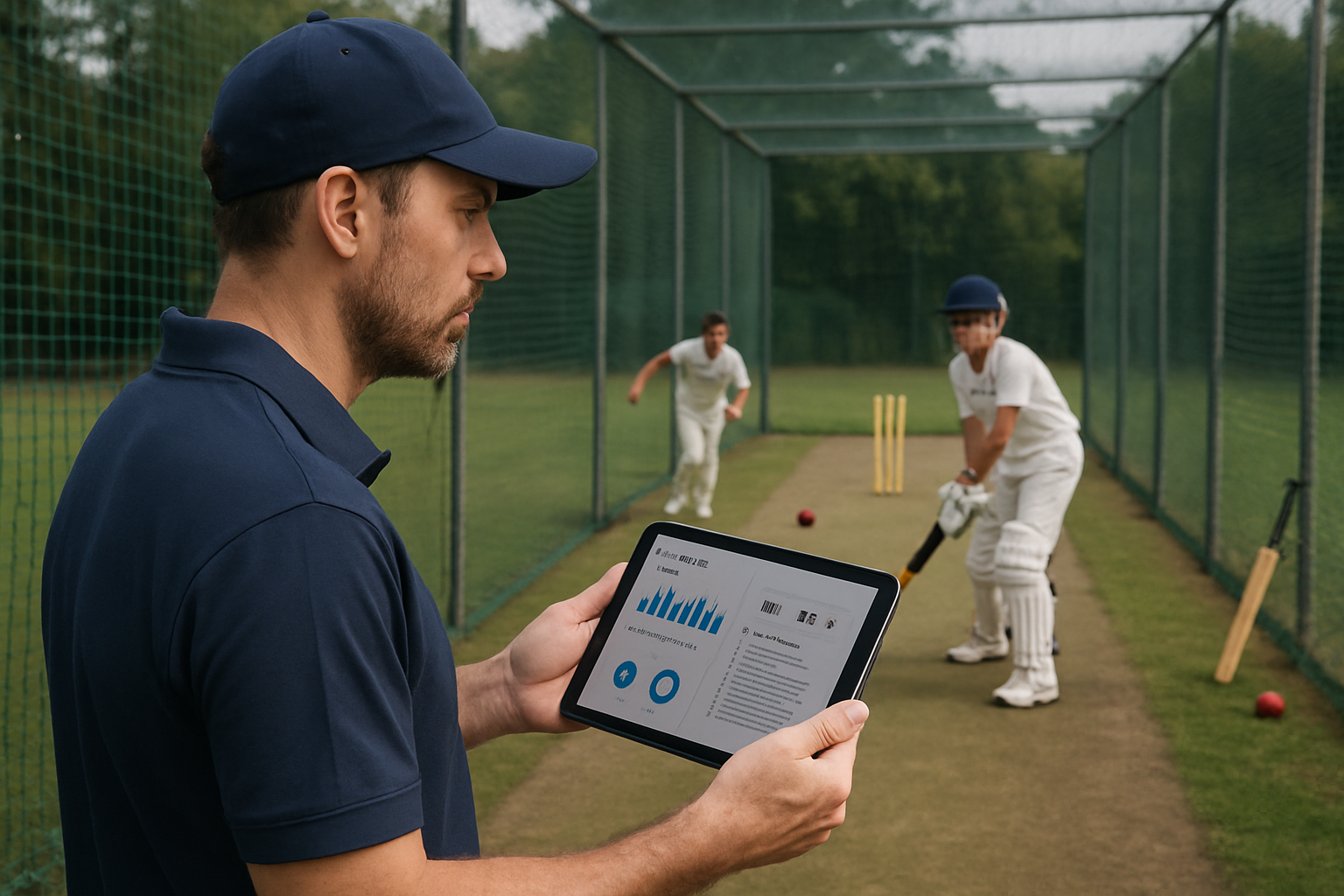
2. A cricket academy in Bengaluru struggled to track skills beyond runs and wickets. Implementing a coach management platform allowed bowling coaches to log session-by-session rhythm and control assessments, creating actionable improvement plans tailored to each bowler.
3. A grassroots football academy in Delhi used a coach communication platform to share consistent feedback with parents after weekly sessions, significantly reducing misunderstandings about player progress and creating a more supportive environment around each player.
Practical checklist
Here is a checklist for academies considering or implementing coach management software:
- Is coach assignment linked clearly to age-group and skill-level batches?
- Does the software support automated and conflict-aware session scheduling?
- Are coach attendance and player attendance recorded digitally in real-time?
- Can coaches input detailed player assessments after every session?
- Is there an integrated communication platform for coach-parent interactions?
- Do automated reports reach parents regularly with meaningful player progress data?
- Is the system flexible enough to adjust coach assignments based on performance data?
- Does it provide a central dashboard for academy owners to monitor coaching and operational metrics?
- Are reminders and notifications customizable to ensure timely actions?
- Does the software facilitate integration with scouting or sponsorship readiness workflows?
Common mistakes
1. Ignoring coach feedback capture: Many academies fail to ensure coaches regularly update player assessments. This causes inconsistent feedback and slower player growth. Fix: Make coach feedback an integral, scheduled task within the software workflow.
2. Overlooking parent communication: When reports and progress updates don’t reach parents timely, misunderstandings and unrealistic expectations rise. Fix: Use automated reporting tools and prioritize clear, concise updates.
3. Manual scheduling without software: Relying on spreadsheets or memory for coach scheduling leads to conflicts and underutilized resources. Fix: Adopt digital scheduling with conflict alerts and batch awareness.
4. Lack of integration between attendance and performance tracking: Separate attendance checks and performance notes miss linking discipline to progress. Fix: Choose systems that connect attendance data with player development records.
5. Not adapting software workflows to academy needs: Using generic tools causes inefficiencies and coach frustration. Fix: Customize workflows such as Session → Attendance → Assessment → Coach Note → Parent Report → Next Goal to fit your academy’s routine.
An 8lete-Aligned Workflow for Coach Management
A practical example of integrating coach management software into daily academy operations follows a cycle:
Session Planning: Coaches create detailed session plans linked to specific batches with targeted skills and objectives.
Attendance Management: Digital roll-call for coaches and players; lateness or absences flagged automatically.
Player Assessment: After each session, coaches input structured feedback covering technical, tactical, physical, and mental aspects.
Coach Notes: Aggregate session data with personalized comments to track player evolution and highlight focus areas.
Parent Reports: Generate and distribute understandable progress reports to parents, keeping them engaged and aware.
Next Goal Setting: Use assessment insights to update individual player goals and adjust upcoming sessions, closing the development loop.
FAQ
Q1: What is coach management software for sports academies?
It is a digital platform that organizes coach scheduling, attendance, communication, and player assessments to streamline academy operations and improve development consistency.
Q2: How does coach management software help with coach scheduling in grassroots sports?
It provides automated conflict checks, batch-specific session planning, and calendar integration, reducing manual errors and ensuring coaches are optimally utilized.
Q3: How can coaches improve communication using these platforms?
Coaches can share real-time feedback, session summaries, and personalized notes directly with parents and players, creating transparent and efficient communication channels.
Q4: Why do academies struggle with coach management without software?
Manual processes are prone to scheduling conflicts, missed attendance tracking, inconsistent feedback, and fragmented communication that collectively hinder player and operational progress.
Q5: What is the best way to start implementing coach management software?
Begin with batch and coach setup, gradually shift scheduling and attendance digitally, train coaches to input assessments consistently, and set up automated parent reporting to build familiarity and trust.
Q6: How long does it take for an academy to see benefits?
With consistent use, operational clarity and better communication typically improve within 1–2 months; longitudinal tracking of player development accelerates over subsequent months based on accurate data.
Conclusion
Coach management software for sports academies offers a foundational tool for organizing the often chaotic task of coaching administration in football and cricket environments. By embedding structured scheduling, rigorous attendance tracking, disciplined player assessments, and transparent communication, academies create an ecosystem that supports consistent, measurable player development. Coaches gain clear workflows without administrative overload, parents receive reliable progress updates without guesswork, and academy owners finally operate with data-driven insights rather than fragmented records. The true advantage of such software lies in connecting the many moving parts—training sessions, coach feedback, player progress, and parent engagement—into a unified process. This not only reduces errors but also builds trust across all stakeholders, fostering an environment where long-term improvement, discipline, and clarity become the default. For any grassroots football or cricket academy serious about development, adopting a comprehensive coach management system is an essential step toward sustainable growth and stronger player outcomes.
What is coach management software for sports academies?
It is a digital platform that organizes coach scheduling, attendance, communication, and player assessments to streamline academy operations and improve development consistency.
How does coach management software help with coach scheduling in grassroots sports?
It provides automated conflict checks, batch-specific session planning, and calendar integration, reducing manual errors and ensuring coaches are optimally utilized.
How can coaches improve communication using these platforms?
Coaches can share real-time feedback, session summaries, and personalized notes directly with parents and players, creating transparent and efficient communication channels.
Why do academies struggle with coach management without software?
Manual processes are prone to scheduling conflicts, missed attendance tracking, inconsistent feedback, and fragmented communication that collectively hinder player and operational progress.
What is the best way to start implementing coach management software?
Begin with batch and coach setup, gradually shift scheduling and attendance digitally, train coaches to input assessments consistently, and set up automated parent reporting to build familiarity and trust.
How long does it take for an academy to see benefits?
With consistent use, operational clarity and better communication typically improve within 1–2 months; longitudinal tracking of player development accelerates over subsequent months based on accurate data.

Related Articles
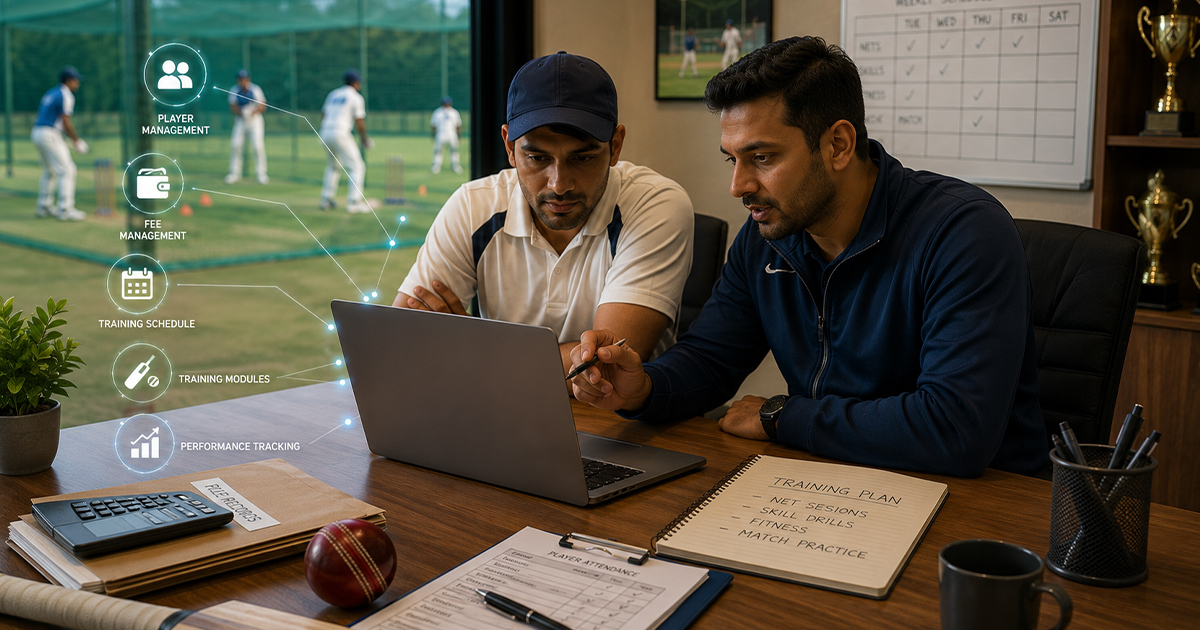 Read More about Cricket Academy Management Software: How to Manage Players, Fees, and Training Effectively
Cricket Academy Management Software: How to Manage Players, Fees, and Training Effectively
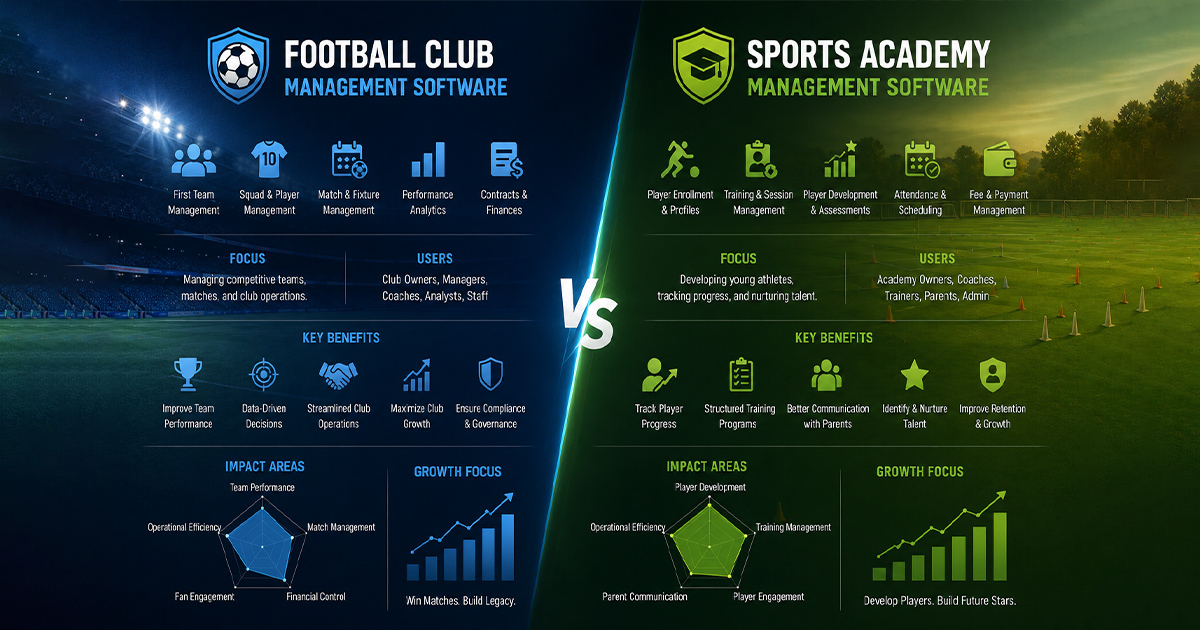
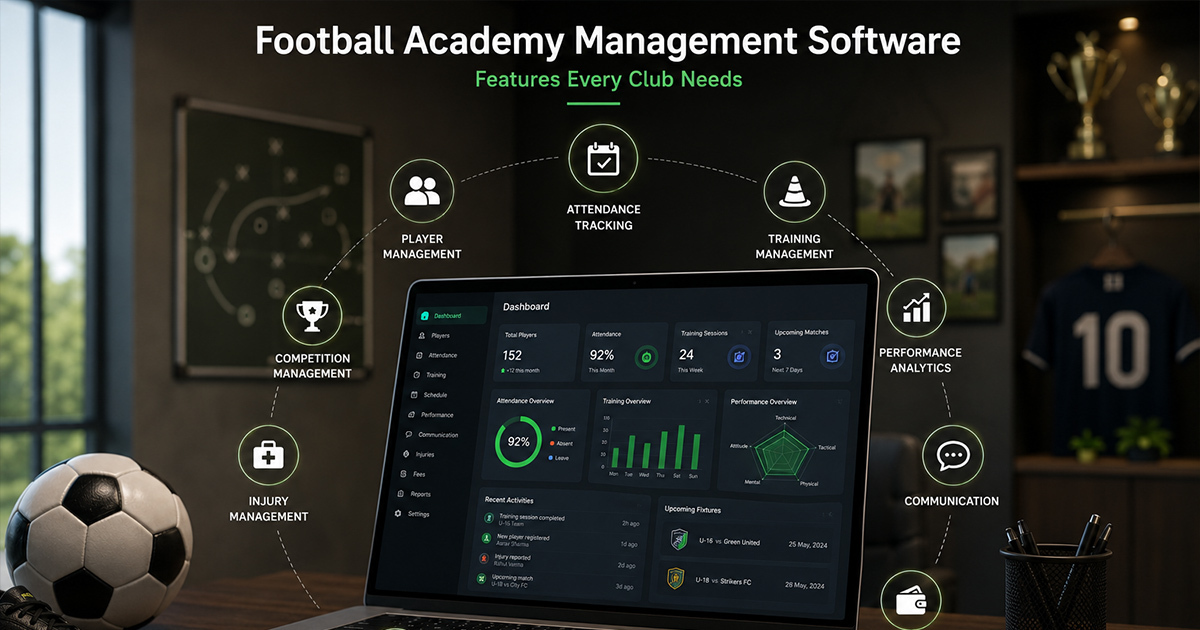 Read More about Football Academy Management Software: Features Every Club Needs
Football Academy Management Software: Features Every Club Needs
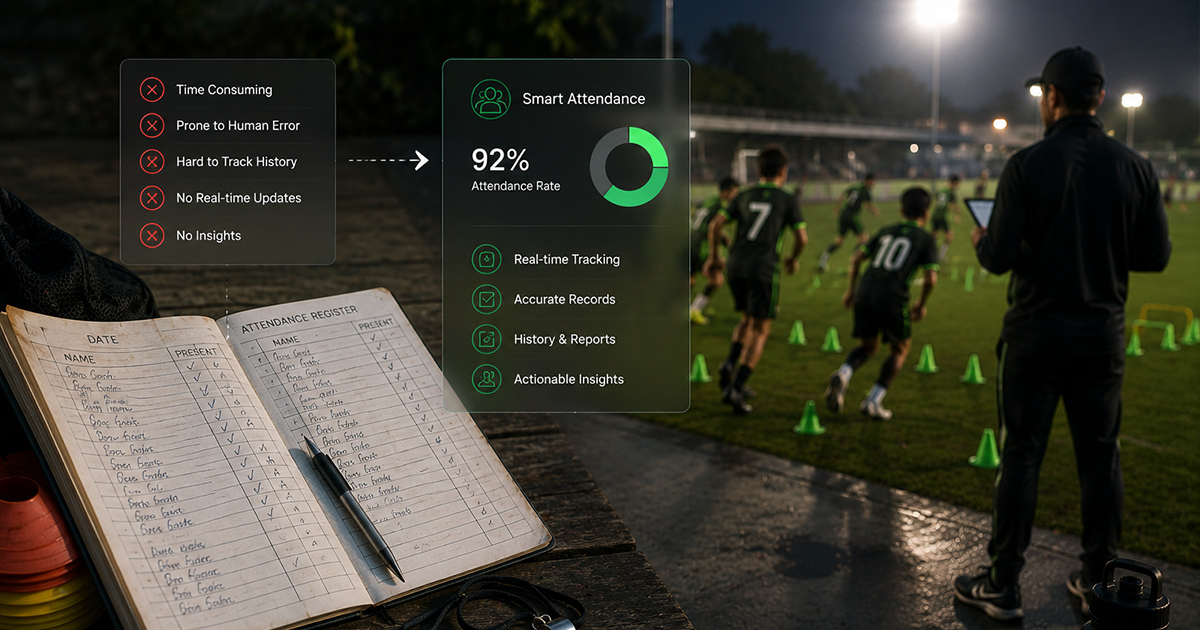 Read More about Sports Academy Attendance Management Software: Why Manual Registers Are Not Enough
Sports Academy Attendance Management Software: Why Manual Registers Are Not Enough
Latest Articles
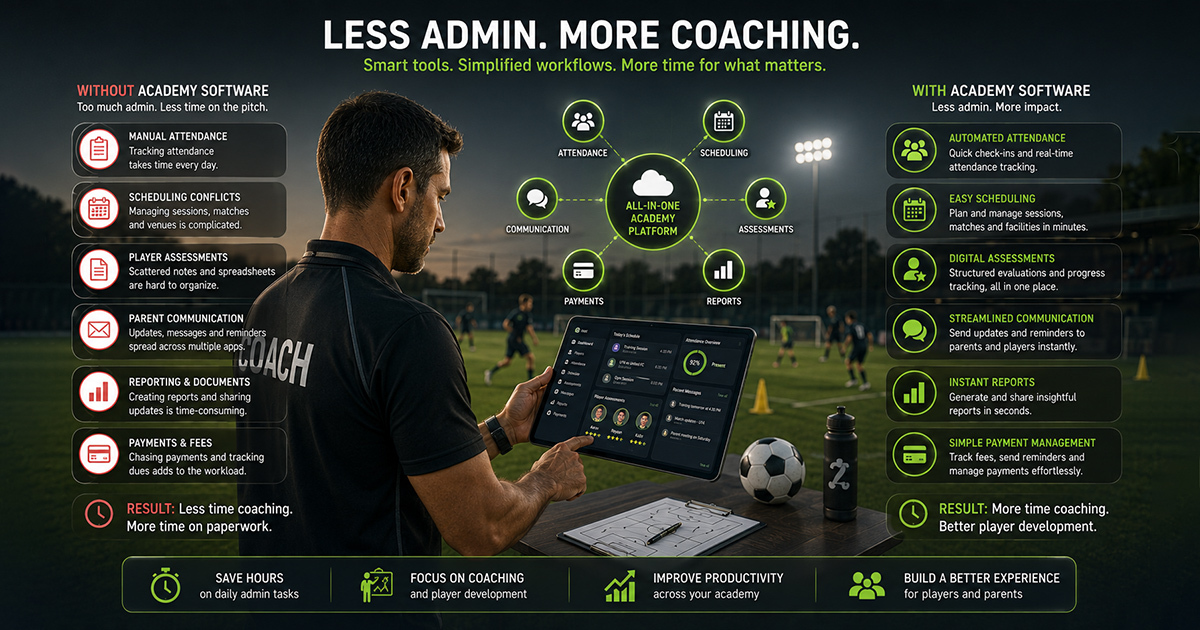 Read More about How Sports Academies Can Reduce Admin Work for Coaches
How Sports Academies Can Reduce Admin Work for Coaches
 Read More about How to Build Age-Wise Player Development Pathways in Football and Cricket
How to Build Age-Wise Player Development Pathways in Football and Cricket
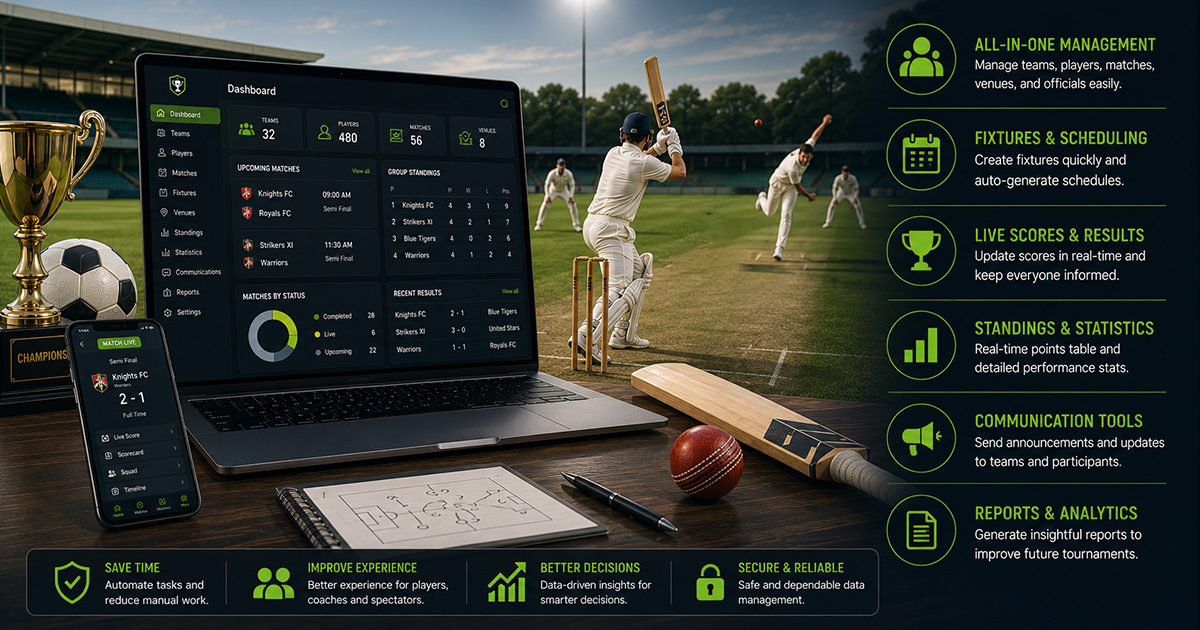 Read More about Tournament Management Software for Football and Cricket Organizers: A Practical Guide
Tournament Management Software for Football and Cricket Organizers: A Practical Guide
Ready to Bring Structure to Your Academy?
Let’s walk through your current setup and show you how 8lete can improve it.


