



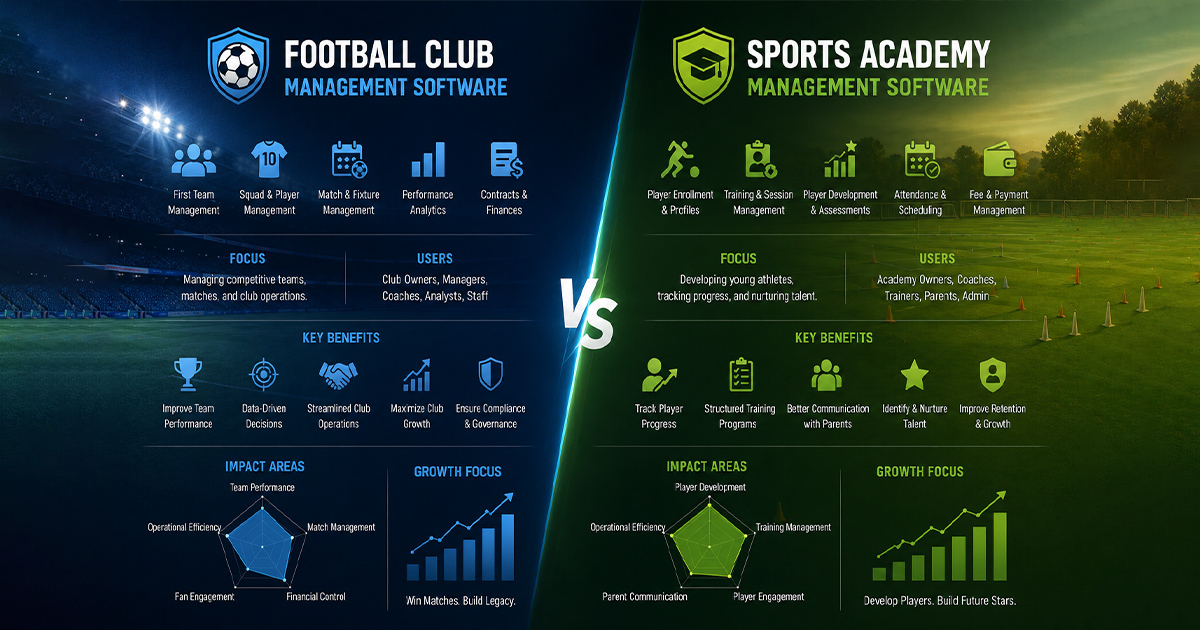
Football Club Management Software vs Sports Academy Management Software: A Practical Guide
Choosing the right management software is critical for the smooth operation and development of grassroots football organizations. Football club management software and sports academy management software serve related but distinct purposes in managing players, coaches, sessions, and operations. This article clarifies their differences and practical applications, helping club owners, coaches, parents, and academy managers decide which solution meets their specific needs for structured growth and long-term player development.
What is Football Club Management Software vs Sports Academy Management Software?
Football club management software primarily focuses on managing adult or youth teams, player registrations, match scheduling, and club finances. In contrast, sports academy management software provides a broader system to handle player development workflows, training session planning, coach assignments, attendance tracking, fee management, assessments, and parent communication in an academy setting.
Understanding these differences is essential because a football club's operational needs can vary significantly from those of an academy focused on structured grassroots player growth, long-term tracking, and multiple age groups.
Key Differences Between Club and Academy Management Systems
While football clubs often prioritize match fixtures, player registrations, and member communication, academies emphasize ongoing training processes and player development cycles. This can be summarized in the following framework:
1. Core Focus: Clubs focus on competition and membership; academies on training and progression.
2. Player Management: Club software handles registrations and transfers, academy software tracks attendance, assessments, and progress.
3. Session Planning: Clubs may schedule training via calendars; academies require structured session planning with coach assignments.
4. Communication: Clubs communicate about matches and events; academies provide detailed parent updates and player reports.
5. Financial Management: Clubs manage membership fees and sponsorship; academies track complex fee structures and batch-wise payments.
6. Development Tracking: Generally absent in clubs; central in academies with skill assessments and progress reports.
7. Scalability: Club software may be limited to team-level; academy software supports multiple teams and age groups in an integrated manner.

A Practical Framework for Choosing the Right Management Software
Selecting between football club management software and sports academy management software requires evaluating your organization's priorities. This framework helps decision-makers:
1. Define Organizational Type: Are you primarily a team competing in leagues or an academy focused on training young players?
2. Identify Operational Needs: Consider if you need detailed player assessments, coach workflows, and parent communication or mainly registrations and match scheduling.
3. Assess Scale and Complexity: Multiple age groups and batches typically require academy management solutions.
4. Evaluate Financial Workflows: Complex fee structures and batch payments lean toward academy software capabilities.
5. Review Communication Channels: Consider the importance of structured parent updates and progress reports versus basic event notifications.
6. Plan for Growth: Choose software that can scale as your club or academy expands, both in players and operational complexity.
7. Integration Potential: Check if the system can integrate attendance, assessments, and fee management for seamless workflows.
Practical checklist
Use this checklist to evaluate whether football club management software or sports academy management software fits your grassroots operation:
- Does the software track player attendance and training consistency?
- Can it manage multi-age group batch scheduling and coach assignments?
- Is there support for ongoing player skill assessments and development reports?
- Does it support detailed fee management for academies, including installments and batch-wise payments?
- Are parent communication tools integrated for progress visibility and feedback?
- Does the system handle player registrations, transfers, and membership renewals efficiently?
- Is match scheduling and team lineup management included?
- Are coach workflows and session planning capabilities part of the solution?
- Can the software generate comprehensive reports for academy owners and stakeholders?
- Does the platform support digital enquiry management and lead nurturing?
Role-wise Insights to Choose and Use Management Software
For Players: Benefit from transparent progress tracking, consistent training schedules, and timely feedback made possible by academy-centric management systems.
For Coaches: Use systems that offer session planning, coach notes, and player assessments to organize training efficiently and monitor development effectively.
For Parents: Prefer platforms that provide regular communication, attendance visibility, and development reports to better understand your child’s growth and commitment.
For Academy Owners: Focus on software that integrates multiple operational workflows, including fees, attendance, enrolment, communication, and comprehensive reporting to run the academy smoothly and transparently.
Stage-wise Implementation: From Setup to Growth
Managing grassroots football and academy operations evolves through stages. Here’s a practical breakdown:
Stage 1 – Setup: Establish player registrations, batch scheduling, and basic attendance management, ideally using club or simple academy software.
Stage 2 – Structured Training: Introduce session planning, coach assignments, and initial player assessments to foster disciplined development.
Stage 3 – Progress Tracking: Implement detailed attendance discipline, regular skill assessments, and parent communication mechanisms for transparency.
Stage 4 – Advanced Management: Scale fee management, enquiry systems, batch re-organization, and integrate AI-assisted assessments for continuous growth.
Stage 5 – Long-Term Development: Use comprehensive data-driven reports, scouting visibility, and sponsorship readiness features aligned with rigorous academy workflows.
Consistent tracking and structured feedback turn grassroots training into measurable progress over time.
Common mistakes
Choosing and using management software without clear operational understanding can lead to these errors:
1. Selecting club software for an academy: This limits player development tracking. Fix: Opt for academy software with structured workflows to track progress and attendance.
2. Ignoring parent communication features: Causes trust gaps and reduced engagement. Fix: Use platforms that facilitate regular progress reports and feedback sharing with parents.
3. Managing fees and enquiries manually: Increases errors and delays. Fix: Adopt integrated fee and enquiry management to improve operational efficiency.
4. Overlooking coach workflows: Leads to inconsistent training quality. Fix: Use software offering session planning and coach note features to maintain coaching standards.
5. Failing to scale software with growth: Causes system fragmentation and data loss. Fix: Choose scalable solutions that can expand with your academy or club.

A Recommended Workflow for Grassroots Football Academy Management
A practical, structured workflow to manage football academies effectively using dedicated management software involves interconnected steps:
Session Planning: Coaches prepare drills and objectives for training days.
Attendance Management: Track player presence consistently to ensure discipline.
Player Assessments: Evaluate skill acquisition and fitness after sessions or matches.
Coach Notes: Document observations and feedback for each player.
Parent Reports: Share progress insights and next steps with families to foster transparency.
Next Goal Setting: Define achievable targets based on assessments to drive continuous improvement.
This workflow connects training, tracking, and communication, creating a unified development environment supported by the right academy software.
Grassroots Examples Highlighting Software Use
Example 1: A grassroots club used simple football club software focused on registrations and match schedules but struggled to maintain consistent attendance records. Transitioning to academy software improved attendance discipline and player visibility.
Example 2: A football academy without structured parent communication faced repeated fee payment delays and misunderstandings. Implementing integrated fee management and automated parent reports reduced conflicts significantly.
Example 3: Coaches at a youth football academy manually tracked player drills and assessments on paper, causing data loss. Using software with digital coach notes and assessment tools streamlined training feedback and fostered faster player development.
FAQ
Q1: What is football club management software?
Football club management software is a digital tool that helps clubs organize player registration, match schedules, team communication, and sometimes financial management suited for club operations.
Q2: How does sports academy management software differ from club software?
Academy software provides broader functionalities such as training session planning, attendance tracking, player assessments, coach workflows, fee management, and detailed parent communication, supporting long-term player development.
Q3: How can coaches improve training consistency with management software?
Coaches can use session planning tools, track attendance exactly, record detailed assessment notes, and monitor progress trends over time, ensuring training is consistent and targeted to individual player needs.
Q4: Why is parent communication important in academy management?
Regular updates on attendance, progress reports, and fee reminders help build trust, encourage player commitment, and reduce misunderstandings, which indirectly supports player development.
Q5: How to manage fees effectively in sports academies?
Effective fee management involves automated billing, installment plans, reminders, and clear records integrated into the management software, reducing manual errors and improving cash flow predictability.
Q6: Can football club software scale for an academy’s expanding needs?
Most club software lacks scalability for multi-batch training, detailed assessments, and layered communication. Academies generally require specialized software designed for growth and complexity.
Q7: What is the best time to adopt academy management software?
The best time is when your grassroots operation grows beyond basic team management—particularly when multiple age groups, coaches, and detailed player tracking become essential for sustainable development.
Conclusion
The choice between football club management software and sports academy management software hinges on your organization's core needs. For grassroots clubs primarily focused on team registrations and matches, club software suffices for basic operations. However, academies dedicated to structured player development across age groups require software designed to manage complex training workflows, attendance discipline, skill assessments, and parent communication. Ignoring these aspects can stall growth and reduce player visibility over time. Integrated management systems connect daily training routines with long-term progress reports and financial management, enabling stakeholders—including players, coaches, parents, and academy owners—to stay aligned on goals. By choosing the right software and adopting a structured workflow, grassroots organizations can foster consistent training quality, effective communication, and trustworthy operational oversight. This approach not only supports player growth but also builds credibility and sustainability for clubs and academies alike.
What is football club management software?
Football club management software is a digital tool that helps clubs organize player registration, match schedules, team communication, and sometimes financial management suited for club operations.
How does sports academy management software differ from club software?
Academy software provides broader functionalities such as training session planning, attendance tracking, player assessments, coach workflows, fee management, and detailed parent communication, supporting long-term player development.
How can coaches improve training consistency with management software?
Coaches can use session planning tools, track attendance exactly, record detailed assessment notes, and monitor progress trends over time, ensuring training is consistent and targeted to individual player needs.
Why is parent communication important in academy management?
Regular updates on attendance, progress reports, and fee reminders help build trust, encourage player commitment, and reduce misunderstandings, which indirectly supports player development.
How to manage fees effectively in sports academies?
Effective fee management involves automated billing, installment plans, reminders, and clear records integrated into the management software, reducing manual errors and improving cash flow predictability.
Can football club software scale for an academy’s expanding needs?
Most club software lacks scalability for multi-batch training, detailed assessments, and layered communication. Academies generally require specialized software designed for growth and complexity.
What is the best time to adopt academy management software?
The best time is when your grassroots operation grows beyond basic team management—particularly when multiple age groups, coaches, and detailed player tracking become essential for sustainable development.

Related Articles
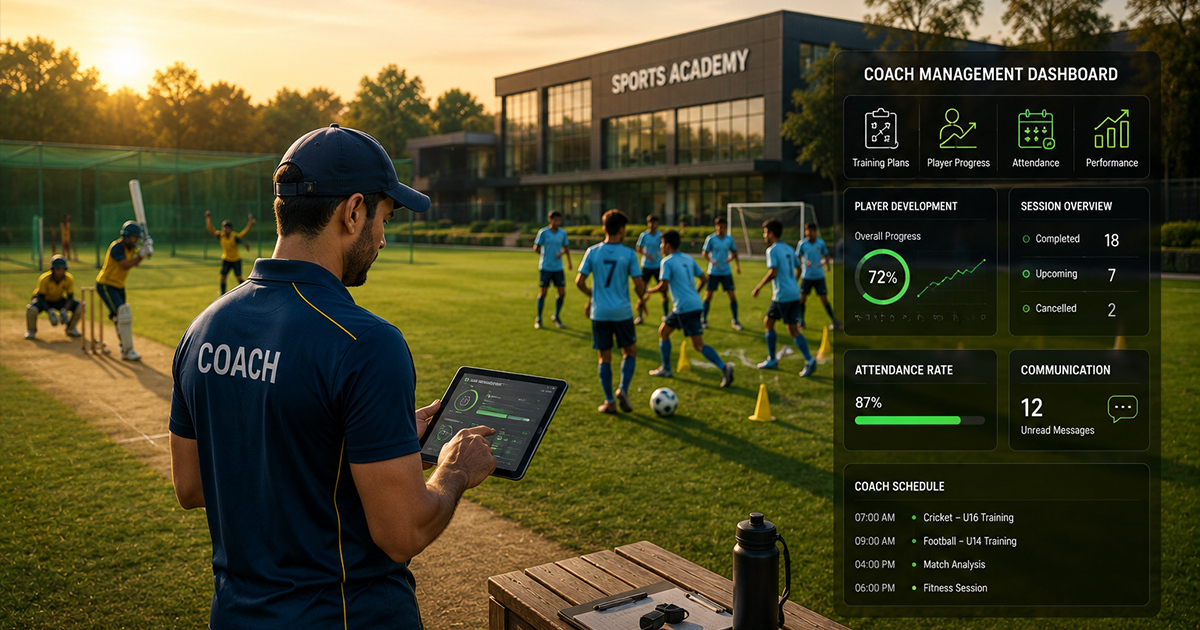 Read More about Coach Management Software for Sports Academies: Streamlining Football and Cricket Coaching Operations
Coach Management Software for Sports Academies: Streamlining Football and Cricket Coaching Operations
 Read More about Cricket Academy Management Software: How to Manage Players, Fees, and Training Effectively
Cricket Academy Management Software: How to Manage Players, Fees, and Training Effectively
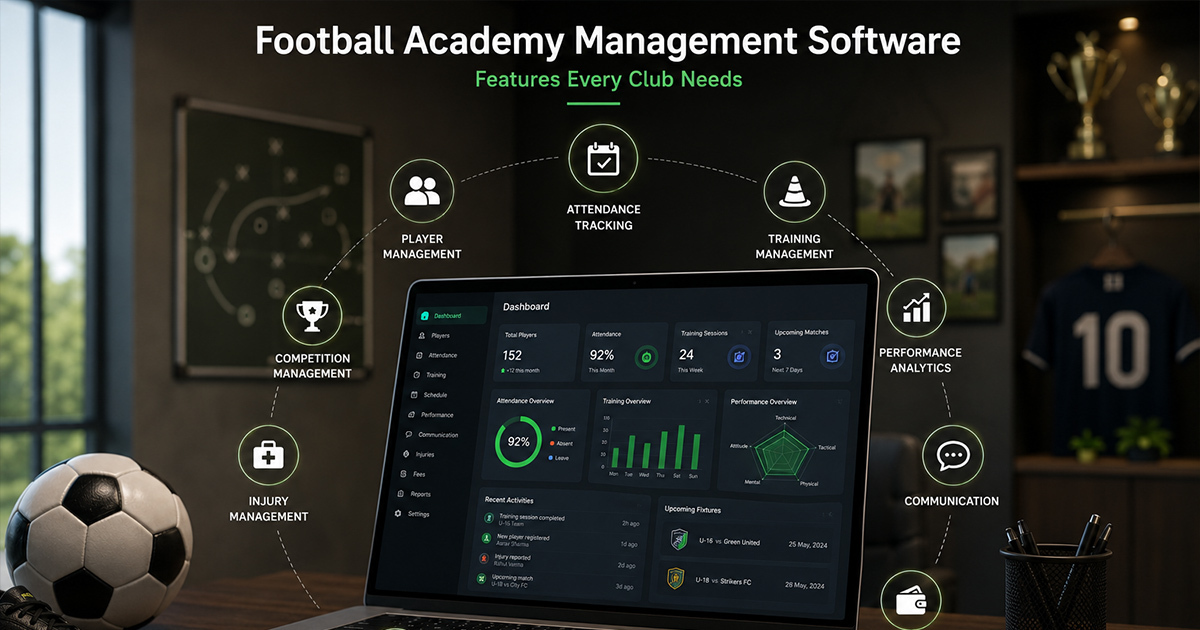 Read More about Football Academy Management Software: Features Every Club Needs
Football Academy Management Software: Features Every Club Needs
Latest Articles
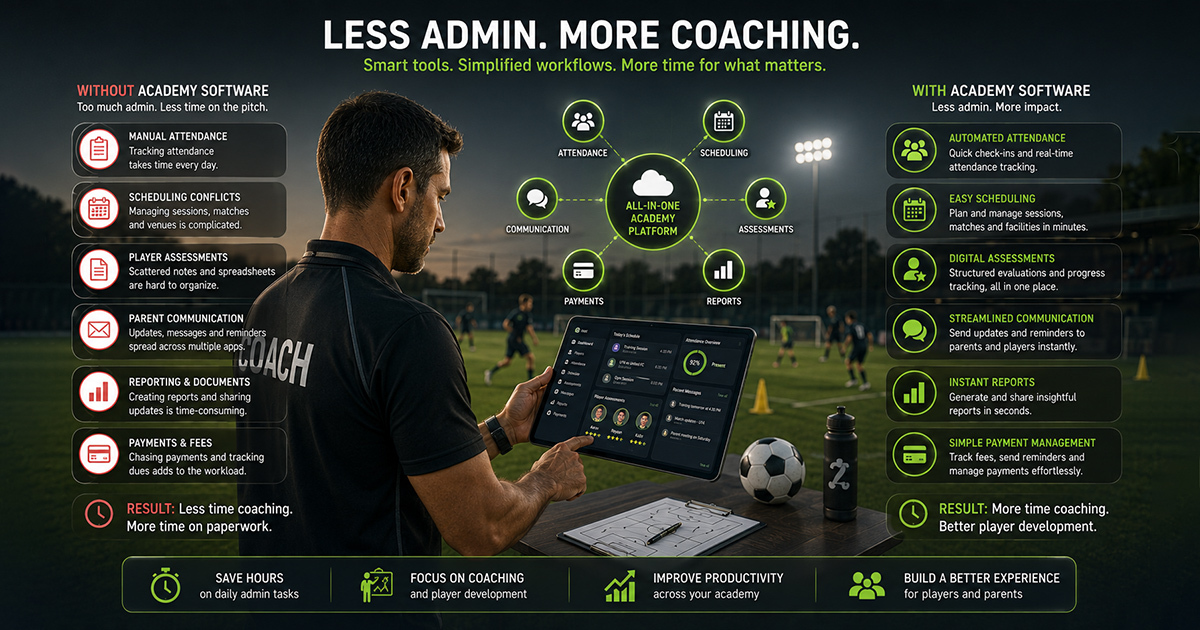 Read More about How Sports Academies Can Reduce Admin Work for Coaches
How Sports Academies Can Reduce Admin Work for Coaches
 Read More about How to Build Age-Wise Player Development Pathways in Football and Cricket
How to Build Age-Wise Player Development Pathways in Football and Cricket
 Read More about Tournament Management Software for Football and Cricket Organizers: A Practical Guide
Tournament Management Software for Football and Cricket Organizers: A Practical Guide
Ready to Bring Structure to Your Academy?
Let’s walk through your current setup and show you how 8lete can improve it.


