



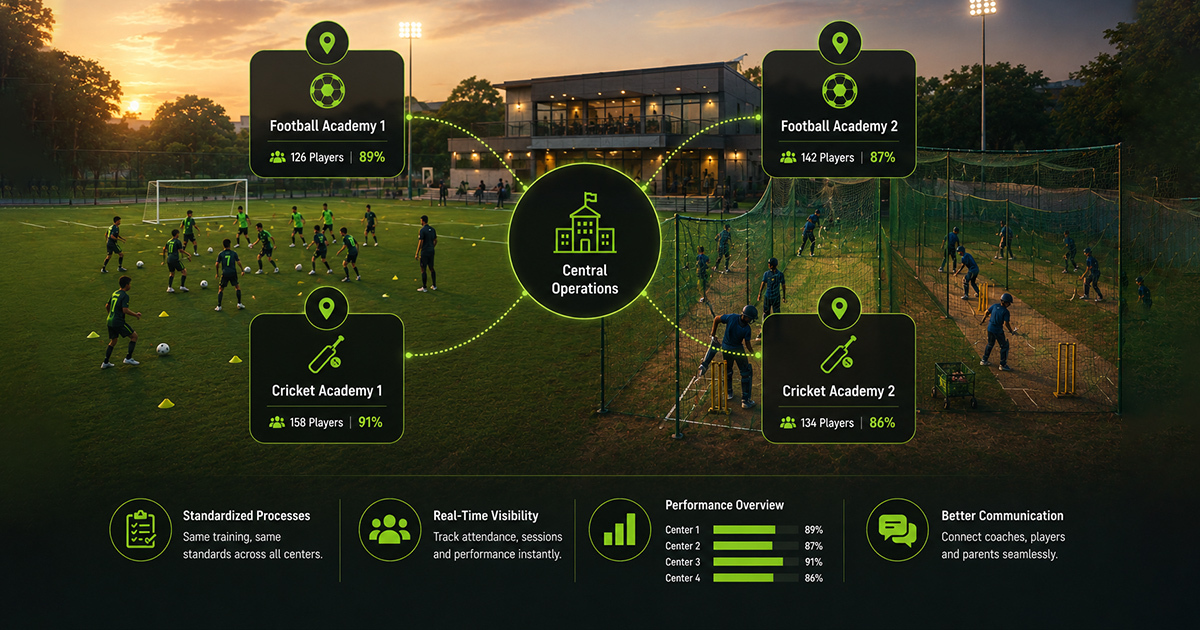
How to Manage Multi-Center Sports Academies Without Operational Chaos
Managing multi-center sports academies means coordinating training, staff, schedules, and resources across multiple locations without allowing operational complexity to disrupt player development or coach workflows. Academy owners, coaches, parents, and players frequently face challenges such as inconsistent training quality, staff miscommunication, and schedule overlaps, which can stall long-term progress. Successful management is crucial to ensure consistent player assessments, coach feedback, attendance discipline, and transparent communication across all centers. This article presents practical frameworks and checklists to help your multi-location academy run smoothly and support structured grassroots sports growth effectively.
What Managing Multi-Center Sports Academies Really Means
Managing multi-center sports academies involves maintaining synchronized operations across various physical locations. This means aligning schedules, training standards, coaching feedback, player assessments, attendance tracking, and parent communication systems so every center supports the same development goals consistently.
Without this alignment, academies risk fragmented coaching efforts and diluted player progress, which complicates scouting, sponsorship readiness, and long-term visibility. Structured operations reduce confusion and create reliable routines for players and staff alike.

A Practical Framework for Managing Multi-Center Sports Academies
Managing multi-center academies effectively requires a framework that addresses both operational coordination and player development consistency. Here are six key points:
1. Centralized Scheduling: Use shared calendars and sports academy scheduling software that allow real-time updates and avoid session clashes across centers.
2. Standardized Coaching Curriculum: Develop a uniform training program with session plans and learning objectives that all coaches implement, ensuring consistent skill-building regardless of location.
3. Attendance and Discipline Tracking: Implement digital attendance management tools across centers to monitor player participation and punctuality systematically.
4. Coach Coordination and Feedback Sharing: Set regular multi-center coach meetings and use workflows that enable sharing player assessment notes and session feedback smoothly.
5. Parent Communication Systems: Establish centralized channels for messaging, progress reports, and session schedules, so parents stay informed about their child's development irrespective of location.
6. Resource Allocation and Facility Management: Plan and distribute equipment, field usage, and staff efficiently to avoid wastage or overcrowding at any center.
Role-Wise Responsibilities in Multi-Center Management
Players: Must maintain attendance discipline and communicate any location-specific constraints early to coaches to allow schedule adjustments.
Coaches: Should follow the standardized curriculum across centers, record detailed player assessments digitally, and participate in cross-center coordination meetings to share insights.
Parents: Need to understand and utilize communication channels to track development and clarify session timings, especially if players attend multiple centers.
Academy Owners: Must implement centralized management systems for attendance, fees, enquiries, and staff workflows to ensure smooth collaboration between centers and transparent accountability.
Stage-Wise Management Breakdown for Multi-Center Academies
Phase 1: Foundation Setup — Start by establishing centralized digital tools for scheduling, attendance, and communication. Train coaches on standardized curriculum and reporting standards.
Phase 2: Operational Synchronization — Integrate coach coordination meetings and resource sharing policies. Begin consistent parent reports and feedback loops. Monitor attendance patterns centrally.
Phase 3: Performance Review & Growth — Analyze collected data across centers to identify coaching effectiveness, player progress, and resource utilization. Adjust batch timings or staffing as needed.
For example, a multi-center volleyball academy implemented weekly coach video calls and unified attendance software during Phase 2, leading to higher session consistency and fewer schedule conflicts.
Similarly, a youth football academy with four locations streamlined equipment distribution and started monthly parent newsletters, increasing trust and player retention.
Common Challenges and How to Fix Them
1. Disconnected Coach Communication: Leads to inconsistent training. Fix: Set mandatory weekly coach coordination calls and use shared digital notes for player feedback.
2. Conflicting Schedules Across Centers: Causes player confusion and missed sessions. Fix: Use live shared scheduling software accessible to staff, players, and parents.
3. Untracked Attendance and Fees: Results in revenue loss and unreliable player progress data. Fix: Move to automated attendance and fee collection systems with real-time tracking.
4. Parent Communication Gaps: Creates trust issues and misinformation. Fix: Implement unified parent communication platforms giving timely access to reports and schedules.
5. Inefficient Resource Allocation: Wastes equipment and facility availability. Fix: Plan resource sharing across centers with digital booking and inventory management.

Practical checklist
Use this checklist to audit your multi-center sports academy management:
- Is there a centralized digital calendar accessible to coaches, parents, and staff?
- Are training sessions standardized with shared curricula and session plans?
- Does the academy use automated attendance tracking with alerts for absences?
- Are multi-center coach meetings scheduled regularly for feedback exchange?
- Is there a transparent parent communication system with progress reports and session updates?
- Are resources like equipment and fields allocated and tracked digitally across centers?
- Are player development assessments synchronized across locations for consistency?
- Is staff management streamlined with clear role definitions and accountability?
- Are fee collections automated and reconciled centrally?
- Is there a workflow ensuring session planning flows into attendance, assessments, coach notes, and parent reports?
Consistent communication and centralized tracking turn multiple centers into one seamlessly operating academy.
An 8lete-Aligned Workflow for Multi-Center Academies
An effective multi-center academy operation can follow this workflow for each batch and location:
Session Planning → Attendance Management → Player Assessment → Coach Feedback Notes → Parent Progress Reports → Next Training Goals Setup
This cycle ensures that every training session connects directly to player progress documentation and parent communication, creating clarity for all stakeholders and reducing operational noise.
Common mistakes
Mistake 1: Relying on Manual Registers — Manual sheets across multiple centers cause data loss and delays in tracking attendance or fees. Fix: Adopt a centralized digital attendance system accessible by all locations.
Mistake 2: Lack of a Unified Training Approach — Different coaches running their own plans results in uneven player skill development. Fix: Develop and enforce a standardized curriculum and session plan template.
Mistake 3: Ignoring Parent Communication Needs — Parents get frustrated when updates or schedules vary by center or are delayed. Fix: Use centralized communication tools that give parents regular access to reports and notices.
Mistake 4: No Regular Staff Coordination — Without coach meetings or feedback exchange, coaching quality drifts and players receive mixed messages. Fix: Schedule weekly cross-center coach check-ins with mandated shareable notes.
Mistake 5: Poor Resource Planning — Equipment shortages or field booking conflicts disrupt sessions. Fix: Implement a resource allocation calendar visible to all centers and staff.
How to Overcome Multi-Center Academy Challenges: Examples from the Field
A cricket academy with three centers in a metro city faced frequent scheduling clashes that caused players to miss sessions. They introduced a shared scheduling platform with automated notifications, significantly reducing no-shows.
In a multi-location basketball academy, coaches used paper-based player assessments, leading to fragmented feedback. The academy switched to a digital coach workflow that aligned assessments, which improved player tracking and helped parents better understand progress through monthly reports.
A regional football academy struggled with uneven training quality as coaches customized sessions randomly per location. After implementing a standardized curriculum and organizing biweekly coach coordination calls, the academy saw consistency improve and player skill gaps narrow across centers.
Conclusion
Managing multi-center sports academies without operational chaos requires a strong commitment to structured coordination, consistent communication, and centralized systems. Each location should operate not as an independent unit but as part of a well-synchronized whole where schedules, training standards, attendance discipline, coach workflows, and parent communication are aligned. The complexity of running multiple centers is best met with digital tools and repeatable workflows that connect session planning, attendance, player assessments, and progress reporting seamlessly. When academy owners, coaches, parents, and players all understand their specific roles and use clear shared processes, the academy environment becomes transparent and productive across every location. This structured approach avoids confusion, builds long-term trust, and most importantly, creates a reliable foundation for player development to thrive beyond the immediate training ground.
What is managing multi-center sports academies?
It means coordinating operations across multiple training centers to maintain consistent coaching, scheduling, attendance, and communication for players and staff.
How to improve staff communication in multi-center academies?
Regular cross-center staff meetings and shared digital platforms for feedback and session notes help coaches stay aligned and maintain coaching consistency.
How to manage scheduling conflicts in multi-location sports academies?
Use centralized scheduling software accessible to coaches, players, and parents with real-time updates and notifications to prevent session overlaps and reduce no-shows.
Why do multi-center academies struggle with parent communication?
Fragmented updates and different communication channels per location confuse parents. Centralized parent communication systems providing consistent reports and alerts improve trust and clarity.
How to track player attendance effectively across multiple centers?
Implement automated attendance management tools that provide real-time tracking and alerts across all centers, replacing manual registers prone to errors.
How long does it take to streamline multi-center academy operations?
Streamlining can take 2–6 months depending on size. Phased implementation starting with centralized scheduling, followed by coach coordination and parent communication, helps ensure smooth adoption.
What are common mistakes when managing multi-center academies?
Common mistakes include manual record-keeping, inconsistent training curricula, lack of staff coordination, poor parent communication, and inefficient resource planning. Each needs structured digital systems and defined workflows to fix.
Related Articles
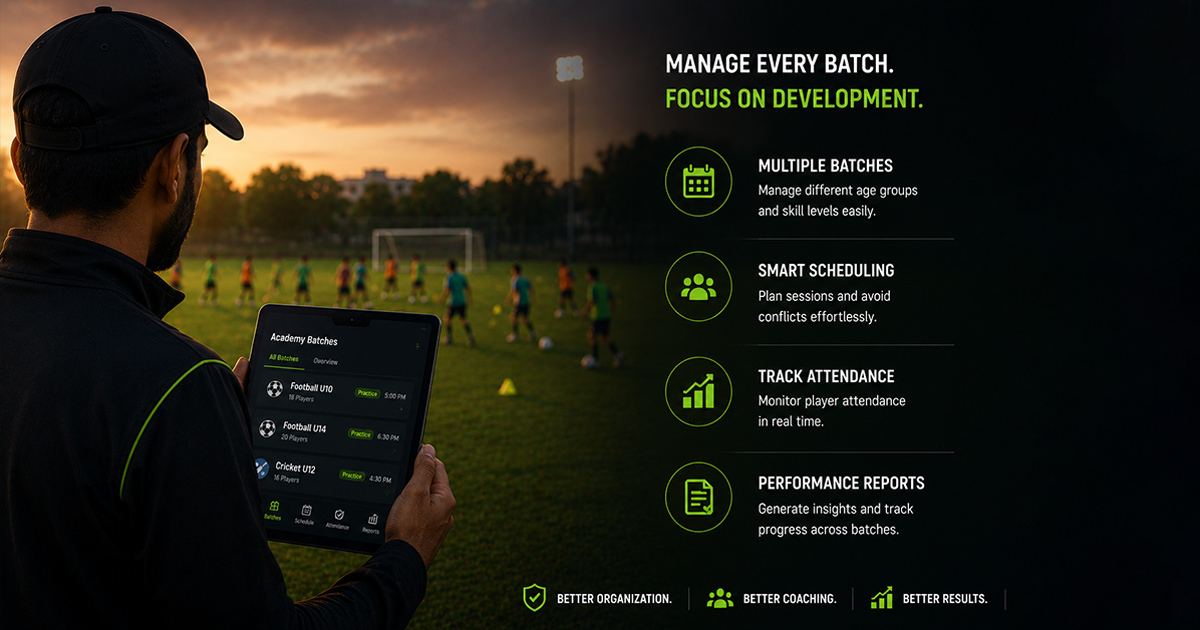 Read More about Managing Multiple Batches in a Sports Academy: A Practical Guide for Coaches and Owners
Managing Multiple Batches in a Sports Academy: A Practical Guide for Coaches and Owners
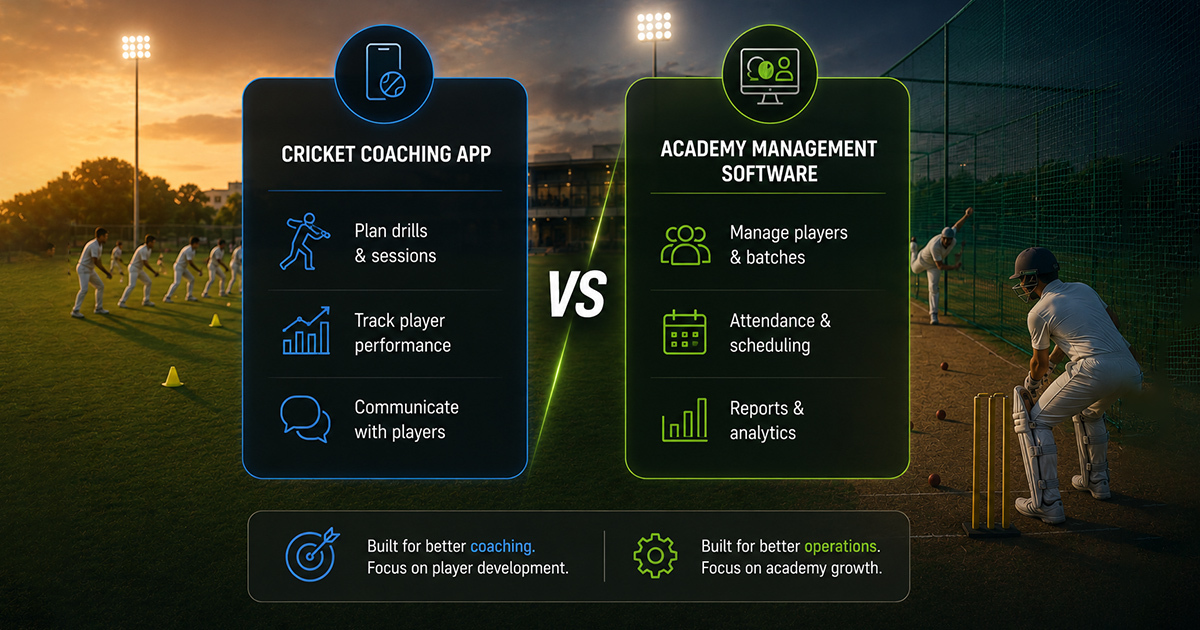 Read More about Cricket Coaching App vs Academy Management Software: What Is the Difference?
Cricket Coaching App vs Academy Management Software: What Is the Difference?
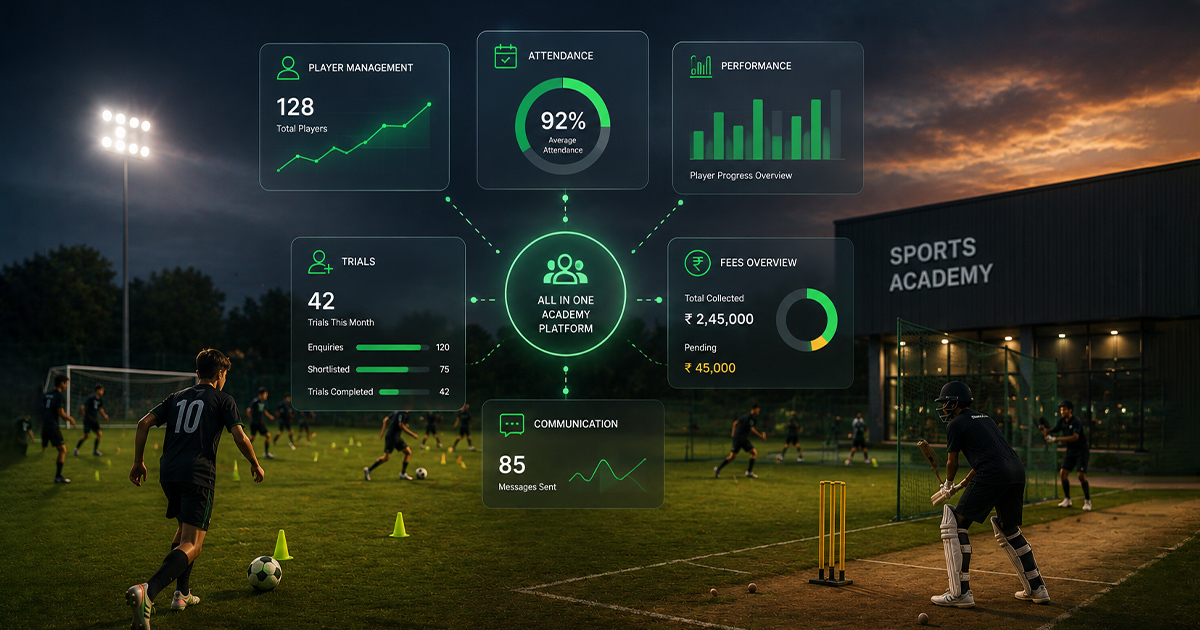 Read More about Best App for Managing Sports Academies: A Practical Guide for Football and Cricket Academy Operations
Best App for Managing Sports Academies: A Practical Guide for Football and Cricket Academy Operations
Latest Articles
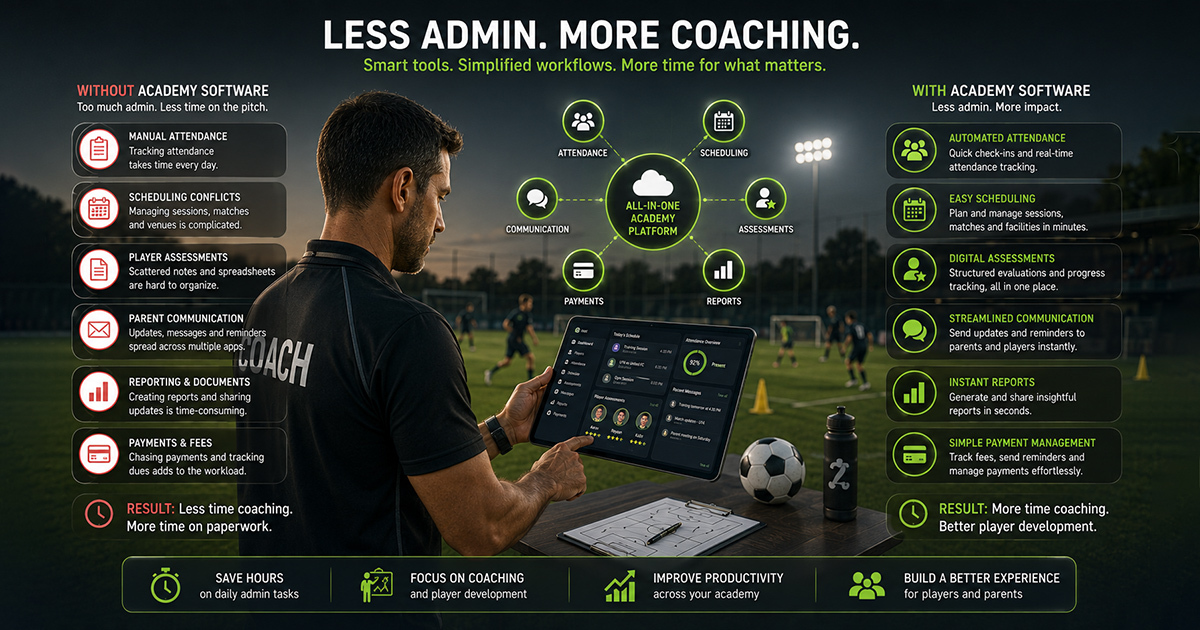 Read More about How Sports Academies Can Reduce Admin Work for Coaches
How Sports Academies Can Reduce Admin Work for Coaches
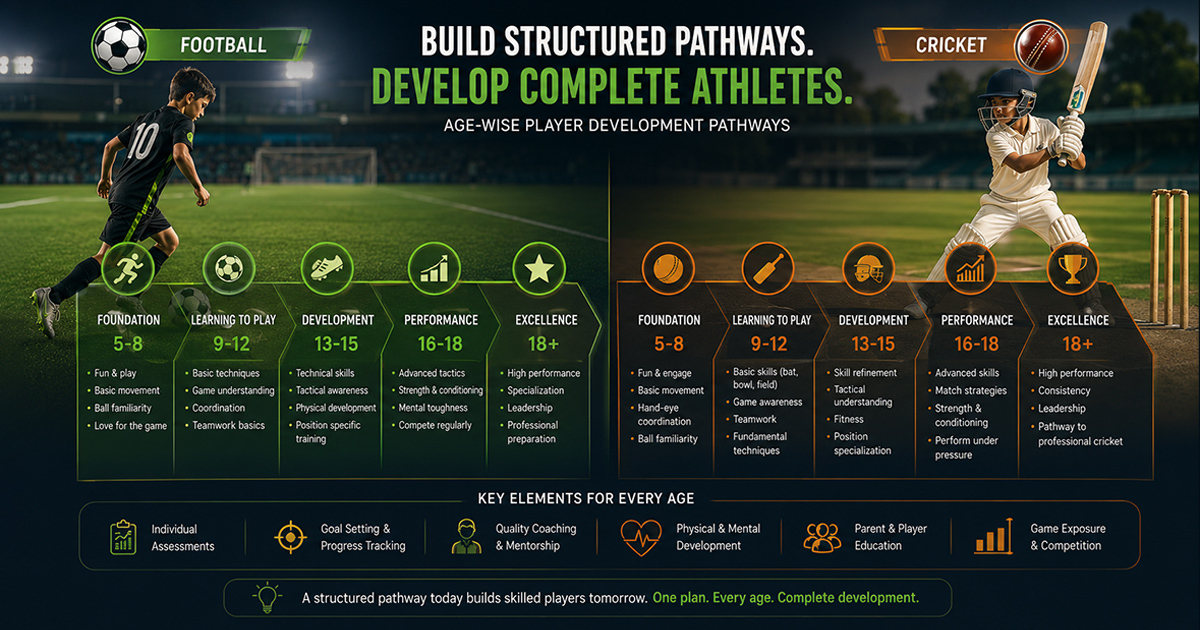 Read More about How to Build Age-Wise Player Development Pathways in Football and Cricket
How to Build Age-Wise Player Development Pathways in Football and Cricket
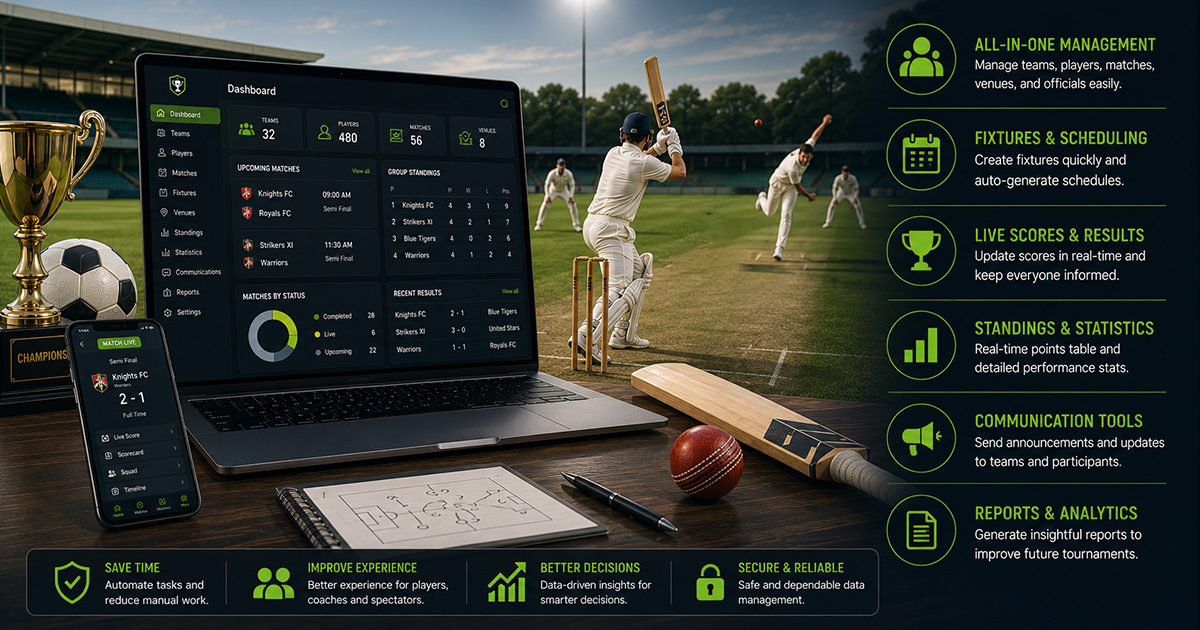 Read More about Tournament Management Software for Football and Cricket Organizers: A Practical Guide
Tournament Management Software for Football and Cricket Organizers: A Practical Guide
Ready to Bring Structure to Your Academy?
Let’s walk through your current setup and show you how 8lete can improve it.


