



Organizing Grassroots Football Tournaments: A Practical Guide for Academies and Clubs
Organizing grassroots football tournaments is a common challenge for football academies and clubs aiming to create structured, enriching competitive experiences for young players. The process often feels overwhelming due to the many logistical elements, safety considerations, and player development needs involved. However, understanding how to plan and execute these tournaments efficiently can enhance both player growth and community engagement, turning events into valuable learning opportunities.
What Is Organizing Grassroots Football Tournaments?
Organizing grassroots football tournaments means planning, scheduling, and managing youth football competitions focused on long-term player development, community involvement, and safe participation. This includes coordinating teams, venues, referees, equipment, and communications while ensuring a positive football environment across age groups U10 to U21.
The key objective is to provide young footballers with consistent, structured match experience without sacrificing their physical and mental well-being. Proper planning supports academy goals, reinforces player habits around teamwork and discipline, and encourages meaningful feedback after each game.
Essential Steps for Grassroots Football Event Planning
To organize a successful football tournament, clubs should follow a clear framework: define objectives, set a budget, arrange venues, create match schedules, ensure safety, and communicate effectively with all stakeholders.
Step 1: Set clear development goals — prioritize player experience over winning. Step 2: Prepare a realistic budget — consider venue rental, equipment, referees, and refreshments. Step 3: Secure suitable venues — choose well-maintained pitches suitable for youth age groups. Step 4: Design the match schedule — balance playing time to prevent burnout, allow recovery, and ensure fair competition. Step 5: Implement safety and medical protocols — ensure first aid availability and conform to safety guidelines. Step 6: Communicate roles and expectations clearly — inform coaches, players, parents, and volunteers.

Scheduling Football Matches for Academies
Scheduling can make or break the tournament quality. Focus on equitable game time, sufficient rest between matches, and suitable match durations appropriate for each age group. Consider group stages before knockout phases to maximize player participation and learning.
Coaches and technical directors should coordinate to prevent fixture congestion, promoting physical recovery and mental readiness. Using digital tools for match tracking and player visibility can help organizers keep real-time oversight of progress and performance.
Why Players Struggle with Football Tournament Pressure
Many young players face anxiety and fatigue during tournaments caused by overloaded schedules, unclear expectations, or a focus on results instead of development. This pressure can hinder decision-making and impact enjoyment, two essential components of football learning.
Clubs can mitigate such issues by educating parents and players about the purpose of tournaments, emphasizing structured training and repetitive practice over winning at all costs. Creating a supportive learning environment during matches encourages confidence and resilience.
Structured planning and clear communication are key to smooth and development-focused tournaments.
Common Development Mistakes in Tournament Organization
One common pitfall is neglecting balanced playing time, which can limit opportunities for growth across the squad. Overlapping fixtures without recovery periods increases injury risk and undermines player focus. Another mistake is inadequate preparation for event logistics, leaving coaches and volunteers overwhelmed during the tournament.
Ignoring safety guidelines, such as insufficient medical coverage or missing emergency plans, puts players at unnecessary risk. Lastly, failing to communicate clear objectives with clubs and parents can lead to mismatched expectations and frustration, undermining the club’s reputation and player retention.
Practical Implementation for Grassroots Clubs
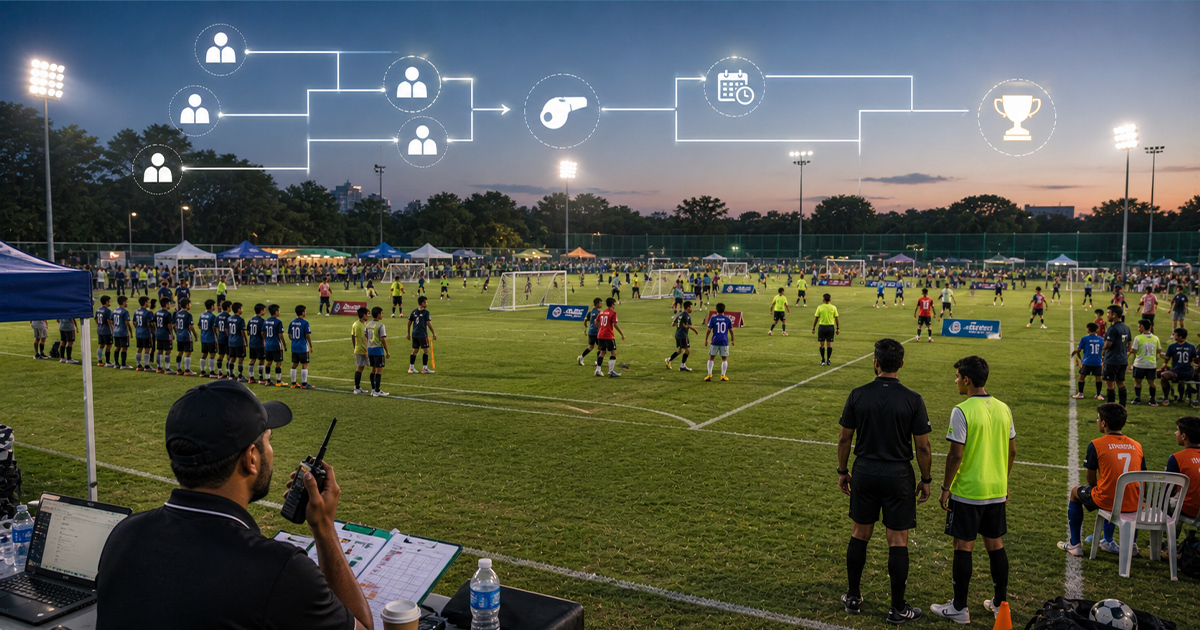
Grassroots clubs can adopt a simple operational framework: Planning → Scheduling → Safety Checks → Communication → Execution. Start with a detailed youth football tournament checklist to guide preparation and ensure no critical aspect is overlooked. Leverage club management systems to track player participation and feedback seamlessly.
Engaging the local community is vital. Invite parents, local businesses, and supporters to participate in volunteering roles, fundraising, and promoting the event, building a stronger football culture around the academy. This engagement creates a supportive environment conducive to disciplined, long-term development rather than short-term achievement.
Football Tournament Budgeting Tips
Managing your budget starts with realistic cost evaluation — consider pitch hire, referee fees, insurance, first aid, and basic equipment like cones or bibs. Allocate funds for contingencies such as weather delays or last-minute changes.
Sponsorship or small entry fees can help offset expenses. However, prioritize affordable access to keep grassroots football inclusive. Transparency in budgeting reassures parents and stakeholders about the club’s focus on development and sustainability.

Safety Guidelines for Youth Football Tournaments
Safety is non-negotiable in grassroots tournaments. Follow local and national football association guidelines for emergency planning, player health checks, and pitch standards.
Ensure qualified first aid personnel are present and clearly mark evacuation routes. Educate coaches and volunteers on spotting injury signs and managing player hydration and rest breaks appropriately.
Conclusion
Organizing grassroots football tournaments requires careful attention to detail, prioritizing structure and player development over short-term results. By following a clear planning framework that balances scheduling, safety, communication, and budgeting, academies and clubs create enriching learning environments that benefit players’ growth both on and off the pitch. Engaging community support while maintaining realistic expectations builds sustainable football ecosystems where young players can thrive. Focused, disciplined tournament management is a practical investment in developing the next generation of football talent.
What is the best way to plan a grassroots football tournament?
Start by defining clear development goals, set a budget, secure venues, schedule matches fairly, and prioritize safety and communication.
How does scheduling impact player development in youth tournaments?
Balanced scheduling ensures players get enough playing time and rest, helping avoid injuries and maintaining their focus and enjoyment.
How to improve football club tournament organization skills?
Use checklists, engage volunteers early, communicate clearly with all involved, and monitor player participation to adapt plans efficiently.
How to get better at managing football event logistics?
Prepare detailed schedules, assign clear roles, conduct safety checks, and keep open lines for real-time communication during the event.
Why do players struggle with pressure in football tournaments?
Pressure often comes from overloaded fixtures, unrealistic expectations, and focus on winning instead of learning, causing anxiety and reduced performance.
What safety guidelines are essential for youth football tournaments?
Ensure qualified first aid is on site, conduct player health checks, maintain safe playing conditions, and have emergency plans in place.
What is the best age to start participating in football tournaments?
Players can begin in organized tournaments from U10, focusing on participation and development rather than competition intensity.

Related Articles
 Read More about How to Improve Player Retention in Football Academies: Practical Strategies to Reduce Dropouts
How to Improve Player Retention in Football Academies: Practical Strategies to Reduce Dropouts
.jpg) Read More about How to Start a Football Academy in India: A Step-by-Step Guide
Read More about How to Start a Football Academy in India: A Step-by-Step GuideHow to Start a Football Academy in India: A Step-by-Step Guide
 Read More about How to Get Sponsorship in Grassroots Football for Players and Academies
How to Get Sponsorship in Grassroots Football for Players and Academies
Latest Articles
 Read More about How Sports Academies Can Reduce Admin Work for Coaches
How Sports Academies Can Reduce Admin Work for Coaches
 Read More about How to Build Age-Wise Player Development Pathways in Football and Cricket
How to Build Age-Wise Player Development Pathways in Football and Cricket
 Read More about Tournament Management Software for Football and Cricket Organizers: A Practical Guide
Tournament Management Software for Football and Cricket Organizers: A Practical Guide
Ready to Bring Structure to Your Academy?
Let’s walk through your current setup and show you how 8lete can improve it.


