



Sports Academy CRM System: How to Manage Enquiries, Trials and Admissions Efficiently
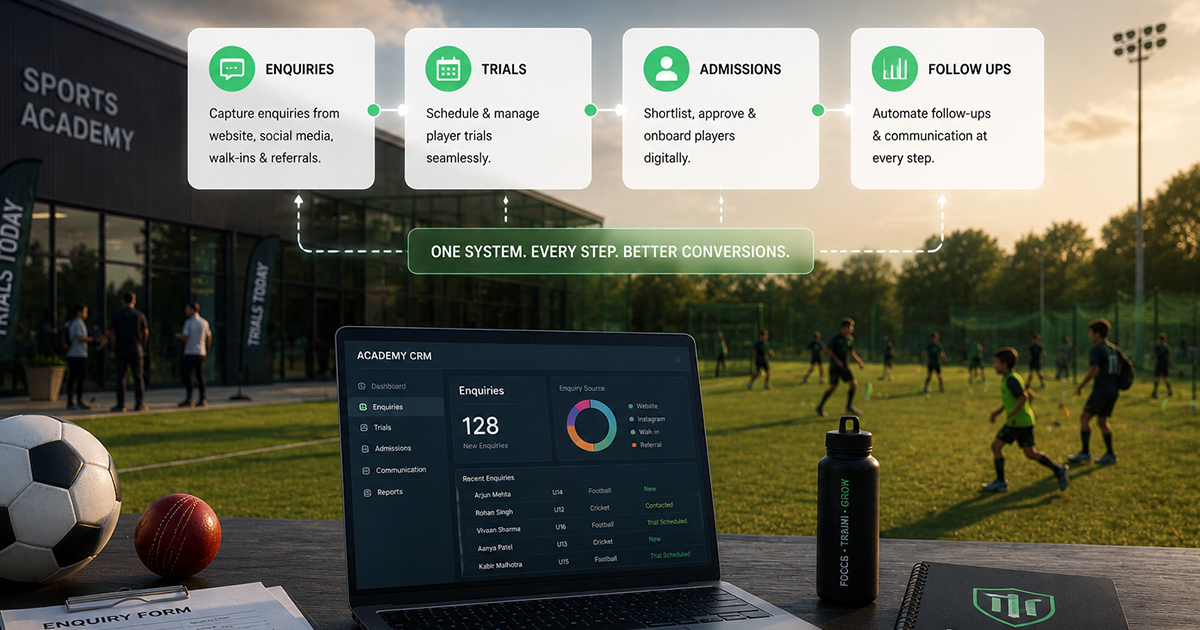
A sports academy CRM system is an essential tool that manages the flow of enquiries, conducts trials smoothly, and handles admissions efficiently. Many grassroots academies struggle with tracking interested players, following up on trials, and converting enquiries into enrolled members. This disorganization leads to lost opportunities and strained communication between coaches, parents, and academy staff. Efficient CRM systems improve the entire admissions lifecycle by providing structured tracking, automated reminders, and clear reporting. This article offers a practical guide on implementing and managing sports academy CRM processes to ensure better enrolment outcomes and operational clarity.
What Is a Sports Academy CRM System?
A sports academy CRM system is software designed to help academies manage enquiries from prospective players, organize trials, and oversee admissions through structured workflows and communication tools.
It centralizes enquiry management, scheduling, player evaluation, parent communication, and enrollment tracking into one platform, reducing manual errors and improving conversion rates.

Key Components of an Effective Sports Academy CRM System
Understanding the core modules ensures academies choose or build systems that meet their operational needs. The essential components include enquiry tracking, trial scheduling, candidate evaluation, communication management, admission processing, and reporting.
For example, a club receiving multiple enquiries weekly should have a clear system to log each contact, set reminders for follow-ups, and assign responsible staff/personnel to manage trials, rather than relying on manual spreadsheets.
A Practical Framework for Managing Enquiries, Trials, and Admissions
Implement this 6-step framework to streamline the admissions lifecycle in your academy:
- Capture & Categorize Enquiries: Record details systematically including player age, contact information, and interest area (trial or direct admission).
- Schedule and Confirm Trials: Automate trial invitations and reminders to parents and players, ensure slots are allocated fairly, and avoid overbooking.
- Trial Execution & Assessment: Use structured evaluation forms for coach feedback during or after trials to document player skills and potential objectively.
- Communicate Trial Outcomes: Notify parents promptly whether the player is accepted, waitlisted, or needs further observation, maintaining clear and respectful communication.
- Admission Processing: Manage enrollment documentation, fee payments, and player profile creation within the same system to avoid missing critical steps.
- Follow-Up & Onboarding: Once admitted, schedule orientation sessions, assign coaches, and integrate the player into batches while tracking attendance from day one.
This framework prevents process leaks that often cause delays or drop-offs in grassroots setups.
Role-Wise Responsibilities in Effective CRM Management
Players, coaches, parents, and academy owners all have vital roles in making enquiry and admission management work:
Players: Should provide accurate contact details and attend trials punctually. Engaging actively during trials and following coach guidance improves admission chances.
Coaches: Responsible for fair assessment using consistent criteria, providing timely feedback, and communicating with parents transparently about trial outcomes.
Parents: Should understand trial processes, respond promptly to communications, and manage documentation and fees efficiently to avoid bottlenecks.
Academy Owners/Managers: Must ensure the CRM system is user-friendly, data is kept updated, and workflows are monitored to identify gaps or delays, enabling continuous process improvement.
Age-Wise Approach to Admission Processes
Player age groups require tailored communication and management strategies to suit development stages and parental involvement.
U10–U13: Parents drive enquiry and trial participation; academies must provide detailed orientation for families and flexible trial scheduling due to school commitments.
U14–U17: Players should be encouraged to take responsibility for attending trials on time and understanding selection criteria; communication can become more direct with players alongside parents.
U18 and above: Players are expected to manage admissions steps more independently; academies should provide clear platforms for self-tracking and fee management.
Structured enquiry and trial management make player development seamless from day one.
Practical Checklist for Managing Enquiries, Trials, and Admissions
- Is the academy logging every enquiry with full contact and age details?
- Are trial schedules sent promptly with automated reminders?
- Are coaches using standardized evaluation forms during trials?
- Is there timely communication of trial results to parents and players?
- Is admission paperwork digitized and tracked end-to-end?
- Are fee payment follow-ups automated to reduce delays?
- Is player onboarding linked directly to batch creation and coach assignment?
- Are enquiry handling and conversion metrics reviewed monthly for improvement?
- Is parent communication clear, respectful, and available in multiple languages if needed?
- Is there a backup system to avoid data loss during peak enquiry periods?
Common Mistakes in Sports Academy Enquiry and Admission Management
Mistake 1: Relying on Manual Spreadsheets for Enquiries
Manual entry leads to missed follow-ups and disorganized data, causing potential players to slip through the cracks. Fix: Implement a CRM tool that automates data capture and reminders to ensure no enquiry is overlooked.
Mistake 2: Lack of Structured Trial Assessments
Without standardized criteria, coach evaluations vary leading to inconsistent admissions decisions. Fix: Develop and use fixed evaluation forms with measurable skill and attitude markers to ensure fairness and clarity.
Mistake 3: Late or No Communication of Trial Results
Parents and players left waiting can feel ignored, reducing trust and satisfaction. Fix: Use the CRM to automate result notifications within 48 hours and provide clear next steps.
Mistake 4: Admission Processes Decoupled from Trials
Storing admissions documents offline and untracked leads to delays in batch assignments and fee collections. Fix: Integrate admission workflows with trial outcomes in the CRM for end-to-end visibility.
Mistake 5: Overbooking Trials Without Capacity Management
Trial congestion results in rushed assessments and poor experience for players. Fix: Monitor trial slot availability and enforce booking limits per batch or time slot through the CRM.

An 8lete-Aligned Workflow for Managing the Sports Academy Enquiry to Admission Cycle
Within a grassroots sports academy, the sequence typically follows:
Enquiry Registration & Batch Segmentation → Trial Scheduling with Automated Confirmation → Player Trial & Coach Assessment Note → Parent Communication on Trial Outcome → Admission Processing including Fees → Player Onboarding & Batch Allocation.
This seamless flow minimizes errors and ensures all stakeholders have visibility at every step, establishing trust and disciplined intake management.
Grassroots Examples of CRM Impact
Example 1: A football academy that previously used WhatsApp groups to schedule trials switched to a CRM system, resulting in a 30% improvement in trial attendance and simpler follow-ups.
Example 2: A multi-sport academy introduced standardized coach trial evaluation forms via their CRM. This led to more equitable admissions and clearer reporting to parents.
Example 3: An academy owner struggled with fee delays post-admission. On integrating the admissions and fee module in the CRM, payment reminders became automated, reducing late payments by half.
FAQs
See the FAQ section below for answers to common queries on managing a sports academy CRM system.
Conclusion
Managing sports academy enquiries, trials, and admissions without structure limits an academy’s growth and player satisfaction. Grassroots academies often underestimate the complexity of intake processes and the communication needs of parents and players. Without a reliable system, important data slips through, follow-ups fail, and trust erodes. On the other hand, implementing a sports academy CRM system designed with enquiry tracking, trial assessments, automated reminders, and admissions workflows creates transparency and efficiency. This enables coaches to focus on player evaluation, parents to feel informed, and academy owners to drive sustainable member growth. Prioritize building this structured operational backbone and connect it with your attendance, fees, and player development tracking for the best long-term results.
What is a sports academy CRM system and why is it important?
A sports academy CRM system is software that manages player enquiries, trial scheduling, assessments, and admissions in a centralized way. It improves communication, reduces manual errors, and helps academies convert enquiries into enrollments more efficiently.
How can I improve the trial conversion rate using CRM tools?
Using CRM tools, you can automate reminders, standardize trial assessments, and communicate promptly with parents. This reduces trial no-shows and builds trust, leading to higher conversion from trials to admissions.
What are the key steps in managing admissions through a sports academy CRM?
Key steps include capturing enquiries, scheduling trials, standardized coaching assessments, communicating results promptly, managing documentation and fees digitally, and onboarding players efficiently into batches.
Why do many sports academies struggle with managing enquiries and trials?
Many rely on manual methods like spreadsheets or messaging apps that lack follow-up automation and data centralization. This causes missed communications, overbooked trials, and inconsistent evaluations, hurting enrolment success.
How does parent communication improve with a sports academy CRM system?
A CRM system enables timely, professional, and clear communication through automated emails or SMS. Parents receive updates about trial schedules, results, and admission steps, reducing confusion and building trust.
What is the best age-wise approach for handling trial admissions?
For U10–U13, focus on parent engagement and flexible scheduling. U14–U17 players should gradually take more responsibility with direct communication, while U18+ players manage many steps independently, requiring self-service tools.
How long does it take to implement a CRM system effectively in a sports academy?
Implementation typically takes 4 to 8 weeks, covering data setup, staff training, and workflow customization. Adequate planning and phased adoption ensure smooth integration without disrupting ongoing operations.

Related Articles
 Read More about Grassroots Football Club Management Software India: Best Tools and Practices for Efficient Club Operations
Grassroots Football Club Management Software India: Best Tools and Practices for Efficient Club Operations
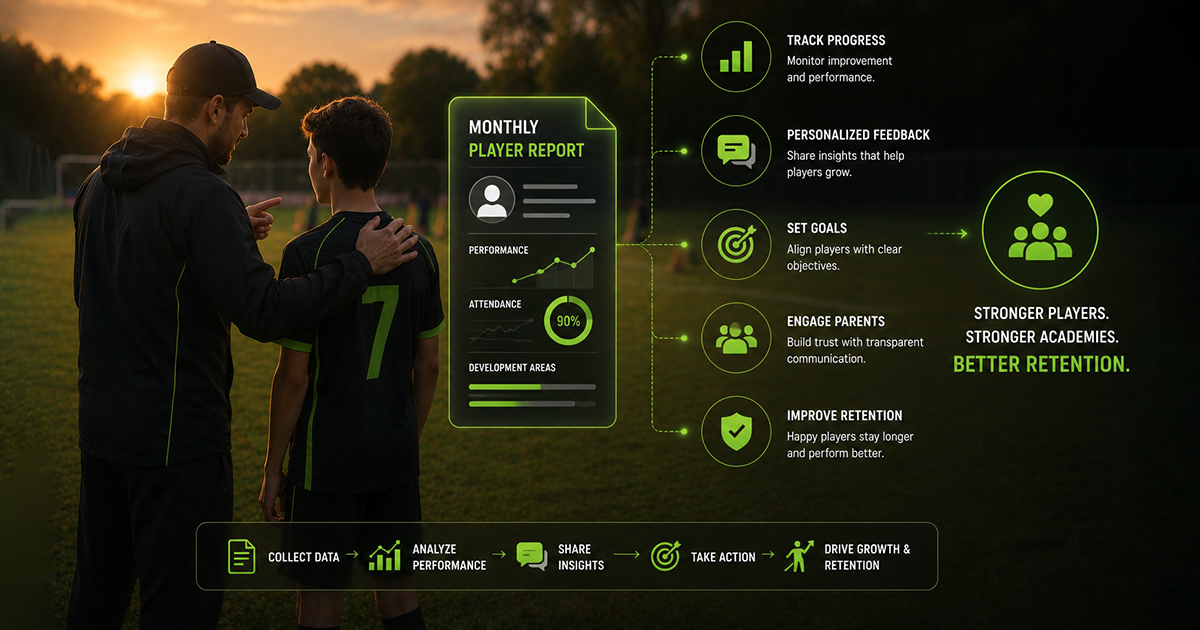 Read More about How Academies Can Use Monthly Player Reports to Improve Retention
How Academies Can Use Monthly Player Reports to Improve Retention
 Read More about Digital Player Record Management for Academies: How Football and Cricket Clubs Can Modernize
Digital Player Record Management for Academies: How Football and Cricket Clubs Can Modernize
Latest Articles
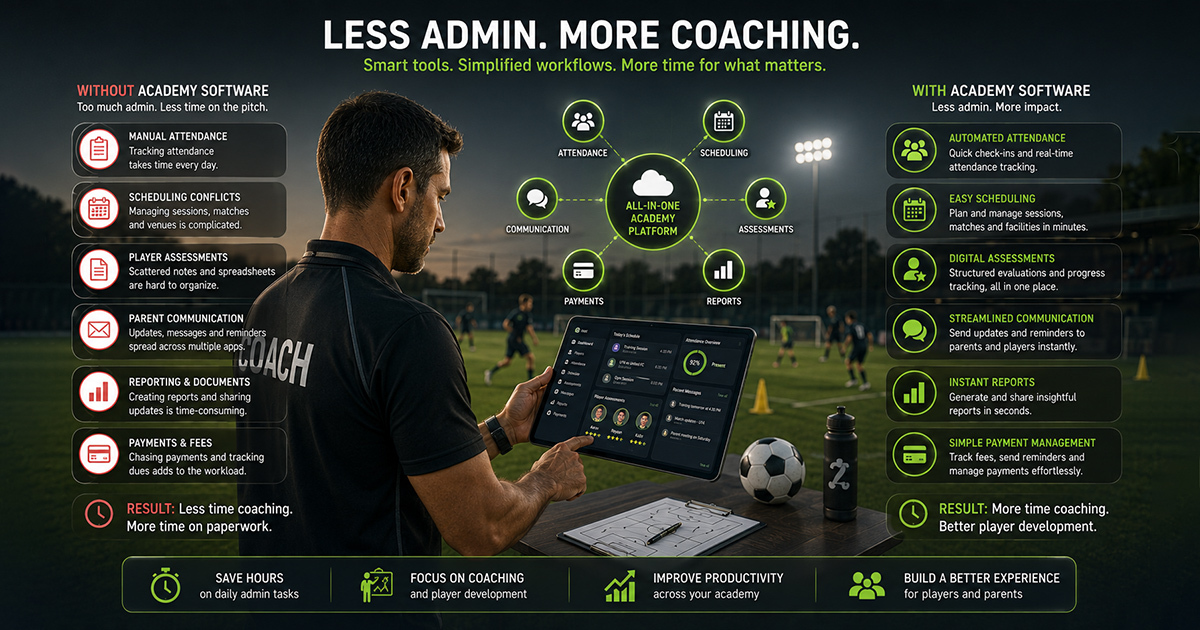 Read More about How Sports Academies Can Reduce Admin Work for Coaches
How Sports Academies Can Reduce Admin Work for Coaches
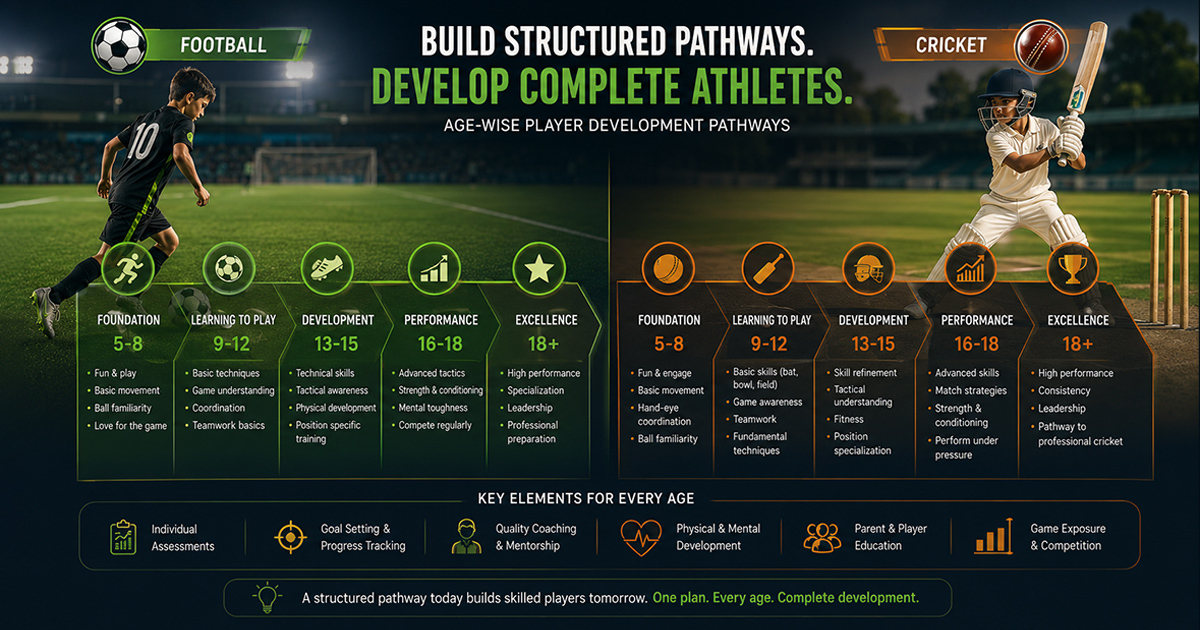 Read More about How to Build Age-Wise Player Development Pathways in Football and Cricket
How to Build Age-Wise Player Development Pathways in Football and Cricket
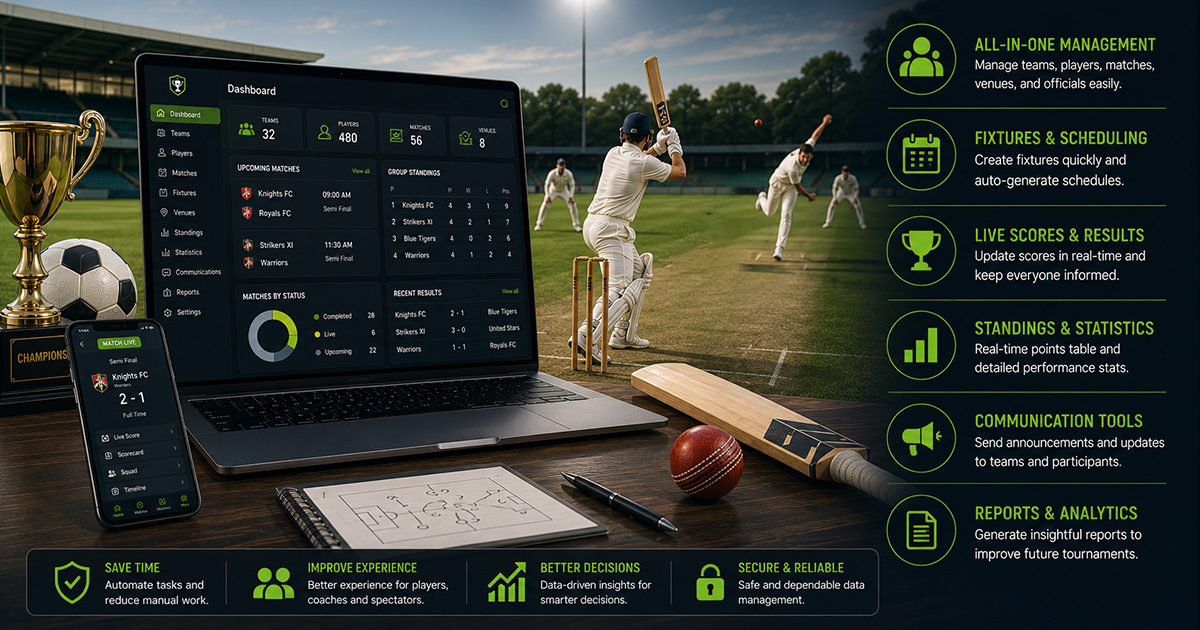 Read More about Tournament Management Software for Football and Cricket Organizers: A Practical Guide
Tournament Management Software for Football and Cricket Organizers: A Practical Guide
Ready to Bring Structure to Your Academy?
Let’s walk through your current setup and show you how 8lete can improve it.


