



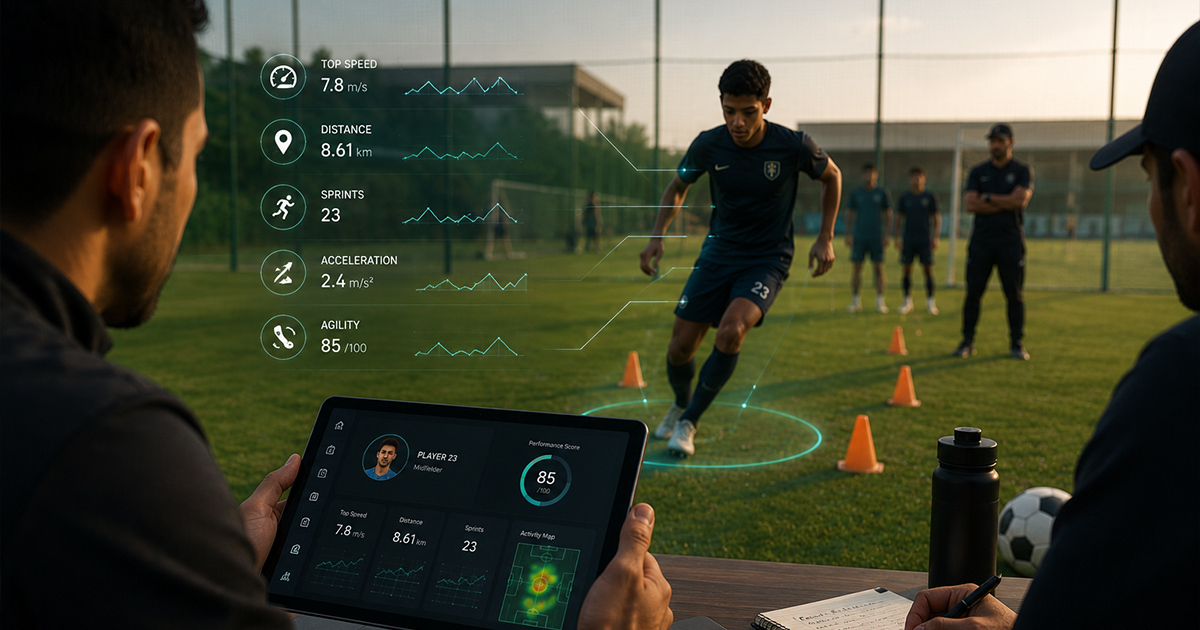
AI Sports Skill Assessment: How Technology Can Measure Player Skills Better
AI sports skill assessment refers to the use of advanced technology, including artificial intelligence, to objectively measure and evaluate the skills of players in grassroots sports. Many players, parents, and coaches struggle to understand how to track real progress beyond subjective opinions or limited match observations. This article explains why AI-based assessments can provide clearer, data-backed insights into player performance and how this technology supports long-term development through consistent training, feedback, and structured tracking.
What Is AI Sports Skill Assessment and Why Does It Matter?
AI sports skill assessment uses algorithms, video analysis, sensor data, and machine learning models to evaluate a player's technique, decision-making, physical output, and tactical understanding. This approach moves beyond subjective evaluation to provide measurable, repeatable insights.
For young players and parents, this means more transparent feedback and milestones. Coaches gain a tool to customize training and track progress over time. Academies benefit from systematic reports and objective data, essential for structured development rather than guesswork.
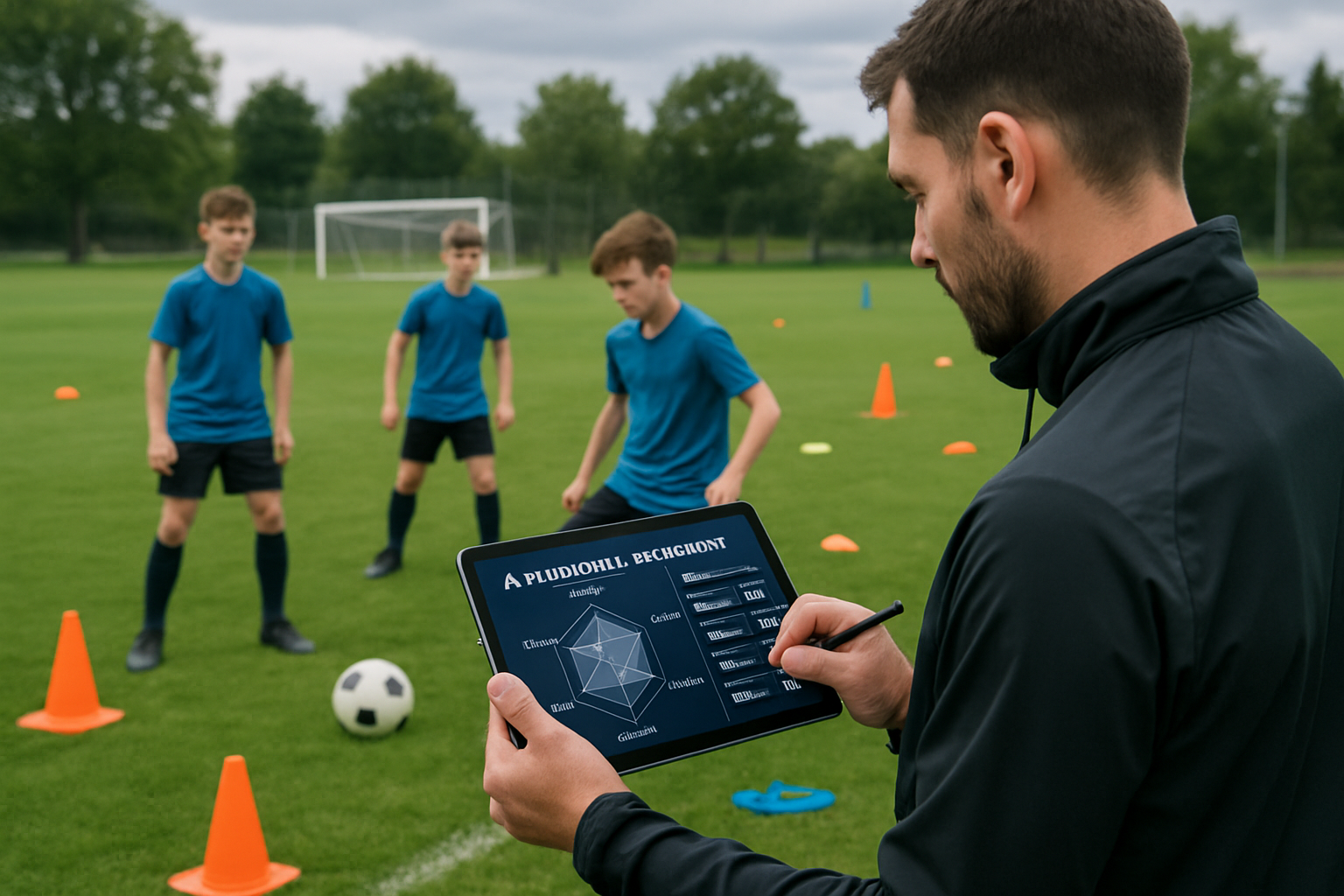
A Practical Framework for Implementing AI Sports Skill Assessment
To effectively use AI sports skill assessment in grassroots development, academies and coaches should follow a step-by-step framework ensuring meaningful impact:
1. Goal Definition: Identify what skills or performance metrics to assess, such as passing accuracy, decision speed, stamina, or technical form. Clear goals help tailor AI tools to relevant evaluations.
2. Data Collection Setup: Use video recordings, wearable sensors, or app inputs to gather raw data during training, matches, and skill drills. Ensuring consistent data capture is critical for reliable assessments.
3. AI Analysis and Pattern Recognition: The AI processes inputs to detect skill patterns, errors, or improvements, such as foot positioning or tactical movement. This replaces guesswork with precise observation.
4. Performance Reporting: Translate AI findings into easy-to-understand reports for players, parents, and coaches. This keeps everyone aligned on development needs and successes.
5. Training Adjustment and Feedback: Use assessment insights to customize drills, focus areas, and coaching points. Regular feedback loops reinforce learning and track progress.
6. Long-Term Tracking: Maintain continuous data logs to observe trends, plateaus, or breakthrough moments, enabling strategic developmental decisions.
7. Parent and Player Communication: Share AI-derived progress reports not only as numbers but with context and recommended actions, ensuring transparency and motivation.
Role-Wise Guide: What AI Sports Skill Assessment Means for Each Stakeholder
Players: Gain objective insights on strengths and areas needing work beyond coach comments. Understanding specific metrics like reaction time or execution accuracy helps refine training focus.
Coaches: Access structured, unbiased assessment data to enhance coaching plans. AI helps identify patterns such as recurring errors in passing or defensive positioning and supports personalized session design.
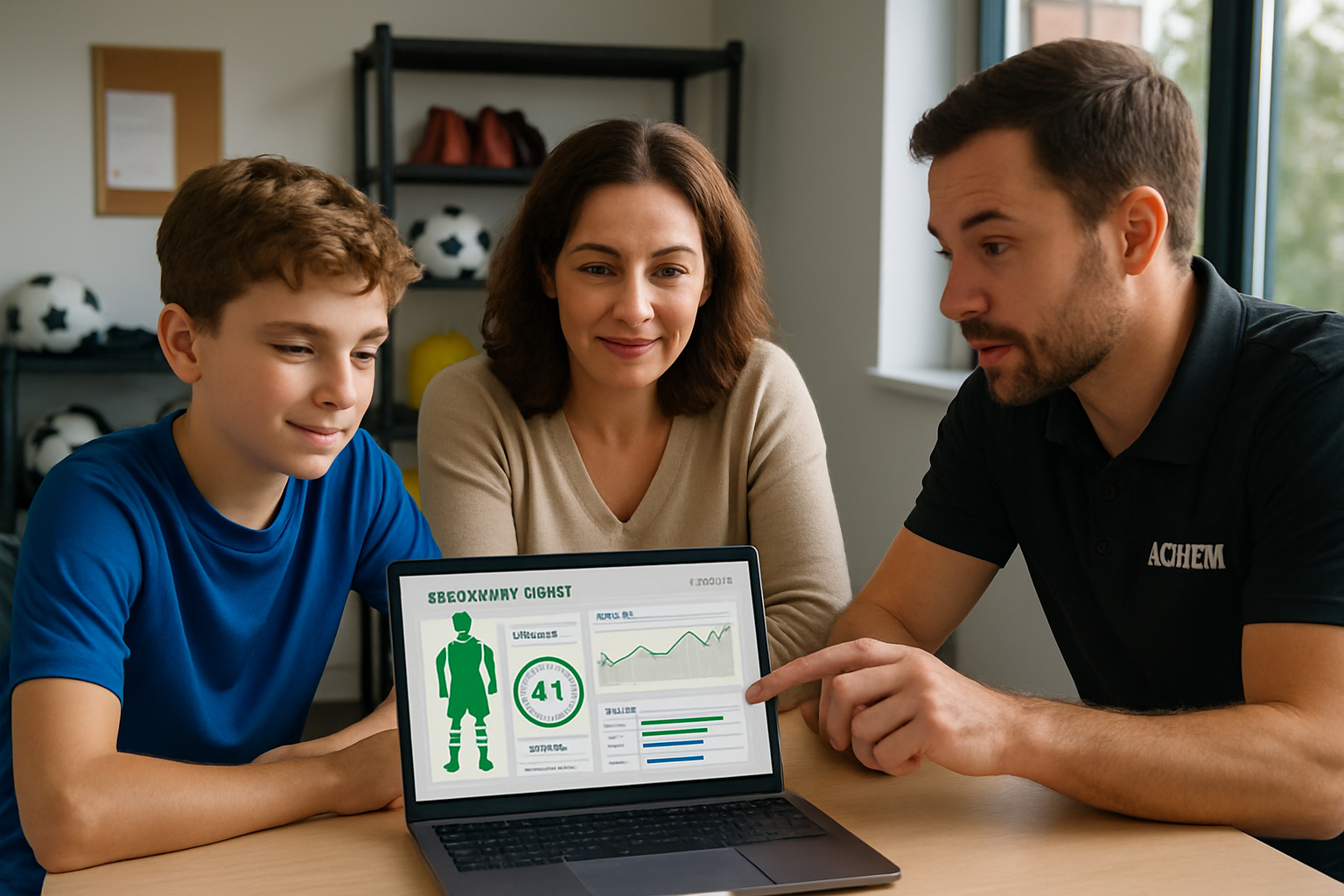
Parents: Receive clear progress updates that explain skill development stages with quantified evidence. This improves trust in training programs and guides support at home without unrealistic pressure.
Academy Owners: Implement scalable systems that track player development efficiently. AI assessments reduce reliance on memory or inconsistent observations, support batch planning, and improve retention through transparent reports.
Age-Wise Implementation for AI Skill Assessment in Grassroots Sports
U8–U10: Focus AI tools on basic motor skills, coordination, and engagement levels. Data gathered should highlight balance, footwork speed, and fundamental technique consistency.
U11–U13: Expand assessment to technical skills and decision-making in small-sided game scenarios. AI can track passing choices or movement patterns under pressure.
U14–U16: Use AI to analyze tactical awareness, stamina, and skill execution in match-like conditions. Detailed feedback on positioning and transitions supports tactical development.
U17+: Incorporate comprehensive physical, technical, and psychological metrics. AI assessment focuses on performance under fatigue, recovery patterns, and mental responses to in-game scenarios.
“Consistent, data-driven feedback from AI turns guesswork into clear steps for growth and progress.
Consistent, data-driven feedback from AI turns guesswork into clear steps for growth and progress.
"Consistent, data-driven feedback from AI turns guesswork into clear steps for growth and progress."
Concrete Grassroots Examples Demonstrating AI Skill Assessment Benefits
1. A local football academy recorded weekly passing drills using video. AI analysis showed a player’s first-touch delay under pressure. The coach introduced targeted small-group sessions improving quick decisions within two months.
2. Parents at a sports club received detailed monthly AI reports highlighting their child’s stamina and recovery times. This clarity changed home habits, adjusting sleep and nutrition leading to visible endurance gains.
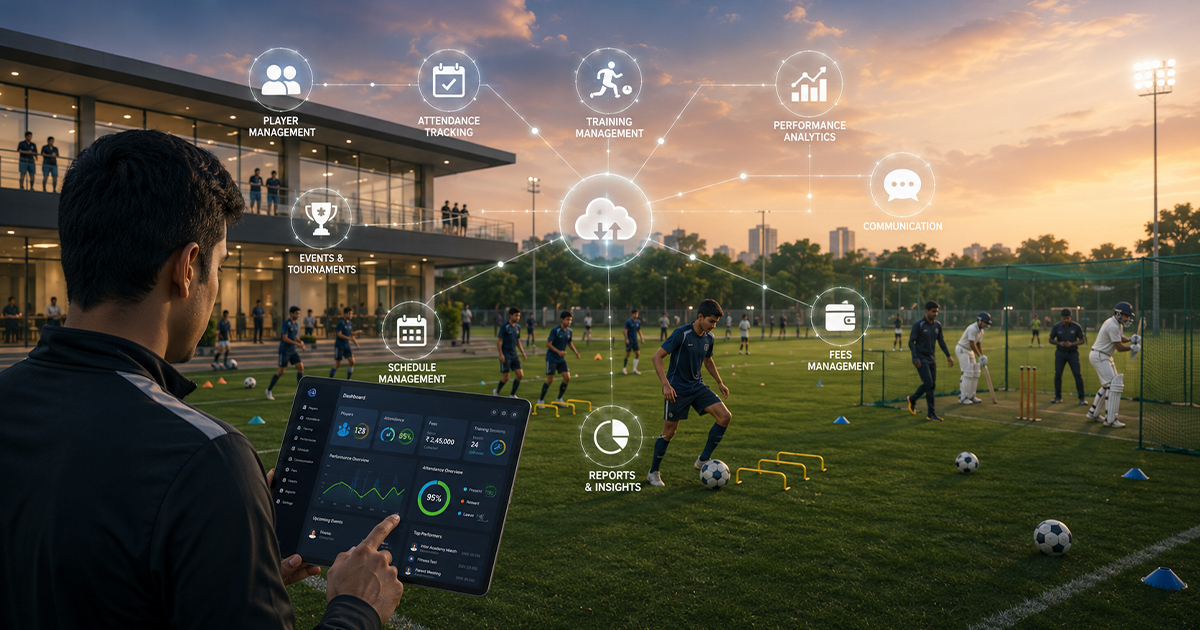
3. An academy owner used AI attendance, training data, and assessments combined into dashboards that exposed batch imbalances. Adjusted schedules and coach assignments balanced training quality and improved player progression rates.
Practical checklist
Use this checklist to implement or evaluate AI sports skill assessment effectively at your club or academy:
- ✓ Are assessment goals clearly defined and communicated?
- ✓ Is data collection consistent for training and match sessions?
- ✓ Is AI analysis linked to specific skill areas relevant to players' age and stage?
- ✓ Are coaches trained to interpret AI feedback into actionable drills?
- ✓ Do players receive understandable progress reports with clear next steps?
- ✓ Are parents informed and engaged with AI-driven updates on development?
- ✓ Does the academy system integrate AI data with attendance and training logs?
- ✓ Is there a feedback loop for adjusting training programs based on assessment trends?
- ✓ Are technical issues like video clarity or sensor accuracy regularly checked?
- ✓ Is long-term data tracking maintained for performance trend analysis?
Common mistakes
Mistake 1: Overreliance on Technology Without Clear Goals
Without defined skill targets, AI data becomes noise. Fix by setting measurable objectives aligned with player development stages before assessment.
Mistake 2: Poor Data Quality
Using low-quality video or inconsistent measurement causes unreliable insights. Fix with proper setup protocols and regular equipment checks.
Mistake 3: Ignoring Human Interpretation
Blindly trusting AI without coach contextualization misses nuances. Fix by combining AI reports with coach observations for balanced feedback.
Mistake 4: Lack of Parent Involvement
Not communicating AI findings to parents leads to confusion or misplaced expectations. Fix by providing clear, jargon-free reports and guidance on at-home support.
Mistake 5: Not Tracking Progress Over Time
One-time assessments do not show development. Fix by building a continuous data tracking system with regular AI evaluations and review meetings.
An 8lete-Aligned Workflow for AI Player Skill Assessment Integration
A practical workflow to embed AI assessments in grassroots training and ensure structured development involves:
Session Planning → Attendance Tracking → AI Data Collection → Coach Assessment Notes → Player & Parent Feedback Reports → Goal Setting for Next Session
In this cycle, coaches capture attendance to ensure discipline. AI collects and analyzes performance during sessions. Coaches then add qualitative notes to complement AI insights. Reports shared with players and parents improve transparency and encourage targeted effort. Finally, concrete, measurable goals are set for future training.
FAQ
What is AI sports skill assessment?
It is the use of artificial intelligence and technology to objectively analyze a player’s skills, techniques, and physical performance, providing measurable data for development.
How does AI help in grassroots sports training?
AI provides consistent, unbiased evaluations that help coaches identify strengths and weaknesses more accurately, enabling personalized training interventions.
How can players improve using AI coaching aids?
Players can receive precise feedback on specific skill areas, practice targeted drills, and track progress over time, fostering focused improvement and confidence.
Why am I not improving despite training hard?
Without structured assessment, effort may miss key weaknesses. AI data can reveal technical flaws or training inconsistencies that require adjustment.
When should academies start using AI assessments?
It’s best to start when players develop basic coordination and technique (around U10+). Integration should be gradual to ensure data quality and user understanding.
How to manage the costs of AI technology?
Start with affordable tools like smartphone video apps and expand to sensors or advanced platforms as the club grows to balance investment and benefit.
What role do parents play in AI-based player improvement?
Parents should focus on understanding reports, supporting recommended at-home practices, and encouraging consistent training without added pressure.
Conclusion
AI sports skill assessment offers a transformative opportunity to make player development more precise, transparent, and efficient. Through objective measurement, consistent tracking, and clear feedback, players gain a realistic understanding of their progress while coaches can tailor training intelligently. Parents benefit from seeing tangible evidence of growth, creating a supportive environment. The key is to build a structured system combining AI data with human coaching, attendance discipline, goal setting, and parent communication. This ensures AI is a tool for real, sustainable development rather than just complex technology. For any grassroots academy or club, adopting AI thoughtfully aligns with proven principles of long-term growth: clear goals, consistent effort, informed feedback, and transparent tracking. Implementing this technology-driven approach today lays a foundation for smarter training habits and steady progress tomorrow, empowering every role in the ecosystem to contribute effectively to player success beyond just short-term results.
What is AI sports skill assessment?
It is the use of artificial intelligence and technology to objectively analyze a player’s skills, techniques, and physical performance, providing measurable data for development.
How does AI help in grassroots sports training?
AI provides consistent, unbiased evaluations that help coaches identify strengths and weaknesses more accurately, enabling personalized training interventions.
How can players improve using AI coaching aids?
Players can receive precise feedback on specific skill areas, practice targeted drills, and track progress over time, fostering focused improvement and confidence.
Why am I not improving despite training hard?
Without structured assessment, effort may miss key weaknesses. AI data can reveal technical flaws or training inconsistencies that require adjustment.
When should academies start using AI assessments?
It’s best to start when players develop basic coordination and technique (around U10+). Integration should be gradual to ensure data quality and user understanding.
How to manage the costs of AI technology?
Start with affordable tools like smartphone video apps and expand to sensors or advanced platforms as the club grows to balance investment and benefit.
What role do parents play in AI-based player improvement?
Parents should focus on understanding reports, supporting recommended at-home practices, and encouraging consistent training without added pressure.
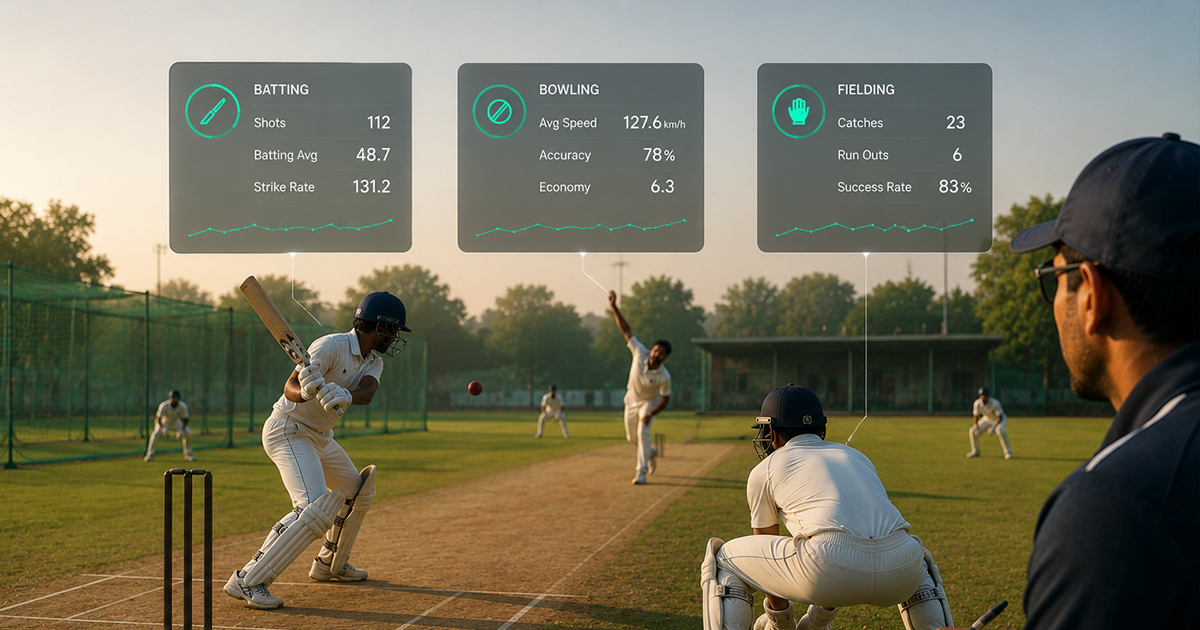
Related Articles
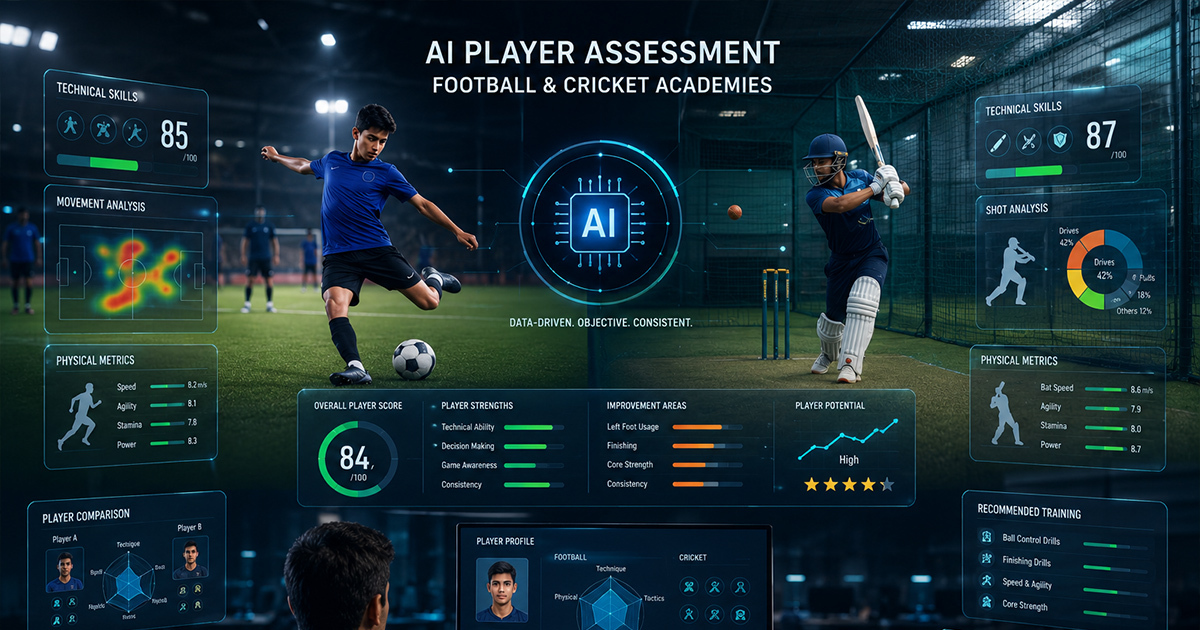 Read More about AI Player Assessment Software: Transforming Player Development in Football and Cricket Academies
AI Player Assessment Software: Transforming Player Development in Football and Cricket Academies
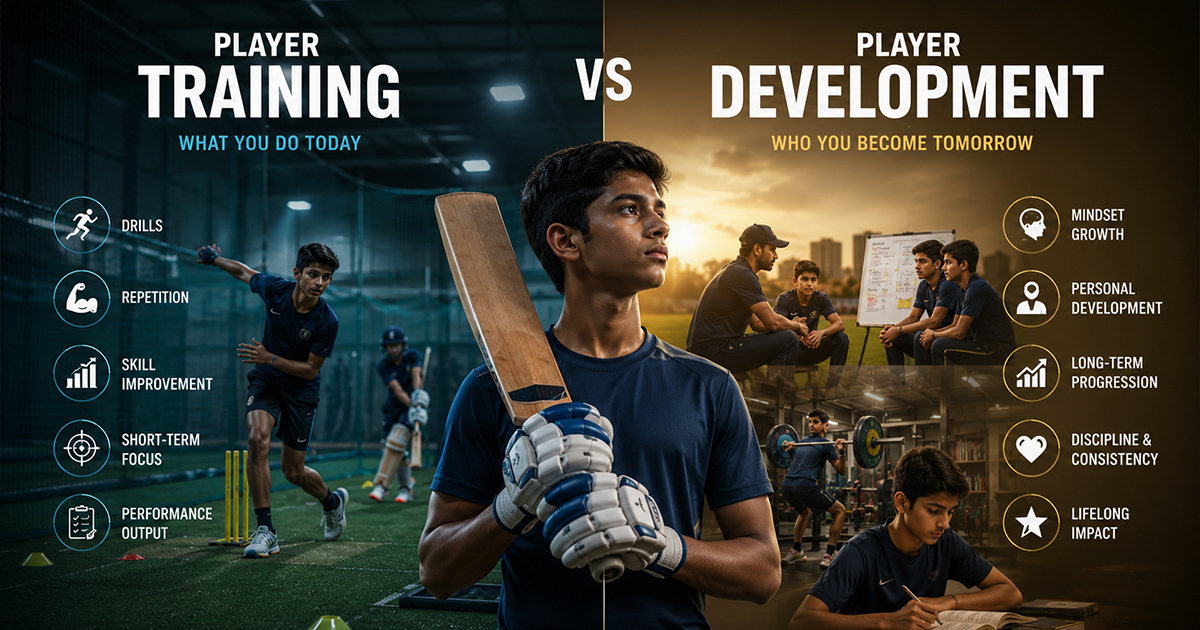 Read More about Player Development vs Player Training: What Every Academy Must Understand
Player Development vs Player Training: What Every Academy Must Understand
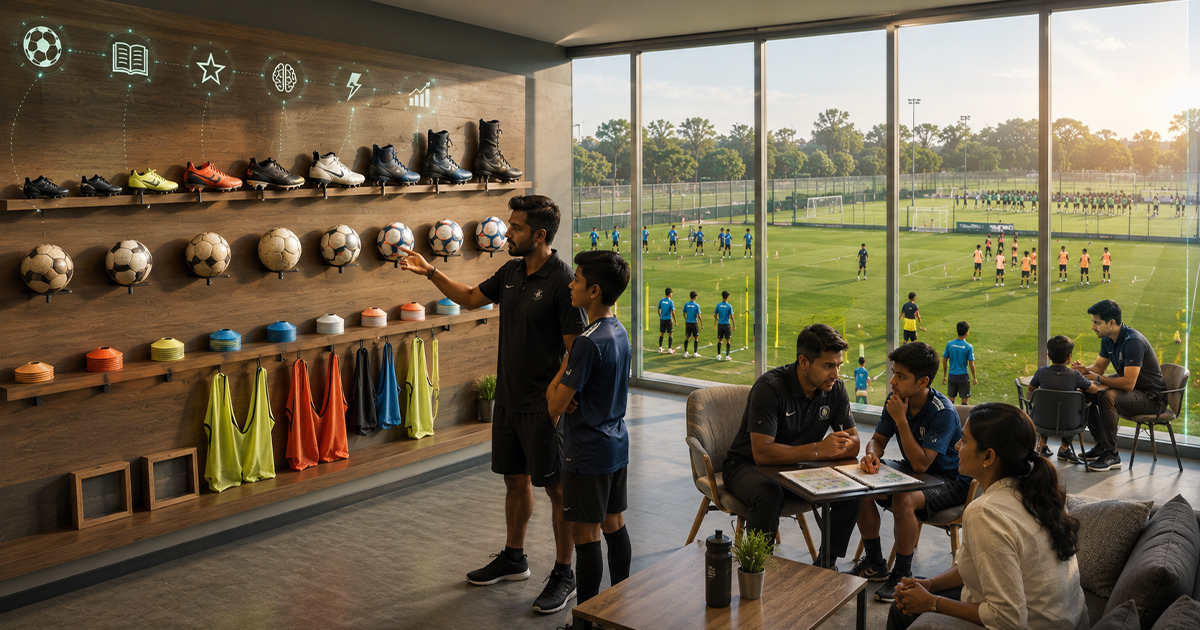 Read More about How to Build a Football Development Plan for Youth Players Aged U10 to U18
How to Build a Football Development Plan for Youth Players Aged U10 to U18
Latest Articles
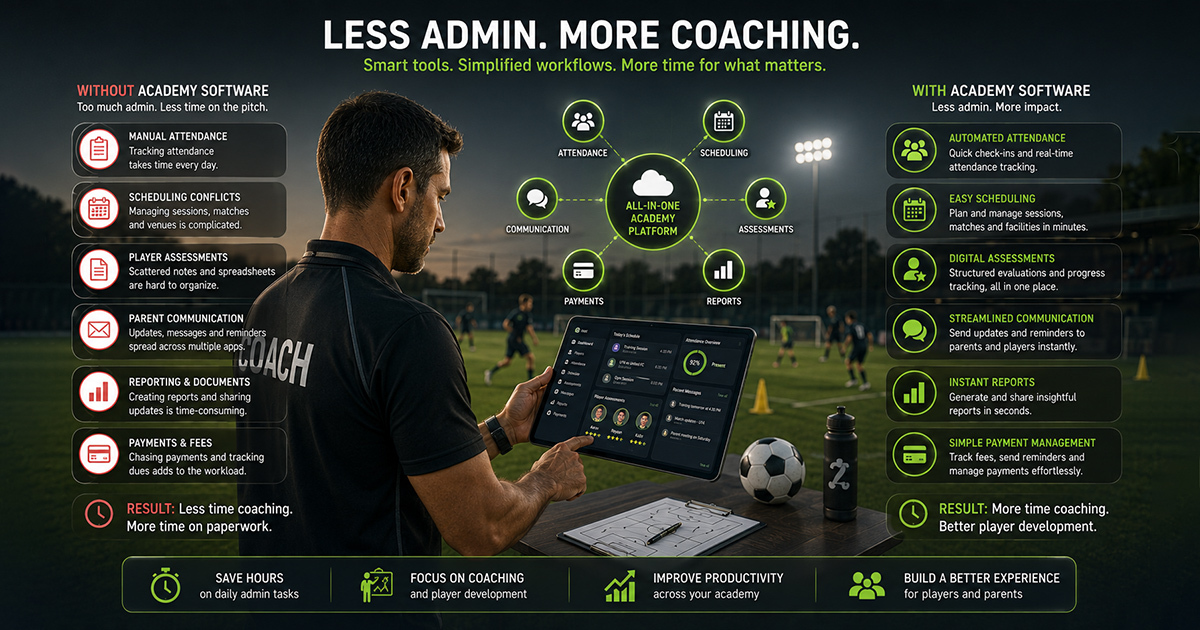 Read More about How Sports Academies Can Reduce Admin Work for Coaches
How Sports Academies Can Reduce Admin Work for Coaches
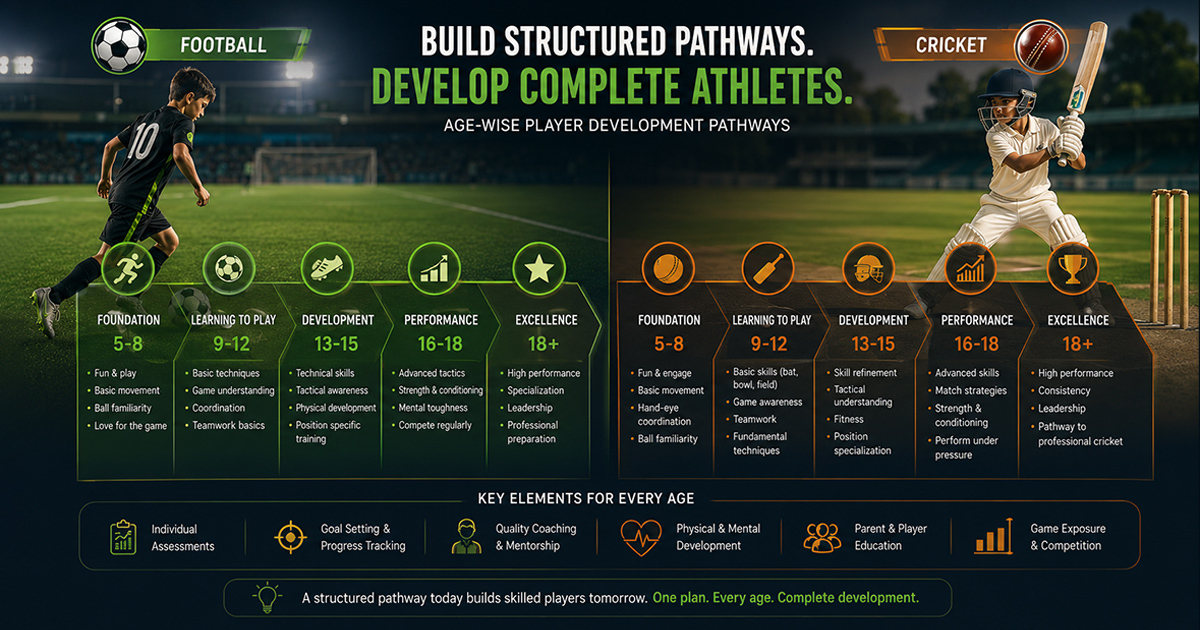 Read More about How to Build Age-Wise Player Development Pathways in Football and Cricket
How to Build Age-Wise Player Development Pathways in Football and Cricket
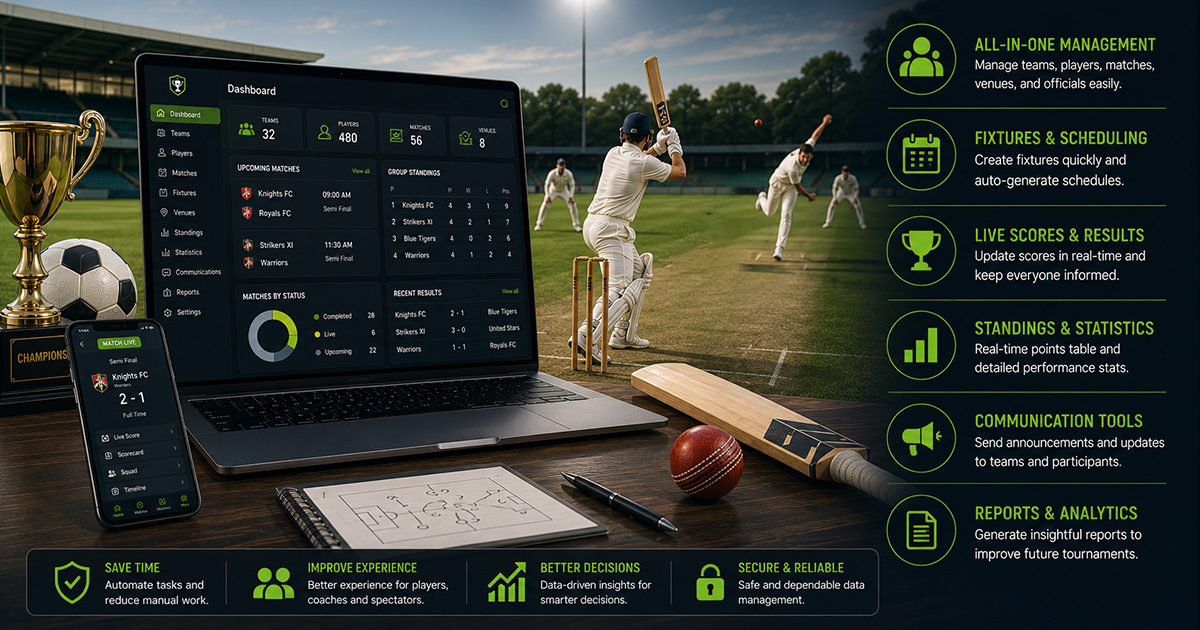 Read More about Tournament Management Software for Football and Cricket Organizers: A Practical Guide
Tournament Management Software for Football and Cricket Organizers: A Practical Guide
Ready to Bring Structure to Your Academy?
Let’s walk through your current setup and show you how 8lete can improve it.


