




Cricket and Football Academy Management: What Clubs Can Learn from Both Sports
Effective cricket and football academy management involves integrating diverse operational and developmental practices that suit the unique demands of each sport while supporting grassroots clubs in delivering consistent player growth. Many grassroots clubs face difficulties balancing coaching quality, attendance discipline, parent communication, and structured progress tracking. Understanding and learning from how cricket and football academies organize training, assessments, and club workflows can help academies improve operations and long-term player development. This article presents practical management strategies clubs should adopt by analyzing cricket and football academy lessons for better grassroots sports governance.
Defining Cricket and Football Academy Management
Cricket and football academy management refers to the systematic organization of coaching, player development, administration, and communication within grassroots clubs dedicated to either or both sports. It focuses on creating structured environments where clear goals, attendance discipline, feedback mechanisms, player assessments, and parent engagement form the foundation for sustainable club growth and long-term player visibility.
Successful management balances sport-specific training demands—such as cricket’s technical net sessions and football’s tactical drills—with academy-level systems, including attendance tracking, fees management, and progress reporting.
Cricket vs Football Academy Operations: Core Differences and Shared Principles
Cricket academies emphasize controlled skill repetition, technical assessment of batting, bowling, and fielding, and match temperament conditioning. Net sessions and precise skill measurement are key.
Football academies focus more on physical conditioning, positional understanding, decision-making under pressure, and transferring training to match scenarios. Small-sided games and tactical awareness sessions dominate.
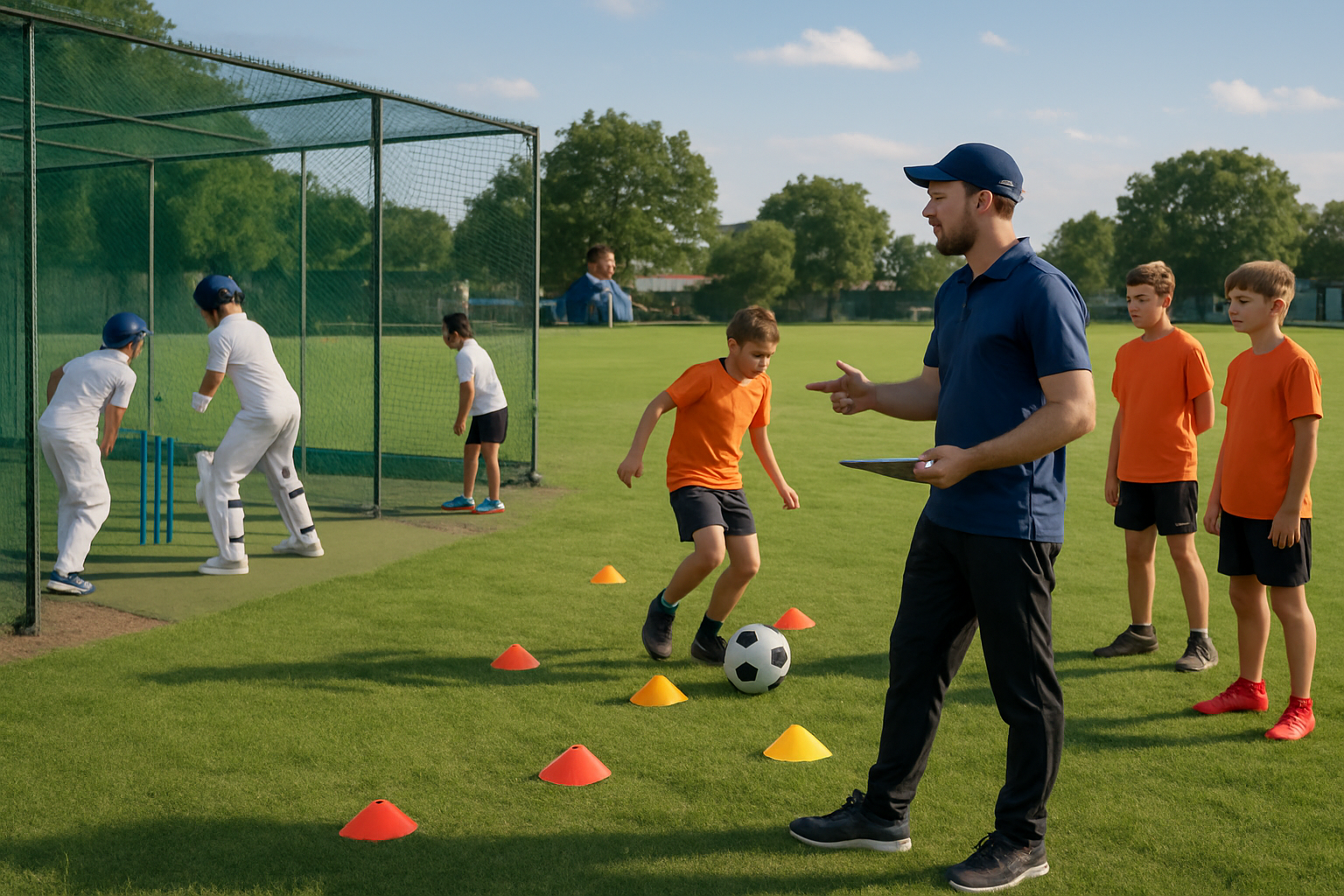
A Practical Management Framework for Combined Cricket and Football Academies
Integrating cricket and football academy management requires a tailored approach. Here is a 6-point framework clubs can use:
- 1. Sport-Specific Session Planning: Design training batches and weekly sessions according to sport needs—batting and bowling drills for cricket; passing, pressing, and finishing for football.
- 2. Consistent Attendance Tracking: Maintain attendance discipline with automated systems to correlate training consistency with progress.
- 3. Structured Player Assessments: Use regular technical and tactical evaluations fitting each sport, combined with AI-powered performance data where possible.
- 4. Effective Coach Workflows: Standardize coach notes and feedback protocols to capture training observations and development points systematically.
- 5. Parent Communication and Progress Reports: Keep parents informed with transparent reporting that connects practice attendance, assessments, and next goals for clarity and trust.
- 6. Integrated Operations Management: Use unified academy systems for fees, enquiries, batch management, and player tracking to avoid operational silos.
Each point ensures that cricket and football academies under one roof or separate clubs develop a structured ecosystem that supports sustained player progression.
Role-Wise Management Insights: Players, Coaches, Parents, and Academy Owners
Players must focus on disciplined attendance, embracing coach feedback, and actively reviewing their progress reports to set achievable sport-specific goals.
Coaches should observe sport-related performance markers—batting footwork or passing accuracy—and consistently log assessments linked to attendance and training load for a holistic view.
Parents need to understand the broader development timeline beyond immediate results, asking for regular updates and clarifications on training focus and progression standards.
Academy Owners must build integrated workflows supporting enquiry handling, batch allocation based on age and skill, fees collection, attendance monitoring, and coordinating training plans aligned to each sport’s structure.
Age-Wise and Stage-Wise Implementation for Cricket and Football Academies
U8–U10: Focus on basic coordination and sport introduction—football ball mastery fundamentals, cricket hand-eye coordination drills; light, fun sessions maintain engagement.
U11–U13: Emphasize technical consistency—batting stance correction, basic bowling lines in cricket; passing drills, positional discipline in football.
U14–U16: Develop tactical understanding—match simulations and decision-making exercises for both sports; structured feedback intensifies.
U17+: Prioritize performance analysis and specialization—video review, mental strength work, detailed fitness monitoring tailored to cricket’s endurance and football’s agility demands.
Consistent tracking and structured feedback create the foundation for meaningful player growth across sports.
Practical checklist
Use this checklist to assess cricket and football academy management readiness:
- Are sport-specific training sessions planned with clear weekly goals?
- Is attendance tracked consistently and linked to development data?
- Do coaches provide written feedback regularly after sessions and matches?
- Are player assessments conducted separately for cricket and football to reflect skill sets?
- Is parent communication scheduled and transparent, including progress reports?
- Are fees, enquiries, and batch schedules managed in an integrated system?
- Does the academy collect data on both training and match performance?
- Are batches grouped by age and skill stage to ensure tailored coaching?
- Is there a feedback loop connecting coaches, players, and parents?
- Does the academy maintain digital records supporting scouting visibility and long-term growth?
Common mistakes
Mistakes made in cricket and football academy management often stall player growth and cause operational inefficiencies. Here are common pitfalls and how to fix them:
- Mixing training goals without sport focus: Trying to apply identical drills for cricket and football confuses players and coaches. Fix: Maintain distinct sport-specific session plans while sharing best operational practices.
- Poor attendance discipline: Irregular attendance masks true progress and wastes resources. Fix: Implement reliable attendance tracking linked to coaching plans and player reports.
- Lack of structured feedback: Coaches noting observations only mentally or verbally miss opportunities for consistent follow-up. Fix: Use standardized forms or apps to capture and share detailed assessments.
- Ignoring parent communication: Parents may become disengaged or concerned if uninformed. Fix: Schedule regular reports and open channels for queries; educate parents about long-term development principles.
- Manual and siloed operations: Separate management of fees, batches, and assessments duplicates effort and risks errors. Fix: Adopt integrated management workflows linking major operational areas for clearer oversight.
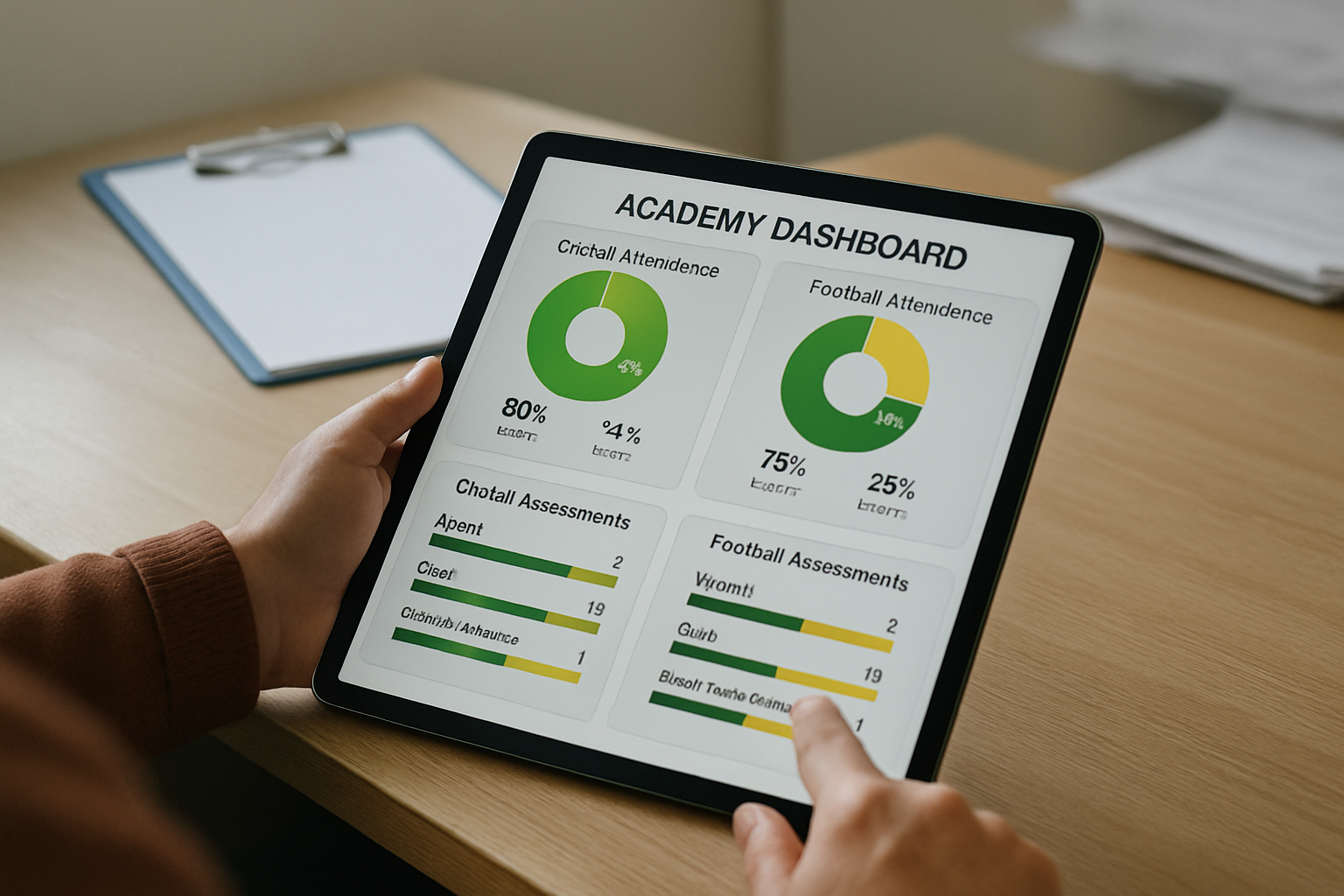
Concrete grassroots examples of integrated academy management
1. A multi-sport academy running football and cricket simultaneously noticed attendance dips impacting football skill retention. Implementing digital attendance linked to coaching plans helped highlight absences early and automatically informed parents, improving player consistency.
2. A cricket club struggled with slow bowling progression. Coaches introduced detailed bowling rhythm assessments post-net sessions and used video reviews during feedback. This structured review improved player understanding and technique refinement.
3. A football academy coordinated batches by age groups but lacked communication on player progress. Implementing monthly progress reports with parent-friendly language improved trust and decreased dropout rates by showing transparent pathways for growth.
An 8lete-aligned workflow example: From Session to Progress Report
A practical workflow to run a combined cricket and football session smoothly includes:
Session Plan → Attendance Marking → Player Skill Assessment → Coach Notes Entry → Parent Progress Report → Next Goal Setting. This structured flow ensures each stakeholder stays informed, progress is tracked quantitatively, and coaching remains focused on individual and team goals.
Using this type of workflow, academies can link attendance discipline with measurable skill data and parental communication, reducing gaps caused by unrecorded progress or misunderstandings.
What is cricket and football academy management?
Cricket and football academy management is the organized process of running coaching, player development, and operations specifically tailored for cricket and football grassroots clubs. It involves session planning, attendance tracking, skill assessments, coach feedback, parent communication, and integrated administrative systems to support sustainable growth.
How to improve cricket and football academy operations?
Improving operations starts with setting clear sport-specific training goals, enforcing consistent attendance, standardizing player assessments, maintaining active communication with parents, and using integrated management systems for administration. Regular coaching feedback and data tracking ensure continuous improvement in both sports.
Why do grassroots sports clubs struggle with managing multi-sport academies?
Clubs often face challenges because cricket and football require distinct training methods and operational priorities. Without clear separation of session plans and sport-specific assessments, confusion arises. Lack of integrated management tools to handle batches, attendance, and fees across sports can cause inefficiencies and communication breakdowns.
How can coaches integrate training methods effectively in a multi-sport academy?
Coaches should design sport-specific drills and evaluations while collaborating on shared academy goals like attendance discipline and structured feedback. Utilizing standardized workflows and reporting tools helps ensure consistent development tracking across cricket and football without mixing training content.
What are the best practices for club management in grassroots cricket and football?
Best practices include planning sessions around sport demands, monitoring attendance scrupulously, performing regular technical and tactical assessments, maintaining transparent parent communication, managing administrative tasks through unified systems, and focusing on long-term player progress over quick results.
How does parent communication affect grassroots academy success?
Parents who receive clear, regular updates about training focus, attendance impact, and player assessments build trust in the academy. This transparency encourages consistent player attendance and reduces dropouts, contributing to sustainable academy growth.
What is the best age-wise approach to training in cricket and football academies?
Between U8 and U10, focus on basic coordination and fun introduction to skills. U11 to U13 should develop consistent technique. U14 to U16 focuses on tactical understanding and match simulations. U17+ emphasizes performance analysis, specialization, and mental strength to prepare for advanced competition.

Related Articles
 Read More about Attracting Students to Sports Academies: Effective Strategies Without Heavy Advertising
Attracting Students to Sports Academies: Effective Strategies Without Heavy Advertising
 Read More about How to Run Fair and Transparent Sports Trials for Young Athletes: A Guide for Grassroots Academies
How to Run Fair and Transparent Sports Trials for Young Athletes: A Guide for Grassroots Academies
 Read More about How Academies Can Communicate Player Progress Better to Parents
How Academies Can Communicate Player Progress Better to Parents
Latest Articles
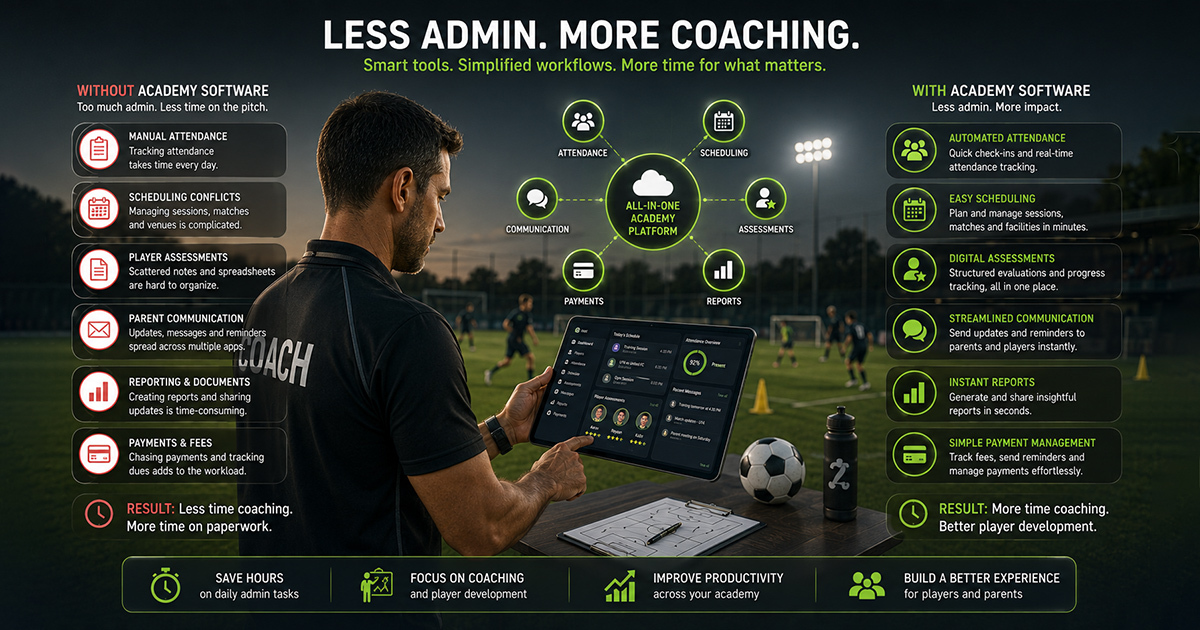 Read More about How Sports Academies Can Reduce Admin Work for Coaches
How Sports Academies Can Reduce Admin Work for Coaches
 Read More about How to Build Age-Wise Player Development Pathways in Football and Cricket
How to Build Age-Wise Player Development Pathways in Football and Cricket
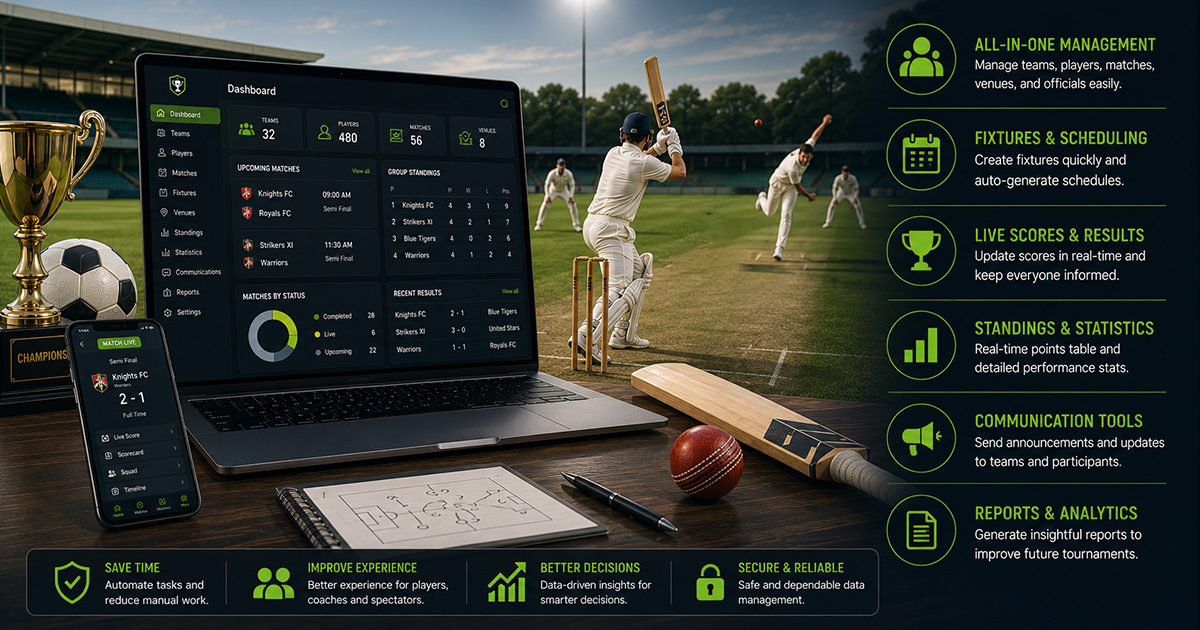 Read More about Tournament Management Software for Football and Cricket Organizers: A Practical Guide
Tournament Management Software for Football and Cricket Organizers: A Practical Guide
Ready to Bring Structure to Your Academy?
Let’s walk through your current setup and show you how 8lete can improve it.


