



How Many Hours Should You Train Football Daily? An Age-Wise Guide for Young Players
Understanding the appropriate daily football training hours by age is a common challenge for players, parents, and coaches alike. Many question how long young footballers should train each day without risking burnout or injury, while also ensuring meaningful progress. Striking the right balance is crucial to nurture long-term development, maintain enthusiasm, and build a solid foundation of skills. This guide demystifies football training durations for different ages, offering clear, age-appropriate advice suitable for grassroots academies, home training, and structured club environments.
What Are Daily Football Training Hours by Age?
Daily football training hours by age refers to the recommended amount of time young players should spend training football each day tailored to their stage of physical and mental development. It balances skill acquisition, physical conditioning, recovery, and fun.
Properly aligned training time prevents overtraining and supports steady progress, providing a framework to guide coaches, parents, and players in designing football schedules that optimize long-term growth.
Why Does Training Duration Matter in Youth Football?
Training duration is not just about clocking hours. It impacts physical health, technical skill development, mental focus, and motivation. Too little time limits repetition and learning; too much increases fatigue and risk of injury or burnout, especially in younger players.
A well-structured training duration respects a player’s growing body and evolving capacity for concentration, supporting incremental improvement within a supportive environment.

How to Improve Training Impact with Age-Appropriate Football Practice Time
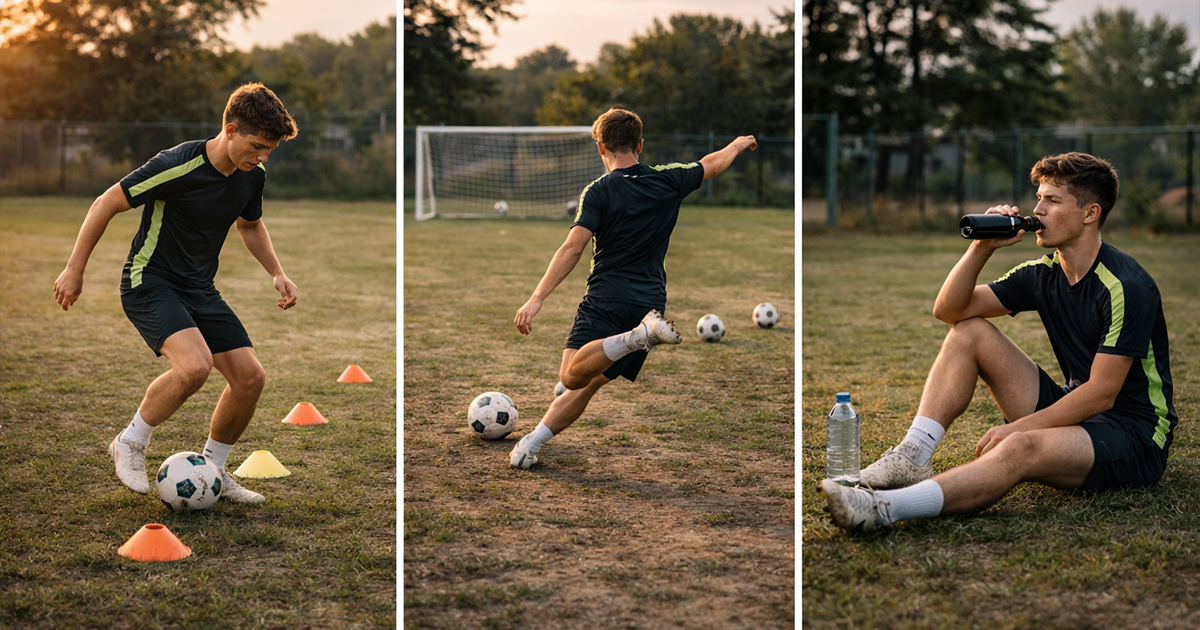
Younger players (U6 to U9) need short, playful sessions focused mainly on ball familiarity and fun. Ideally, training sessions last 30 to 45 minutes daily, including varied activities that develop coordination more than intense drills.
From U10 to U13, players develop better concentration and physical capacity. Sessions can extend to 60–75 minutes daily, split between technical skills, small-sided games, and individual touches. This phase is critical for fostering decision-making while guiding recovery routines.
Effective youth training balances consistent practice time with rest to build skills without burnout.
Football Training Duration for Kids and Teenagers: What the Guidelines Say
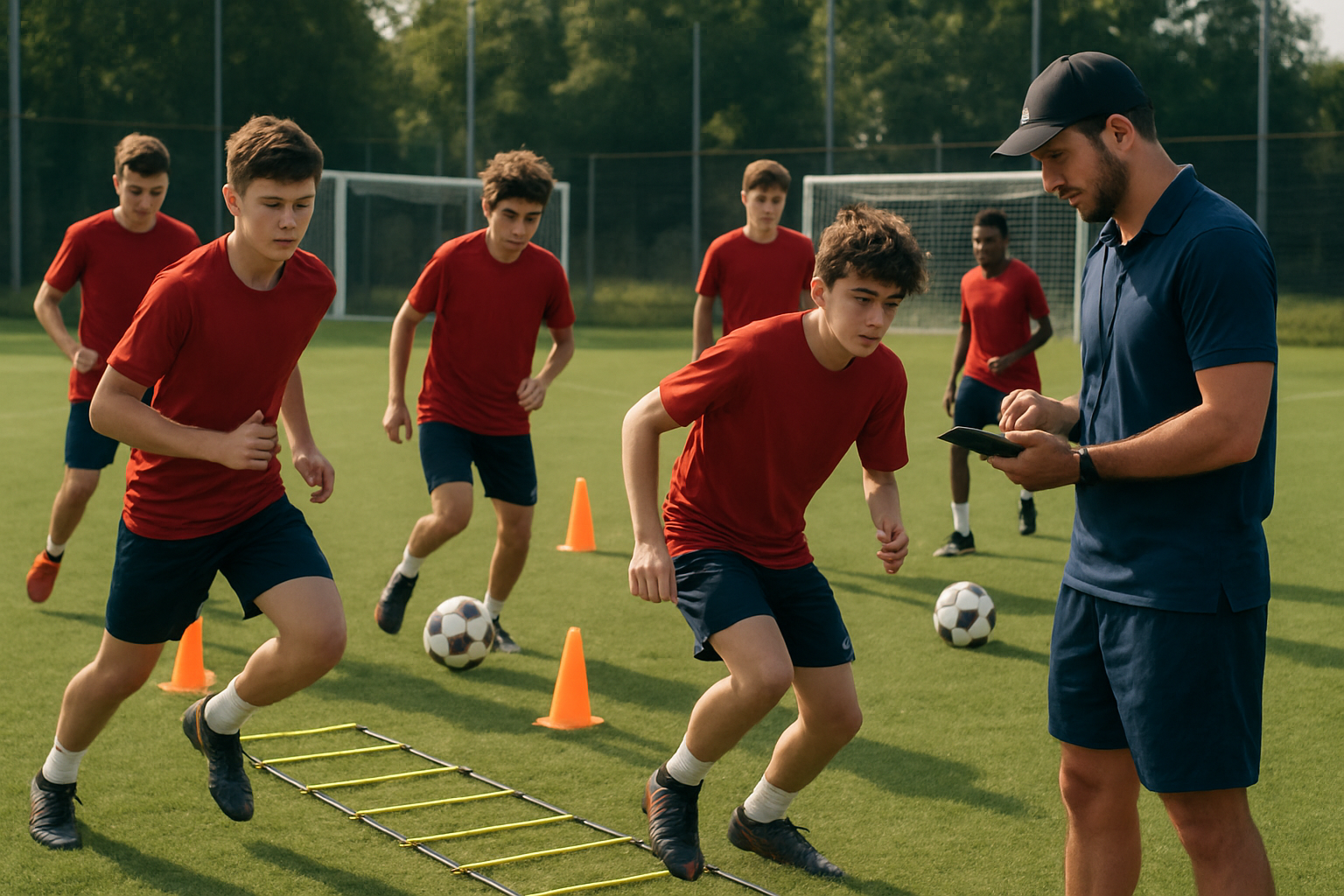
Between U14 and U17, physical demands increase, and training should include strength, conditioning, and tactical awareness alongside skills. Daily dedicated training may rise to 90 minutes or more but must include recovery and cross-training to avoid overuse injuries.
Youth football training guidelines emphasize quality over quantity, encouraging deliberate practice and using periods of rest as part of development. Structured training combined with match play maximizes learning and adaptation.
Practical Implementation for Grassroots Clubs
Clubs should build football training schedules by age group that align with physical, cognitive, and emotional development. For example, U8 squads need frequent but shorter sessions focusing on variety and engagement, while U15 groups can handle longer, focused training blocks combined with recovery management.
Coaches should use a clear framework for youth training: training → feedback → rest → repetition → progression. This cyclical approach supports learning and safeguards against overtraining. Integrating player development tracking tools helps tailor hours and intensity for individual needs.
Common Development Mistakes Regarding Training Duration
A common error is prescribing uniform training hours regardless of age or individual readiness, leading to poor motivation or injury. Excessive training without sufficient rest can stunt development and fatigue young players both physically and mentally.
Conversely, too little time spent with the ball can delay skill acquisition and confidence. Parents and coaches should communicate and monitor training loads, avoiding pressure to match older players’ hours prematurely.
Best Way to Balance Training Hours With Recovery and Growth
Young footballers benefit most from training schedules that include intentional recovery periods, flexible session lengths, and diverse activities fostering physical and mental growth. Recovery is as critical as training itself, allowing adaptation and injury prevention.
Parents and coaches should plan weekly rhythms that blend training, rest, academic life, and other social activities to support holistic development.
Conclusion
Determining the right daily football training hours by age is foundational for building confident, skilled young players. From playful short sessions for younger kids to focused, multi-faceted training for teens, the key lies in balancing structured practice with adequate recovery. Grassroots clubs, coaches, and parents must collaborate to deliver age-appropriate schedules that promote steady progression without compromising well-being. Ultimately, consistent, well-managed training fosters discipline, technical growth, and passion that lasts beyond youth football. Adopting age-specific, development-first approaches ensures players remain motivated, healthy, and ready to advance through each stage of the football journey.
What is the recommended daily football training duration for kids under 10?
For children under 10, short sessions of 30 to 45 minutes daily are ideal, focusing on fun, basic skills, and ball familiarity.
How does training routine change as footballers move from U10 to U14?
Between U10 and U14, training increases to about 60 to 75 minutes daily, emphasizing technical skills, decision-making, and physical conditioning.
How to improve football skills effectively at home for young players?
Young players can improve by practicing ball control, juggling, and simple drills consistently in short, focused sessions to build habits and confidence.
Why am I not improving despite training daily in football?
Lack of improvement may come from inconsistent practice quality, insufficient rest, or training that isn’t tailored to your age and development stage.
What is the best way to structure football training for teenagers?
Teenagers benefit from sessions around 90 minutes including skills, conditioning, tactical awareness, and adequate recovery to support growth.
Why do some young players struggle with training intensity and volume?
Young players may struggle if training exceeds their physical or mental capacity, leading to burnout or loss of motivation without proper progression.
What is the optimal age to start structured daily football training?
While informal play can start early, structured daily training typically begins around age 6 to 7 with age-appropriate duration and focus on enjoyment.

Related Articles
 Read More about How to Handle Pressure in Football Matches: Perform When It Matters Most
How to Handle Pressure in Football Matches: Perform When It Matters Most
 Read More about Why Some Football Players Improve Faster Than Others (And How to Catch Up)
Why Some Football Players Improve Faster Than Others (And How to Catch Up)
.jpg) Read More about Why Young Footballers Lose Confidence (And How to Rebuild It Step by Step)
Read More about Why Young Footballers Lose Confidence (And How to Rebuild It Step by Step)Why Young Footballers Lose Confidence (And How to Rebuild It Step by Step)
Latest Articles
 Read More about How Sports Academies Can Reduce Admin Work for Coaches
How Sports Academies Can Reduce Admin Work for Coaches
 Read More about How to Build Age-Wise Player Development Pathways in Football and Cricket
How to Build Age-Wise Player Development Pathways in Football and Cricket
 Read More about Tournament Management Software for Football and Cricket Organizers: A Practical Guide
Tournament Management Software for Football and Cricket Organizers: A Practical Guide
Ready to Bring Structure to Your Academy?
Let’s walk through your current setup and show you how 8lete can improve it.


