



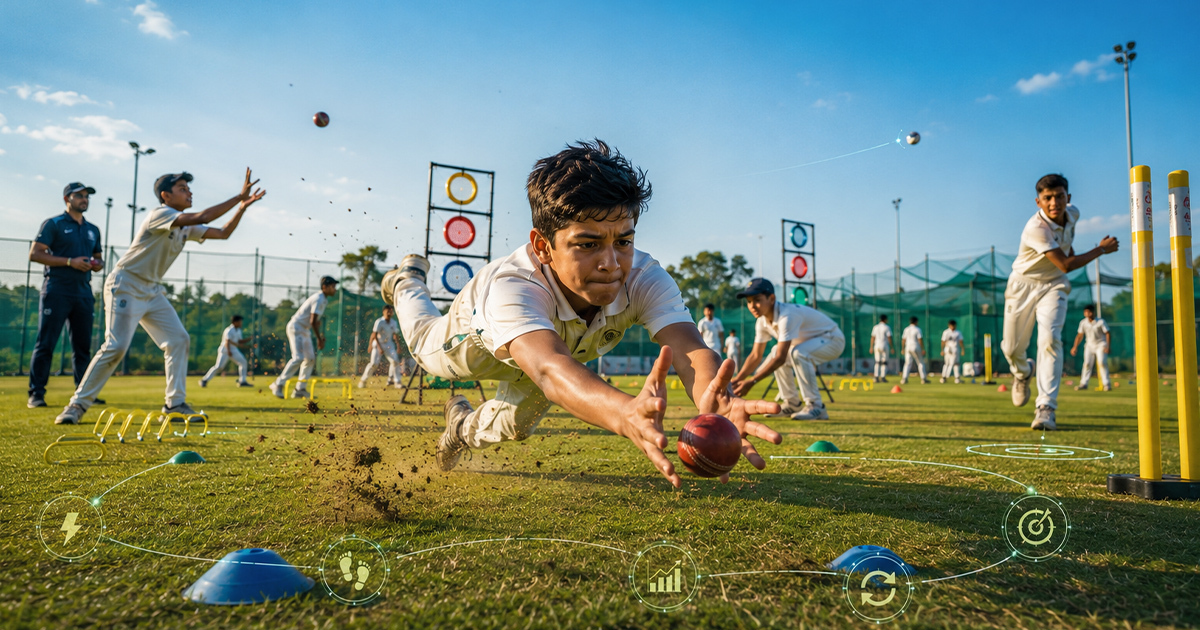
How to Improve Fielding Skills in Cricket: Drills for Young Players
Fielding is a critical aspect of cricket that often separates good teams from great ones, especially at the grassroots level. For young players, improving fielding skills can be a frustrating challenge—many struggle with catching, throwing, and agility. This article focuses on effective cricket fielding drills for young players designed to build confidence, enhance hand-eye coordination, and develop fundamental techniques essential for long-term growth in the sport.
What Are Cricket Fielding Drills for Young Players?
Cricket fielding drills for young players are structured exercises aimed at teaching and reinforcing the basic skills of catching, throwing, and ground fielding. These drills focus on building muscle memory, improving reaction times, and developing the agility required to perform effectively during matches.
By practicing these drills regularly in a structured environment, players enhance their ability to anticipate the ball, maintain focus under pressure, and execute techniques that reduce errors on the field. This foundation supports gradual progression into more complex fielding scenarios suited to competitive levels.
How to Improve Cricket Fielding Techniques for Young Players
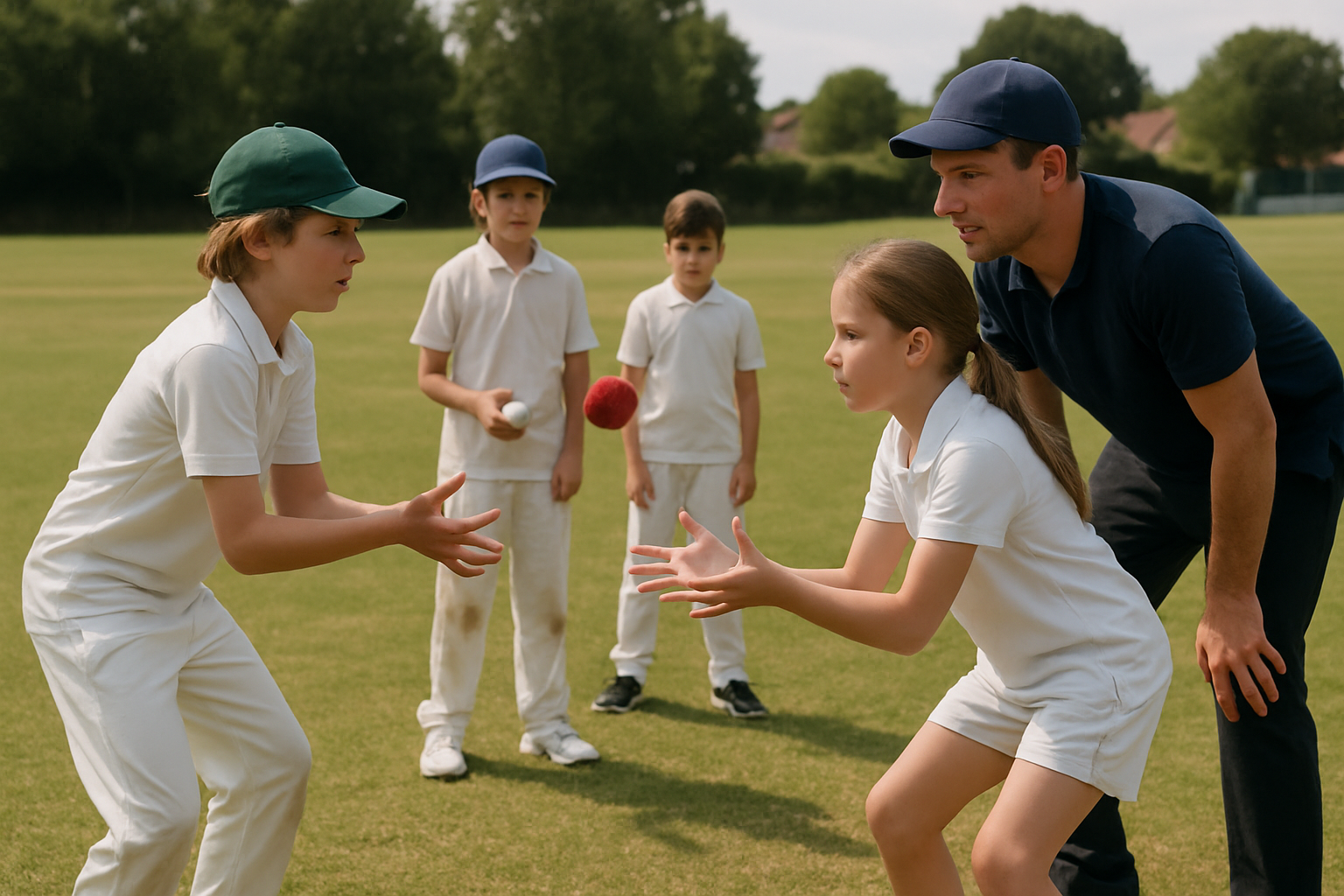
Improving fielding techniques begins with a focus on key fundamentals such as positioning, hand placement, and footwork. Coaches and parents can help players by emphasizing correct body posture, watching the ball closely, and training consistent catching and throwing methods.
It's important to introduce drills that develop enhancing hand-eye coordination in cricket alongside agility work. Simple catching exercises using tennis balls or softer cricket balls at a close range are highly effective for beginners, allowing players to build confidence without fear of injury.
Practical Implementation for Grassroots Clubs
Grassroots cricket clubs should integrate fielding drills into regular training routines rather than treating them as occasional activities. Setting up stations that focus on different skills—such as catching, throwing accuracy, and ground fielding—allows structured attention to each area.
Using drills such as short catching circles, target throwing challenges, and agility ladder exercises improves players' readiness for match situations. Providing consistent feedback while tracking progress encourages discipline and motivates players to refine their techniques. For detailed guidance, coaches can explore training tips for young cricketers to create a balanced program.
Consistent practice of basic fielding drills builds the foundation every young cricketer needs.
Common Development Mistakes
One frequent mistake is neglecting the basics in favor of complex drills too early, which can overwhelm young players. Another is inconsistent training schedules that inhibit muscle memory development. Poor throwing technique—such as sidearm or low release points—can also limit progress and increase injury risks.
Parents and coaches should watch for players focusing on power over accuracy, as precision is crucial for effective fielding. Lastly, ignoring recovery and mental focus during sessions may reduce learning quality, so incorporating rest and engagement strategies is essential.
Best Cricket Fielding Drills for Beginners
Starting with simple yet effective drills helps young players develop consistency. Key exercises include:
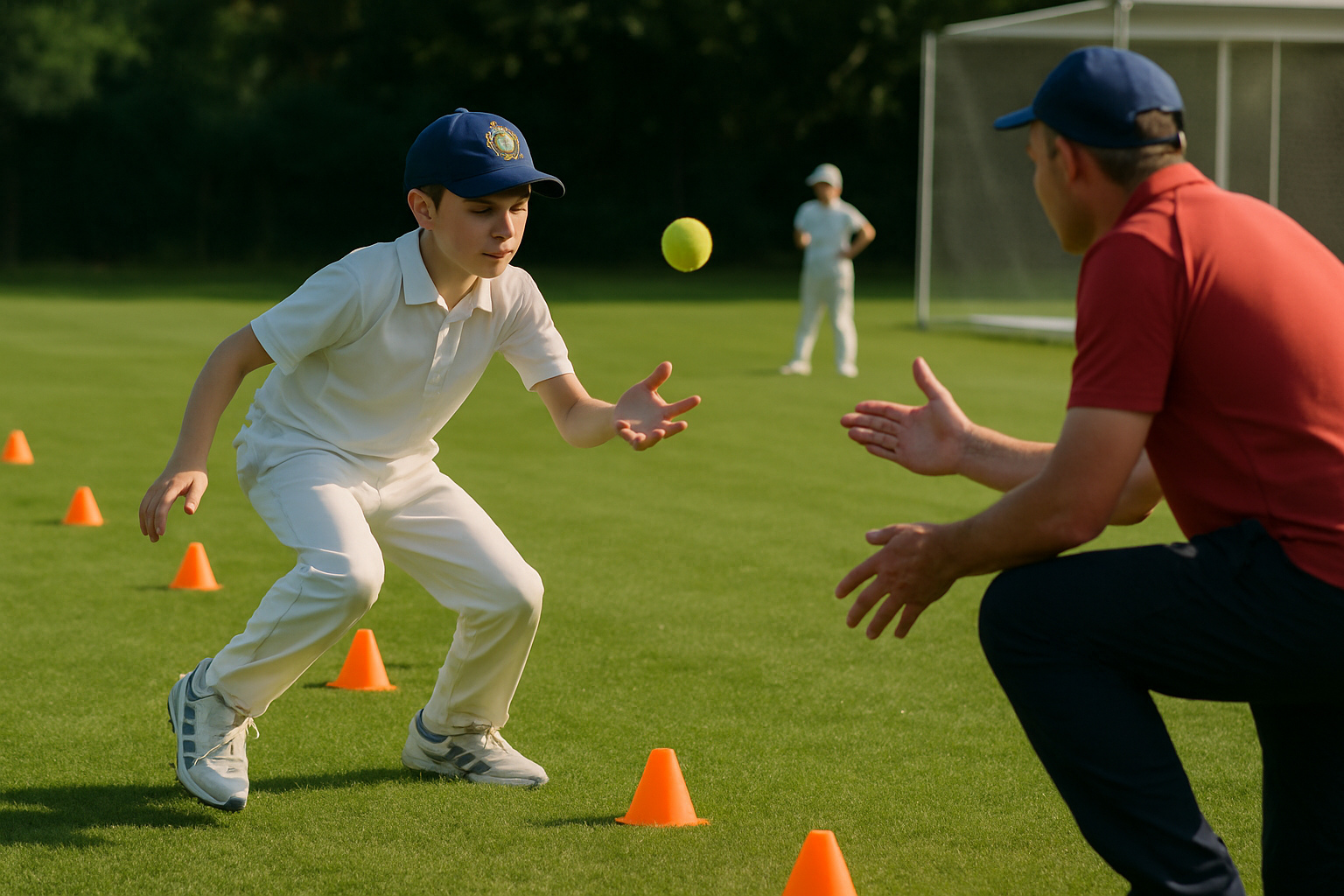
- Basic catching drill: Tossing soft balls straight at the player from a short distance, encouraging hands-out ready position.
- Agility cone drills: Sprinting, side-stepping, and turning around cones to improve movement and reaction speed.
- Ground fielding drill: Rolling balls across the ground with focus on correct picking-up technique and accurate throwing.
These exercises establish the foundation on which intermediate skills can then be layered as players grow more confident.
Fielding Agility Drills Cricket Players Should Try
Improving quickness and coordination on the field is as important as technical skill. Drills like shuttle runs, ladder steps, and reaction ball catches enhance speed and responsiveness. These improve a player's ability to reach difficult balls and adjust to unexpected bounce or direction.
Incorporating these agility drills within structured training sessions helps build conditioned reflexes and better movement efficiency, critical to reducing errors during match play.
Conclusion
Building solid fielding skills in young cricketers requires patience, repetition, and structured training. Focusing on simple, practical drills that develop core techniques — from catching to throwing and ground work — fosters continuous improvement. Clubs, coaches, and parents all play a crucial role in creating a supportive learning environment where players can refine skills with consistent feedback and realistic expectations. Over time, this disciplined approach develops not only physical ability but also mental sharpness and confidence on the field. By prioritizing fundamentals and integrating fielding drills into regular practice, young cricketers lay the groundwork for long-term success and enjoyment in cricket.
What is the best way to improve cricket fielding skills for young players?
The best way is through consistent practice of basic drills focusing on catching, throwing, and agility while maintaining proper techniques.
How does hand-eye coordination affect cricket fielding performance?
Good hand-eye coordination improves a player's ability to judge and catch the ball accurately, making fielding more reliable under pressure.
How to improve cricket fielding techniques at home?
Young players can practice catching soft balls against a wall, work on throwing accuracy to targets, and perform agility exercises in small spaces.
Why am I not improving in cricket fielding despite practice?
Improvement may stall due to inconsistent training, poor technique, or lack of focused repetition and feedback during practice sessions.
How to get better at cricket catching drills for kids?
Regularly practicing with soft balls, focusing on hand positioning, and progressing from close-range to longer catches help improve catching skills.
What is the best age to start focused cricket fielding training?
Most young players benefit from starting basic fielding drills around ages 8 to 10, when coordination and understanding begin to develop steadily.

Related Articles
 Read More about Cricket Trials Preparation: How Young Players Can Prepare for Selection
Cricket Trials Preparation: How Young Players Can Prepare for Selection
 Read More about Football Trials Preparation for Youth Players: What Young Players Must Understand
Football Trials Preparation for Youth Players: What Young Players Must Understand
 Read More about How Cricket Academies Can Track Player Progress Beyond Runs and Wickets
How Cricket Academies Can Track Player Progress Beyond Runs and Wickets
Latest Articles
 Read More about How Sports Academies Can Reduce Admin Work for Coaches
How Sports Academies Can Reduce Admin Work for Coaches
 Read More about How to Build Age-Wise Player Development Pathways in Football and Cricket
How to Build Age-Wise Player Development Pathways in Football and Cricket
 Read More about Tournament Management Software for Football and Cricket Organizers: A Practical Guide
Tournament Management Software for Football and Cricket Organizers: A Practical Guide
Ready to Bring Structure to Your Academy?
Let’s walk through your current setup and show you how 8lete can improve it.


