



How to Structure a Fair Football Trial Selection Process in Academies
A fair football trial selection process is crucial for youth academies striving to build a strong, inclusive, and development-focused player base. Coaches and academy managers often face the challenge of balancing objective evaluation with the pressures of competition and limited trialtime. Without a clear, transparent system, talented players may be overlooked, parents confused, and coaches questioned. This article explores how academies can structure their football trial selection fairly through defined criteria, practical assessment methods, and an environment that prioritizes long-term player growth.
What is a Fair Football Trial Selection Process?
A fair football trial selection process ensures every player has an equal chance to showcase their skills under consistent conditions. It involves using clear, objective criteria combined with professional assessment methods to evaluate physical, technical, tactical, and mental attributes relevant to the academy’s playing philosophy.
By applying such a process, academies reduce bias, support player confidence, and promote transparency with parents and players. This approach aligns well with structured player development models seen across effective academy operations.
Key Football Trial Selection Criteria Every Academy Should Use
To run trials fairly, defining what coaches are looking for is essential. Common criteria include:
- Technical Skills (passing, dribbling, first touch)
- Physical Attributes (speed, agility, endurance)
- Tactical Understanding (positioning, decision-making)
- Mental and Attitudinal Qualities (work ethic, resilience, coachability)
- Potential for Long-Term Development
By standardizing these evaluation points, academies create a transparent benchmark to fairly compare players during trials. This also helps parents understand the academy’s recruitment philosophy.

How to Run Football Trials Fairly: Practical Assessment Methods
Running trials with a focus on fairness requires more than just watching a single performance. Here are practical methods that grassroots academies can apply:
- Multiple Sessions: Spread trials over several training days or sessions to assess consistency and adaptability.
- Small-Sided Games: Use these to observe player skills, decision-making, and teamwork in realistic scenarios.
- Physical and Technical Drills: Run standardized drills to measure specific skills objectively.
- Use a Scoring Rubric: Rate each player on all trial criteria using defined scales to minimize subjectivity.
- Involve Multiple Observers: Having more than one coach or scout assesses players to reduce individual bias.
These methods align with structured football trial assessment and support long-term development tracking and player progression analysis.
Common Development Mistakes During Selection
Even with good intentions, academies can slip into common pitfalls that affect fairness and development focus during trials.
Overemphasis on Early Physical Maturity: Selecting players mainly for their current physical size rather than potential disadvantages younger or later-maturing players.
Short Trial Periods: One-off sessions or short assessments make it harder to evaluate consistency, effort, and character.
Lack of Clear Communication: Players and parents left uncertain about the selection basis can feel distrustful and demotivated.
Avoiding these mistakes requires aligning trials with the club’s long-term philosophy, ensuring fair football trial selection process standards, and maintaining open dialogue throughout the selection timeline.
Fair trials rely on clear criteria and multiple assessments to give every player a true opportunity to show their potential.
Practical Implementation for Grassroots Clubs
Grassroots academies can structure their trial process fairly by incorporating the following framework:
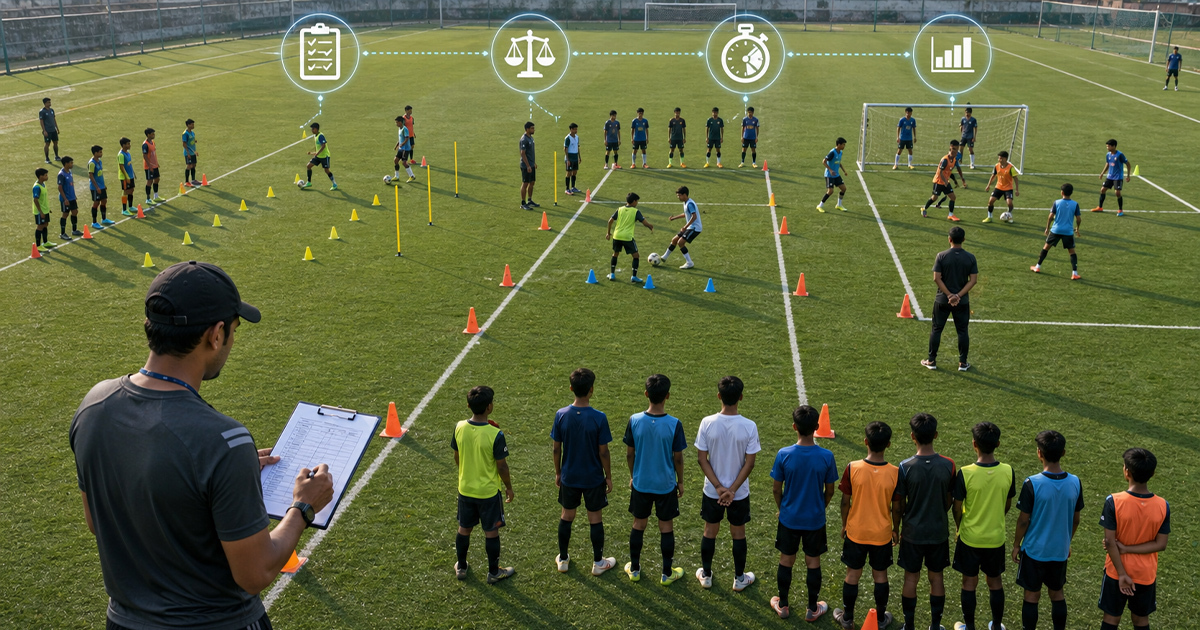
Trial Preparation → Clear Criteria → Standardized Assessment → Multi-Observer Evaluation → Transparent Feedback → Player Tracking
Start by informing players and parents about the trial setup and what attributes are being assessed. Use standardized drills and small-sided games to observe players under varied conditions. Different coaches should record assessments independently, then convene to compare notes and reach consensus. Finally, provide meaningful feedback regardless of selection outcome and log results to support ongoing development and future trial improvement.
Why Players Struggle in Football Trials and How to Address It
Many young players find trial days high-pressure and struggle to perform consistently. Common reasons include nerves, unfamiliarity with the format, or a one-off bad performance. Academies can help by simulating trial conditions during regular training to build player confidence and resilience.
Coaches should encourage players to focus on effort, learning, and understanding rather than just outcomes. Parents can support by reinforcing patience and the long-term nature of development. Building this mindset aligns with a fair football trial selection process that values potential and growth.

Best Practices for Football Trial Selection in Academies
Clear guidelines enhance the fairness and effectiveness of football trials. These include:
- Publish trial dates, venues, and criteria well in advance to ensure transparency.
- Include a warm-up session to help players acclimate and reduce anxiety.
- Maintain consistent group sizes and competitive environments across trial days.
- Offer coaching staff training on unbiased assessment techniques and use of data-driven evaluation.
- Regularly review and adjust selection criteria based on player development research and club philosophy.
Implementing such guidelines supports both fair trial selection and the academy’s long-term recruitment goals, encouraging better player development pathways and decision-making processes within academy operations and management.
Conclusion
A fair football trial selection process is foundational for any academy focused on meaningful, sustained player development. By applying clear, objective criteria combined with standardized assessment methods, academies can minimize bias and create a level playing field. Communication and transparency calm player and parent concerns, while structured feedback and tracking enable ongoing growth beyond just selection days. For coaches and academy owners, this approach builds credibility, supports informed decision-making, and strengthens long-term football pathways. Embracing a structured player development mindset over short-term results ensures that every player evaluated at trials gains valuable experience aligned with the academy’s philosophy and goals.
What is a fair football trial selection process?
It is a transparent system that uses objective criteria and consistent methods to evaluate players equally during academy trials.
How does an academy assess players during trials?
By using technical drills, small-sided games, physical tests, and multi-coach evaluations across multiple sessions to ensure reliable assessments.
How to improve football skills during trial preparation?
Focus on technical basics, decision-making, physical fitness, and mental readiness through regular, structured training and simulated match play.
Why do players struggle to perform well in football trials?
Nerves, pressure, and unfamiliar trial environments can affect performance. Practicing trial scenarios and building resilience help overcome this.
How to run football trials fairly in a grassroots academy?
Set clear criteria, use standardized drills, involve multiple assessors, and communicate openly with players and parents about the process.
Best age to start attending football academy trials?
Many academies start trials around U10; however, focusing on development at any age and attending trials when physically and mentally ready is key.
How long does it take to get selected in a football academy?
Selection can depend on multiple trials and assessments over weeks or months as academies look for consistency and potential, not just one-off performance.


Related Articles
 Read More about Organizing Grassroots Football Tournaments: A Practical Guide for Academies and Clubs
Organizing Grassroots Football Tournaments: A Practical Guide for Academies and Clubs
 Read More about How to Improve Player Retention in Football Academies: Practical Strategies to Reduce Dropouts
How to Improve Player Retention in Football Academies: Practical Strategies to Reduce Dropouts
.jpg) Read More about How to Start a Football Academy in India: A Step-by-Step Guide
Read More about How to Start a Football Academy in India: A Step-by-Step GuideHow to Start a Football Academy in India: A Step-by-Step Guide
Latest Articles
 Read More about How Sports Academies Can Reduce Admin Work for Coaches
How Sports Academies Can Reduce Admin Work for Coaches
 Read More about How to Build Age-Wise Player Development Pathways in Football and Cricket
How to Build Age-Wise Player Development Pathways in Football and Cricket
 Read More about Tournament Management Software for Football and Cricket Organizers: A Practical Guide
Tournament Management Software for Football and Cricket Organizers: A Practical Guide
Ready to Bring Structure to Your Academy?
Let’s walk through your current setup and show you how 8lete can improve it.


