




Digital Transformation in Football and Cricket Academies: A Guide for Grassroots Growth
Digital transformation in football and cricket academies refers to adopting technology-driven systems and tools that streamline academy operations, enhance training quality, improve player assessments, and enable clear communication among coaches, players, and parents. Many grassroots academies struggle with manual processes and inconsistent tracking that limit long-term player development and operational growth. Integrating digital solutions matters because it creates structured environments where goals, attendance, coaching feedback, and player progress are systematically managed. This article explores practical digital adoption frameworks and workflows designed specifically for football and cricket academies, showing how technological growth supports both academy efficiency and sustainable player advancement.
Framework for Digital Transformation in Football and Cricket Academies
Understanding the key areas of digital transformation helps academies prioritize technology investments effectively. The framework below highlights 6 critical focus points to guide grassroots academies:
1. Structured Attendance and Fees Management: Moving from manual registers to digital attendance tools ensures accurate tracking and discipline. Automated fees modules reduce administrative delays and errors.
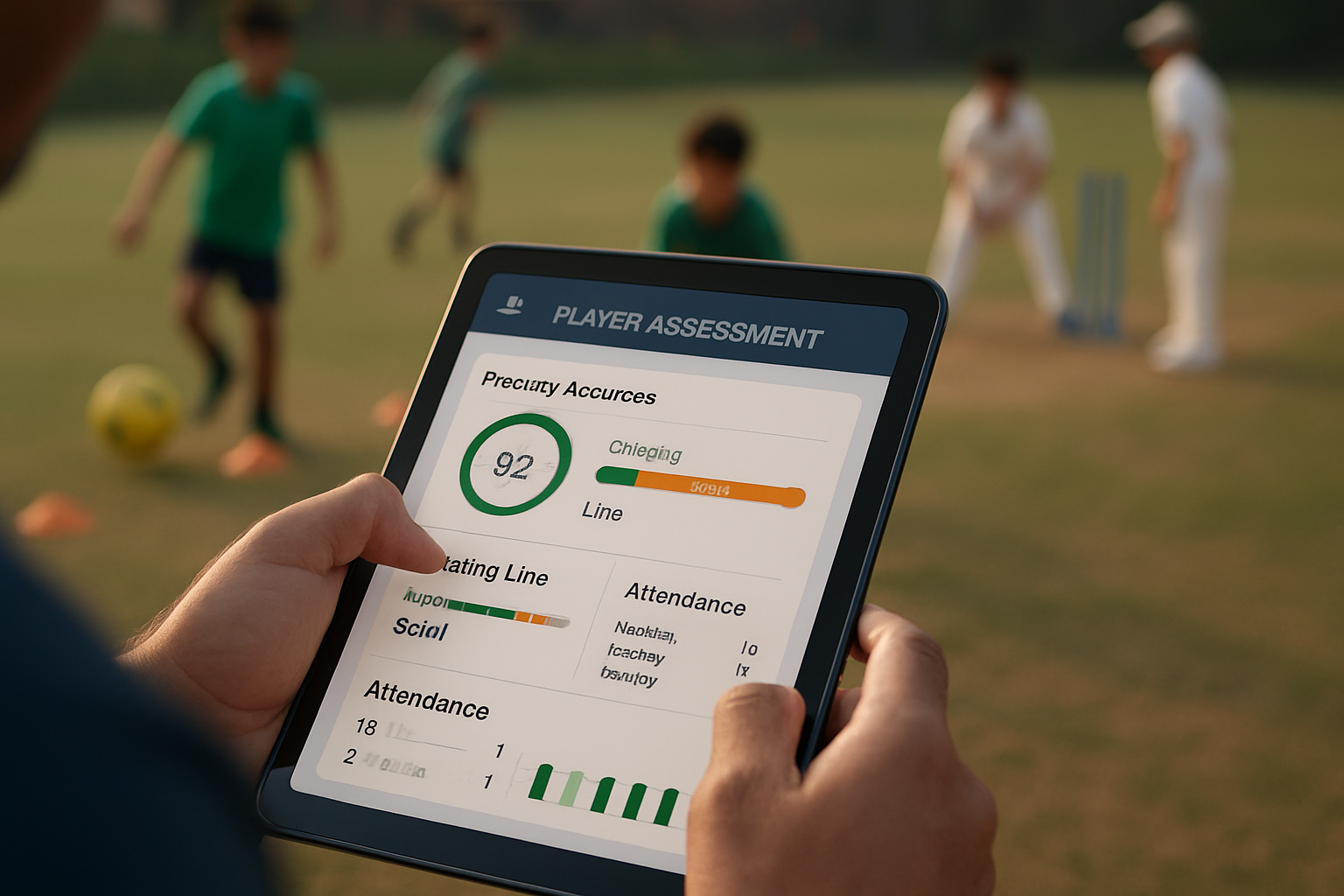
2. Player Development and Assessment Tracking: Using digital platforms for periodic skill assessments, AI-powered analysis, and coach feedback notes builds transparent player progress histories.
3. Session and Batch Planning Software: Digitally organizing training batches by age and skill level helps optimize coach deployment and session structure.
4. Parent Communication Platforms: Enabling automated progress reports and session notifications improves trust and engagement.
5. Data Analytics and Performance Insights: Utilizing data from assessments and match stats supports informed coaching decisions and player improvement strategies.
6. Inquiry and Admission Management: Streamlining player registration and trial scheduling digitally increases operational efficiency and academy reputation.
This practical framework helps academies see digital transformation as an integrated process, not just isolated technology upgrades, enabling long-term structured growth.

Why Digital Transformation Matters for Grassroots Football and Cricket Academies
Manual tracking and unstructured operations create bottlenecks that stunt player progress and add unnecessary workload on coaches and owners. For example, a football academy that records attendance in paper registers often misses late arrivals, impacting training discipline. Similarly, cricket academies managing fees manually face delays and confusion that affect trust with parents. Digital transformation centralizes these workflows for real-time accuracy.
From a coaching perspective, digital tools enable systematic tracking of player performance beyond just training presence. Football coaches can log specific skill drills and match stats, while cricket coaches can enter batting, bowling, and fielding scores linked to each session. This data-driven approach supports focused feedback and measurable growth over time.
Digital Transformation Workflow Example for Academies
A structured workflow leveraging technology provides operational clarity. Consider this sequence:
Session Planning → Attendance Tracking → Player Skill Assessment → Coach Notes → Parent Progress Report → Next Session Goals. Each step utilizes digital tools for ease and accuracy, ensuring every player's progress is visible and actionable.
For instance, after a cricket net session, the coach records bowling accuracy and footwork data in the system. AI analysis identifies improvement areas, coach adds qualitative notes, and parents receive an automated report highlighting the player's strengths and next development targets. This workflow reduces manual errors and builds trust across all stakeholders.
Role-Wise Insights: What Digital Transformation Means for Players, Coaches, Parents, and Academy Owners
Players: Digital tools offer consistent feedback on skills like first touch or shot selection, allowing players to focus on specific habits. A young footballer can review video clips of match plays uploaded by the coach, identifying decision-making improvements rather than relying on memory alone.
Coaches: Automating attendance, assessments, and reports frees time to focus on skill correction and tactical guidance. Coaches managing cricket bowling drills can track line and length consistency digitally, comparing weekly progress without manual charting.
Parents: Real-time visibility into training attendance, fees, and player progress reduces uncertainty and helps parents support their child's commitment without pressure or guesswork.
Academy Owners: Digital platforms simplify batch management, coach assignments, and financial workflows. This enhanced organization improves academy credibility and scalability, reducing dependence on manual tracking that often leads to data loss and inefficiencies.
Implementing Digital Transformation: Age-Wise Steps for Football and Cricket Academies
U10–U13 (Foundation Stage): Introduce basic digital attendance and fees management to build discipline early. Start simple player assessment logs focusing on coordination and technique basics.
U14–U16 (Development Stage): Expand to skill-specific digital tracking such as passing accuracy in football or bowling rhythm in cricket. Begin AI-assisted analysis for personalized coaching insights.
U17–U21 (Performance Stage): Integrate comprehensive match and training data analytics for tactical learning and scouting visibility. Use advanced parent communication and financial systems to support long-term academy operations.
Structured digital tracking turns training from guesswork into measurable player progress.
Practical checklist
Use this checklist to evaluate and implement digital transformation effectively:
- 1. Are attendance and fees tracked digitally with real-time updates?
- 2. Is there a system in place for scheduled player skill assessments?
- 3. Can coaches input session plans and batch assignments online?
- 4. Are parents receiving regular digital progress reports and notifications?
- 5. Does the platform integrate AI or data analytics to analyze player performance?
- 6. Is trial and enquiry management automated for efficient new player onboarding?
- 7. Are coaches trained on using digital tools for feedback and assessments?
- 8. Is player data stored securely with easy access for authorized users?
- 9. Does the system allow seamless communication among coaches, players, and parents?
- 10. Are digital systems evaluated periodically for updates and improvements?
Common mistakes
Mistake 1: Overloading Technology Without Clear Purpose
Many academies adopt multiple tools without clear workflows, leading to fragmented data. Fix: Follow a structured implementation framework prioritizing key workflows like attendance and player assessments before expanding.
Mistake 2: Ignoring Coach Training on Digital Tools
Coaches may resist or misuse technology if not properly onboarded. Fix: Provide practical training sessions and continuous support to ensure coaches can confidently use all features for player development.
Mistake 3: Treating Digital Reports as One-Time Outputs
Digital progress reports are often sent without follow-up or connection to next goals, reducing impact. Fix: Integrate reports into a feedback cycle with coach notes and targeted training plans to create consistent progress tracking.
Mistake 4: Neglecting Parent Communication Channels
Lack of transparent updates can cause frustration and dropouts despite good training. Fix: Set automated parent notifications linked to attendance, fees, and player assessments to maintain engagement and trust.
Mistake 5: Delaying Digital Adoption Until Challenges Build Up
Waiting to digitize until problems become severe can mean lost data and player dissatisfaction. Fix: Start with manageable digital transformation steps early to build resilience and smooth operations.
Grassroots Examples Demonstrating Digital Transformation Benefits
A cricket academy in Maharashtra replaced pen-and-paper attendance with a mobile app. This led to 15% fewer late arrivals and automated fee reminders, reducing follow-up workload by 40%.
A football academy in Bangalore adopted a player assessment tool allowing coaches to record passing accuracy and decision-making during matches. Over 3 months, coaches identified recurring tactical mistakes and tailored drills, producing observable improvement in player match performance.
An academy owner managing both cricket and football batches integrated a centralized system for enquiry management and coach scheduling. This saved 3 hours daily previously spent on manual coordination and helped launch an online trial registration process, increasing new player enrolments.
Practical 8lete-Aligned Workflow for Digital Player Development
8lete’s workflow example for grassroots academies: Session planning → Digital attendance marking → AI-powered skill assessments → Coach feedback notes submission → Automated parent progress reports → Updating next session goals. This structured loop ensures each training influences the next, maintains parent visibility, and empowers coaches with actionable data while tracking attendance as part of holistic development.
This workflow emphasizes continuous learning rather than isolated actions, ensuring that technological adoption yields meaningful player growth and operational clarity simultaneously.
Conclusion
Digital transformation in football and cricket academies is no longer optional but essential for fostering disciplined, measurable player development and sustainable academy operations. Adopting structured tools for attendance, fees, assessments, communication, and data analytics creates transparency and builds trust among players, parents, coaches, and administrators. The journey to digital growth must be intentional, role-aware, and stage-appropriate, ensuring every player’s progress is tracked and linked to next goals. Rather than viewing technology as a quick fix, academies should integrate it into consistent workflows prioritizing long-term development habits over short-term metrics. This structured approach to digital adoption does not remove the human elements of coaching and support but enhances them through clarity and actionable insights. Embracing this change prepares grassroots academies for scalable success and helps young athletes develop sustainably with meaningful feedback, consistent attendance discipline, and parent engagement at each step. The practical takeaway is clear: start with manageable digital steps today to build the foundation for smarter, data-driven grassroots sports environments tomorrow.
What is digital transformation in football and cricket academies?
Digital transformation in these academies involves integrating technology like attendance tracking software, player assessment tools, and communication platforms to improve training quality, operational efficiency, and player development transparency.
How can academies start using digital tools effectively?
Begin with core systems such as digital attendance and fees management, then gradually add player assessment platforms and parent communication modules. Training coaches to use these tools ensures better adoption and meaningful results.
Why do many grassroots academies struggle with technology?
Common challenges include fragmented tools without clear workflows, coach resistance due to lack of training, and adoption delays. Overcoming these requires structured implementation plans, hands-on support, and prioritizing relatable digital functions.
How does technology improve player assessments in football and cricket?
Technology enables recording and analyzing specific skills—like passing accuracy for football or bowling consistency in cricket—over time, making feedback objective and targeted. This systematic tracking helps coaches guide players more precisely.
What role do parents play in a digitally transformed academy?
Parents benefit from transparent access to attendance records, progress reports, and scheduled sessions through digital platforms. This visibility builds trust and lets parents support their child's development realistically, reducing stress and misunderstandings.
How long does it take for an academy to see benefits from digital transformation?
The timeline varies but starting with key modules like attendance and assessments can yield visible discipline and progress insights within 2–3 months. Full operational efficiency gains arise over 6–12 months with consistent use and process refinement.
What is the best age to introduce digital training programs in academies?
Introducing basic digital tools from U10 onwards helps build early development discipline. Advanced analytics and AI-supported assessments become more useful around U14+ when players' skills and workloads increase.
Related Articles
 Read More about How Digital Scorekeeping Can Improve Grassroots Cricket Tournaments
How Digital Scorekeeping Can Improve Grassroots Cricket Tournaments
 Read More about Football Club Management Software vs Sports Academy Management Software: A Practical Guide
Football Club Management Software vs Sports Academy Management Software: A Practical Guide
 Read More about Coach Management Software for Sports Academies: Streamlining Football and Cricket Coaching Operations
Coach Management Software for Sports Academies: Streamlining Football and Cricket Coaching Operations
Latest Articles
 Read More about How Sports Academies Can Reduce Admin Work for Coaches
How Sports Academies Can Reduce Admin Work for Coaches
 Read More about How to Build Age-Wise Player Development Pathways in Football and Cricket
How to Build Age-Wise Player Development Pathways in Football and Cricket
 Read More about Tournament Management Software for Football and Cricket Organizers: A Practical Guide
Tournament Management Software for Football and Cricket Organizers: A Practical Guide
Ready to Bring Structure to Your Academy?
Let’s walk through your current setup and show you how 8lete can improve it.


