



.jpg)
How to Improve Football IQ for Young Players: Practical Steps for Development
Improving football IQ for young players is one of the most overlooked yet essential aspects of youth football development. Many players, parents, and coaches focus primarily on physical skills like dribbling or shooting, but without strong game intelligence, players struggle to perform consistently on match day. This article addresses the practical challenge of enhancing football awareness, decision-making, and anticipation in young players, offering actionable insights grounded in real grassroots environments.
What Is Football IQ and Why It Matters for Youth Players
Football IQ refers to a player's ability to understand the game, anticipate actions, make quick decisions, and effectively read the play. It combines cognitive and perceptual skills such as anticipation, positioning, spatial awareness, and tactical understanding tailored to the player's age and level.
A high football IQ enables young athletes to adapt under pressure, identify opportunities, and react appropriately, which is crucial for long-term success beyond pure technical ability. Enhancing this intelligence early shapes smarter, more effective players capable of thriving in varied football scenarios.
How to Improve Football IQ for Young Players: Key Training Principles
Developing game intelligence demands a structured approach centered on deliberate practice of perception and decision-making tasks. Coaching sessions should integrate football game intelligence training drills that simulate match conditions to develop quick thinking and adaptability.
This involves creating scenarios where players must assess surrounding cues, predict opponents’ moves, and choose the best action — such as passing, dribbling, or repositioning — often under time constraint. The focus should be on cognitive skill development combined with physical execution.
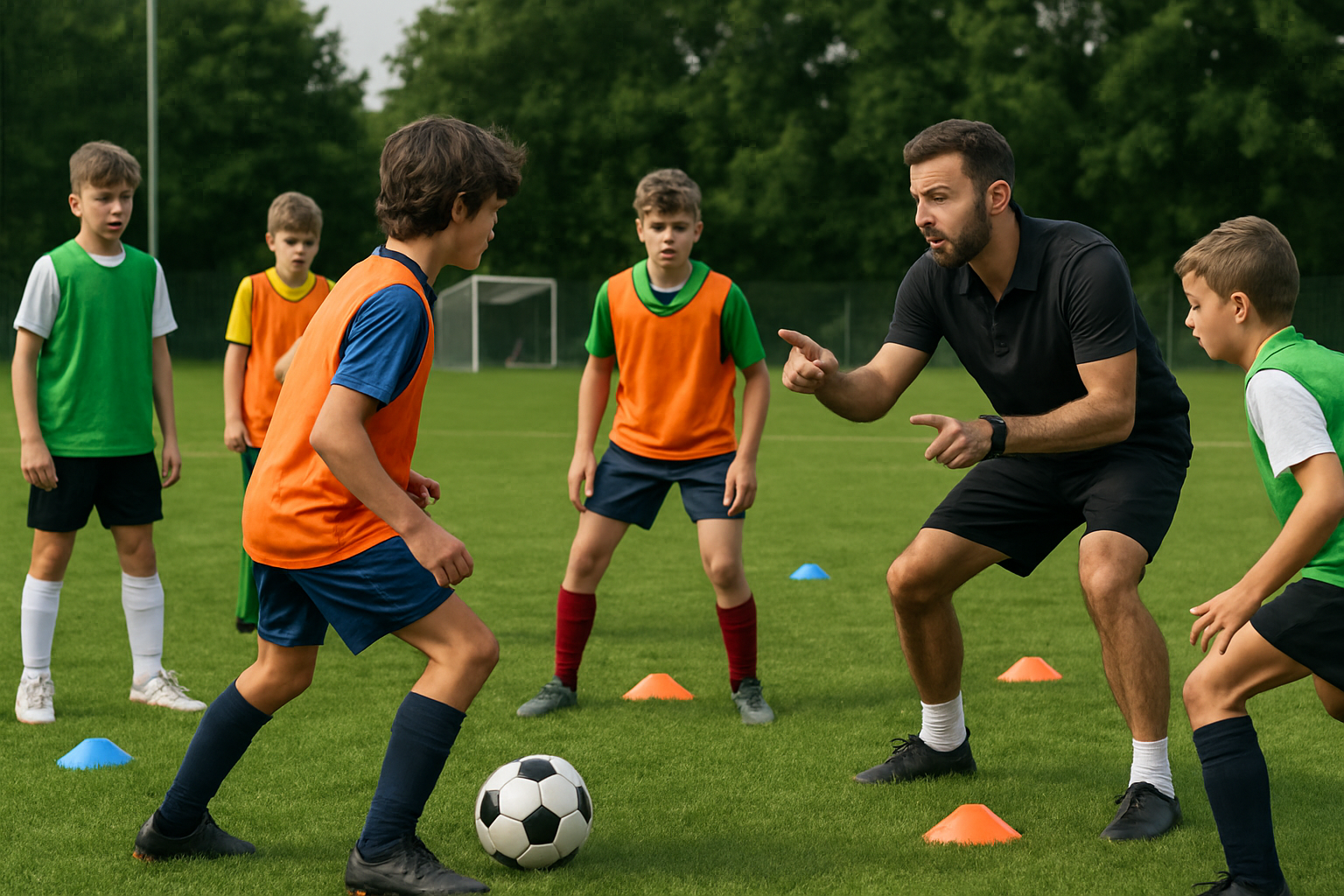
Training Young Players’ Football Intelligence: Exercises and Framework
Below is a simple training framework to enhance football awareness and intelligence through consistent practice:
- Perception Drills: Use small-sided games or drills focusing on scanning the field quickly to identify options.
- Anticipation Exercises: Train players to predict opponent actions using repetition and video analysis.
- Decision-Making Scenarios: Set time limits for choices during practice to improve speed and accuracy of decisions.
- Spatial Awareness Training: Encourage positioning drills emphasizing relative location to teammates and opponents.
- Feedback & Reflection: After sessions, review decisions and movements to develop better understanding and mental models.
This cycle — Training → Feedback → Reflection → Repetition — helps internalize football intelligence concepts naturally over time.
Common Development Mistakes Impacting Football IQ
A frequent error is overemphasizing physical skills while neglecting the mental game. Coaches or parents may push for flashy footwork without ensuring the player understands when, why, and how to use those skills effectively.
Additionally, limited exposure to varied game situations constrains football awareness growth. Overstructured drills lacking decision-making elements or repetitive isolated exercises can stall cognitive development. Finally, insufficient encouragement of reflection and self-assessment prevents players from improving football perception and anticipation.
Football intelligence grows best when players practice decision-making in realistic game scenarios consistently.
Why Players Struggle to Improve Football IQ and How to Help
Young players often struggle because they focus on what is immediately visible — ball control or speed — rather than understanding the game's flow. Without proper guidance in reading play and thinking ahead, improvement stalls.
Parents and coaches should support learning by providing patience, structured challenges, and encouraging curiosity about positioning and teammates’ roles. Using video clips or live match analysis helps players see real examples of situational awareness and decision-making.
Practical Implementation for Grassroots Clubs
Grassroots clubs can integrate football IQ development with minimal equipment by designing training focused on game understanding rather than pure technique. Small-sided games tailored to encourage problem-solving and quick decisions develop youth football cognitive skills organically.
Coaches should use systematic observation and simple feedback tools to track player progress over time, connecting with player development tracking systems to foster structured growth. This approach lays a foundation for smarter players prepared for higher-level demands.
Enhancing Situational Awareness in Football: Tips for Parents and Players
Parents can support development by encouraging young players to watch football thoughtfully — focusing on player positioning, moment-to-moment choices, and team organization.
At home, simple brain training exercises such as pattern recognition games and reaction drills improve mental speed and anticipation skills. These tools complement on-pitch practice and elevate overall football brain function.

Conclusion
Improving football IQ for young players is a gradual process requiring consistent focus on cognitive skills alongside technical and physical training. By emphasizing game intelligence through perception, anticipation, and decision-making exercises, grassroots coaches and parents create a learning environment that builds smarter players able to read and influence the game effectively. Avoiding common pitfalls like neglecting situational awareness or overloading purely technical drills ensures well-rounded development. Ultimately, a deliberate, structured approach to football brain training enriches young players’ long-term growth and game impact, setting a solid foundation for their football future.
What is football IQ and why is it important for young players?
Football IQ is a player's ability to understand the game, anticipate moves, and make smart decisions, which helps young players perform better and adapt quickly.
How to improve football IQ for young players during practice?
Use drills that encourage quick decision-making, scanning the field, and anticipating opponents’ actions to enhance game intelligence in practice.
How to develop football awareness for youth players effectively?
Combine small-sided games with exercises focusing on positioning and reading play to improve football awareness in young players.
Why am I not improving my football decision making despite regular training?
If training lacks game-like scenarios and reflection on choices, decision-making may not improve. Structured football brain training helps address this.
What is the best age to start training football IQ in kids?
Football IQ training can begin as early as 8 years old with simple perception and anticipation exercises suitable for the child's level.
How long does it take to see improvement in football game intelligence?
Consistent training over several months with feedback and repetition is usually needed to notice clear improvements in football IQ.

Related Articles
 Read More about Why Players Perform Well in Training But Fail in Matches (And How to Fix It)
Why Players Perform Well in Training But Fail in Matches (And How to Fix It)
 Read More about How to Build Discipline in Young Football Players: Habits That Last
How to Build Discipline in Young Football Players: Habits That Last
.jpg) Read More about How to Improve Defensive Football Skills: Positioning, Tackling, and Awareness Guide
Read More about How to Improve Defensive Football Skills: Positioning, Tackling, and Awareness GuideHow to Improve Defensive Football Skills: Positioning, Tackling, and Awareness Guide
Latest Articles
 Read More about How Sports Academies Can Reduce Admin Work for Coaches
How Sports Academies Can Reduce Admin Work for Coaches
 Read More about How to Build Age-Wise Player Development Pathways in Football and Cricket
How to Build Age-Wise Player Development Pathways in Football and Cricket
 Read More about Tournament Management Software for Football and Cricket Organizers: A Practical Guide
Tournament Management Software for Football and Cricket Organizers: A Practical Guide
Ready to Bring Structure to Your Academy?
Let’s walk through your current setup and show you how 8lete can improve it.


