



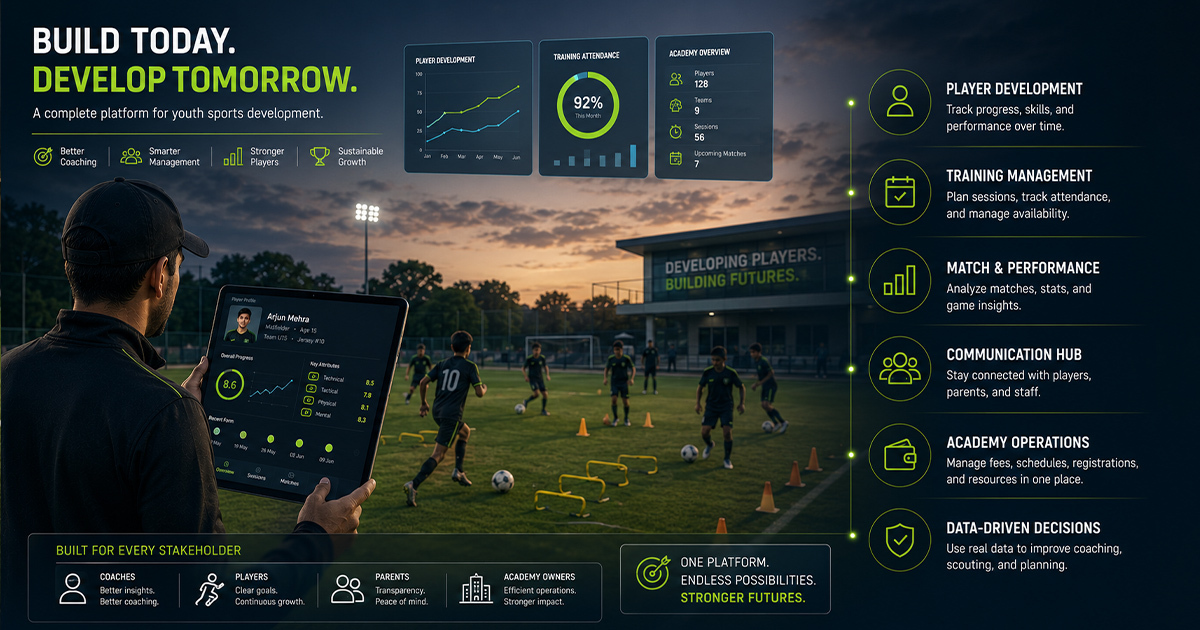
Youth Sports Development Platform 2026: What Academies Need to Thrive
A youth sports development platform in 2026 refers to a comprehensive digital ecosystem designed to streamline academy operations while supporting structured player growth, coach efficiency, and parent communication. Academies today face challenges such as inconsistent training tracking, fragmented player assessments, and limited parent visibility, making long-term development goals elusive. Understanding what features and workflows this platform must offer is crucial for academies aiming to remain competitive, efficient, and focused on genuine player progress in the coming years. This article presents a practical framework and operational guidance to help academies prepare effectively for the future of sports development.
Core Features of a Youth Sports Development Platform 2026
Academy management tools in 2026 must integrate critical functions such as attendance management, player assessments, fee tracking, enquiry management, and parent communication into one seamless system. This integration saves time and enhances data accuracy across operations.
The platform should provide coach support features like structured session planning, real-time feedback capture, and AI-powered skill assessments to empower coaches with meaningful insights to guide player development.

Practical Framework for Implementing a Youth Sports Development Platform
Implementing a youth sports development platform effectively requires a structured approach focusing on several key areas:
- 1. Enquiry and Trial Management: Streamline how new players and parents interact with the academy from initial enquiry to trial assessment, ensuring no leads are lost.
- 2. Attendance and Batch Scheduling: Digitally track daily attendance and manage batch groupings by age or skill level to maintain discipline and personalized training.
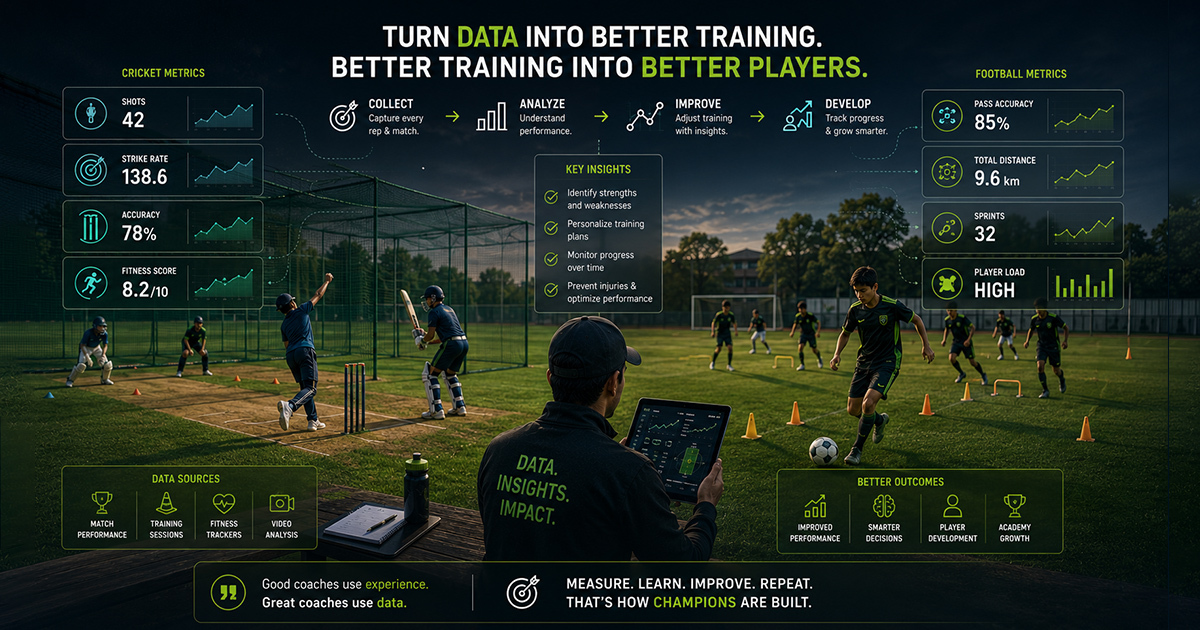
- 3. Player Assessments and AI Analysis: Capture systematic skill, fitness, and mental growth data enabled by AI for objective coaching feedback and progress tracking.
- 4. Coach Workflow and Session Planning: Equip coaches with tools to plan sessions aligned with academy goals, incorporating drills, tactical focus, and player-specific objectives.
- 5. Parent Engagement and Reporting: Maintain transparent communication with parents through regular progress reports, session updates, and developmental milestones.
- 6. Fees and Operations Management: Simplify fee collection, reminders, and financial reporting integrated seamlessly with player records and enrolment status.
- 7. Long-Term Player Development Tracking: Consolidate historical data to identify trends, inform training plans, and prepare players for scouting and future opportunities.
Role-Wise Insights: What Each Stakeholder Should Focus On
Players should engage consistently with the training sessions, focus on feedback, and maintain attendance discipline to enable continuous progress.
Coaches must use the platform to record precise assessments and plan sessions that target player weaknesses and strengths, fostering measurable improvement.
Parents play a critical role by reviewing progress reports and participating in communication loops to support realistic development expectations.
Academy owners need to implement systems that ensure operational efficiency, transparent fee management, and structured tracking to build trust and professionalism.
Stage-Wise Implementation: Preparing for 2026 and Beyond
Year 1-2: Focus on digitizing attendance and enquiry management while introducing basic player assessments to build foundational data.
Year 3-4: Integrate AI support for skills analysis and coach workflows, enhancing quality of training and personalized feedback.
Year 5 and beyond: Cultivate parent engagement through automated monthly reports and enhance fees management with integrated financial tools for sustainability.
Structure, consistent feedback, and clear tracking build the foundation for lasting player growth.
Grassroots Examples: Realities of Using a Development Platform
A coach in a midsize academy used the platform for skill assessments and identified common footwork issues limiting player progression, enabling targeted correction in sessions.
Parents reported greater confidence in the academy after receiving regular progress updates highlighting both improvements and areas needing work.
An academy owner automated fee tracking and attendance which reduced administrative errors, freeing time for strategic development and reducing player dropouts.
Common Mistakes and Practical Fixes
Mistake 1: Relying on manual attendance registers.
Hurts development: Inaccurate data undermines player discipline tracking and session planning.
Fix: Adopt digital attendance management to record and review attendance accurately.
Mistake 2: Infrequent or vague player feedback.
Hurts development: Players miss clear guidance and miss correction opportunities.
Fix: Use structured assessments with coach notes and AI support for detailed reports each month.
Mistake 3: Poor parent communication.
Hurts development: Mistrust and confusion about player progress lead to low engagement.
Fix: Schedule regular parent updates connected to players’ assessment data.
Mistake 4: Fragmented management systems causing data silos.
Hurts development: Lost insights prevent cohesive long-term player growth.
Fix: Choose integrated platforms that unify enquiry, attendance, assessment, and fee data.

Practical Checklist for Choosing and Using a Development Platform
- Does the platform support automated attendance tracking to reduce errors?
- Are player assessments comprehensive, covering skills, fitness, and mental attributes?
- Can coaches plan sessions and input real-time feedback easily?
- Is there a system for managing enquiries, trials, and admissions without manual effort?
- Does the platform enable clear, regular communication with parents?
- Are fee collection and reminders automated with reporting features?
- Does it consolidate player development data to track progress over multiple years?
- Is AI-powered analysis included to provide objective skill evaluation?
- Can batches be managed flexibly by age, skill, or development stage?
- Is the platform user-friendly for all stakeholders (players, coaches, parents, and owners)?
8lete-Aligned Workflow for Youth Sports Development
A well-structured academy workflow supported by a youth sports development platform includes: starting with Enquiry Management to convert leads, followed by Trial and Admission stages to onboard committed players. Next, adhering to strict Attendance Tracking ensures discipline. Coaches conduct regular Player Assessments with data recorded digitally, which feeds into personalized Coach Notes. Parents receive automated Progress Reports monthly to maintain transparency, closing the loop with setting Next Training Goals. This cycle establishes accountability, supports internal communication, and drives long-term development.
FAQ
What is a youth sports development platform in 2026?
It is a digital toolset designed to integrate attendance, player assessments, coach workflows, parent communication, and fee management for streamlined academy operations and focused player development.
How can academies improve parent engagement using technology?
By providing regular, transparent progress reports and direct communication channels via the platform, parents stay informed and involved, building trust and supporting player growth.
What are key features to look for in player development software?
Look for systems offering skill and fitness tracking, AI-powered assessments, detailed coach feedback, progress visualization, and flexible batch management aligned with age and level.
Why do many academies struggle with operations without a unified platform?
Manual or disconnected systems cause data errors, poor communication, inconsistent feedback, and administrative inefficiencies leading to player dropouts and stalled development.
How long does it take to implement a digital development platform effectively?
Typically, structured rollout over 1 to 2 years is advisable, starting with basic functions like attendance and enquiries, then progressing to AI assessments and parent engagement to ensure gradual adoption.
How do coaches use AI-powered assessments effectively?
Coaches review AI-generated skill reports alongside their observations, enabling targeted session planning and more objective player progress tracking.
What future trends will impact youth sports development platforms?
Greater AI integration, real-time match analysis, virtual coaching support, enhanced parent portals, and holistic player wellness tracking will shape next-generation platforms.
Conclusion
Preparing for 2026 means adopting a youth sports development platform that unifies operational efficiency with a robust player development framework. By embracing structured enquiry management, attendance discipline, coach-driven assessments, parent transparency, and integrated fee systems, academies create an environment where players receive consistent feedback and measurable growth. This approach moves beyond traditional manual processes, fostering long-term player visibility and trust within the community. Sustainable growth is only possible when academies commit to structured tracking, disciplined routines, and transparent communication with all stakeholders. The practical frameworks and checklists outlined here serve as a concrete starting point to implement these invaluable changes and future-proof a sports academy’s success.
What is a youth sports development platform in 2026?
It is a digital toolset designed to integrate attendance, player assessments, coach workflows, parent communication, and fee management for streamlined academy operations and focused player development.
How can academies improve parent engagement using technology?
By providing regular, transparent progress reports and direct communication channels via the platform, parents stay informed and involved, building trust and supporting player growth.
What are key features to look for in player development software?
Look for systems offering skill and fitness tracking, AI-powered assessments, detailed coach feedback, progress visualization, and flexible batch management aligned with age and level.
Why do many academies struggle with operations without a unified platform?
Manual or disconnected systems cause data errors, poor communication, inconsistent feedback, and administrative inefficiencies leading to player dropouts and stalled development.
How long does it take to implement a digital development platform effectively?
Typically, structured rollout over 1 to 2 years is advisable, starting with basic functions like attendance and enquiries, then progressing to AI assessments and parent engagement to ensure gradual adoption.
How do coaches use AI-powered assessments effectively?
Coaches review AI-generated skill reports alongside their observations, enabling targeted session planning and more objective player progress tracking.
What future trends will impact youth sports development platforms?
Greater AI integration, real-time match analysis, virtual coaching support, enhanced parent portals, and holistic player wellness tracking will shape next-generation platforms.
Related Articles
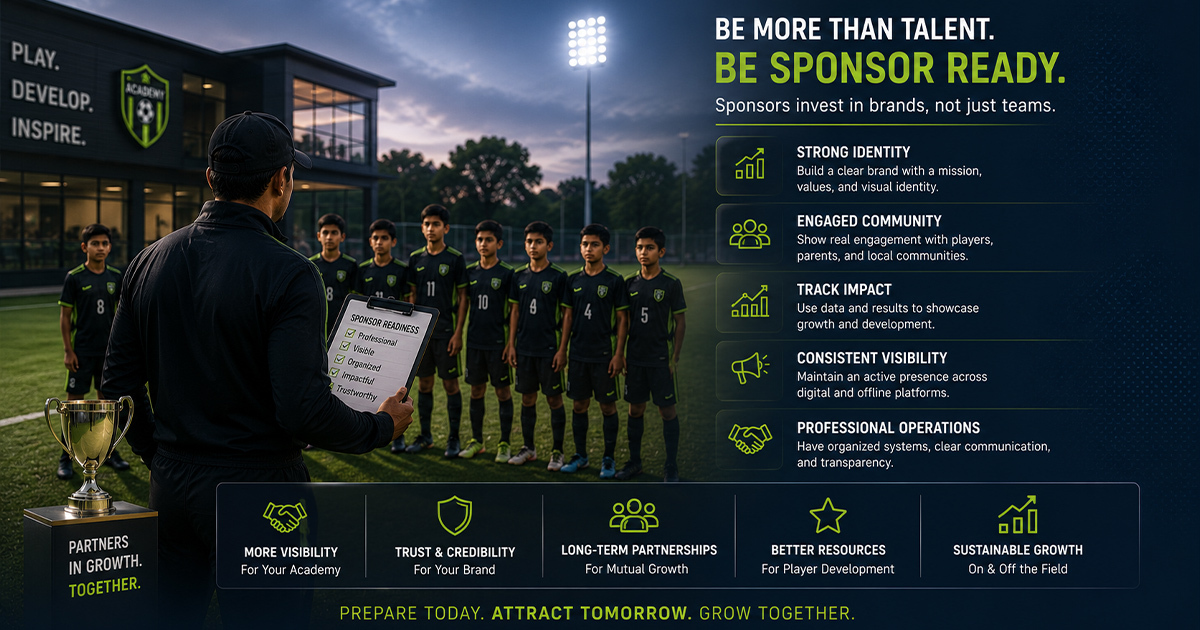 Read More about Sports Sponsorship for Academies: How to Become Sponsor-Friendly and Secure Funding
Sports Sponsorship for Academies: How to Become Sponsor-Friendly and Secure Funding
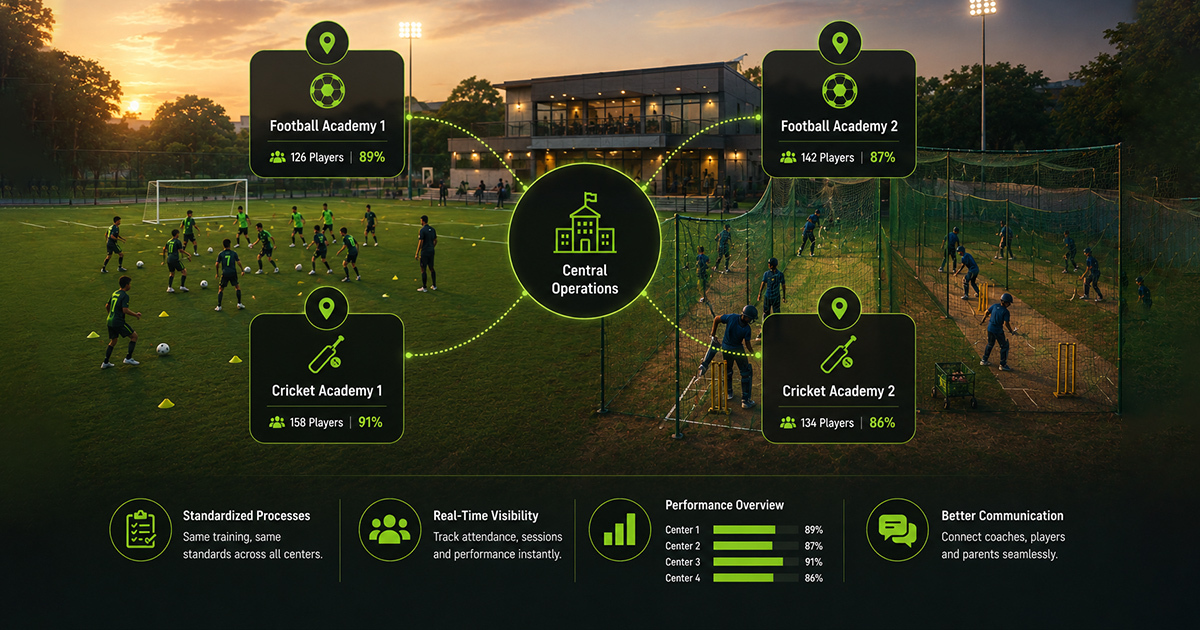 Read More about How to Manage Multi-Center Sports Academies Without Operational Chaos
How to Manage Multi-Center Sports Academies Without Operational Chaos
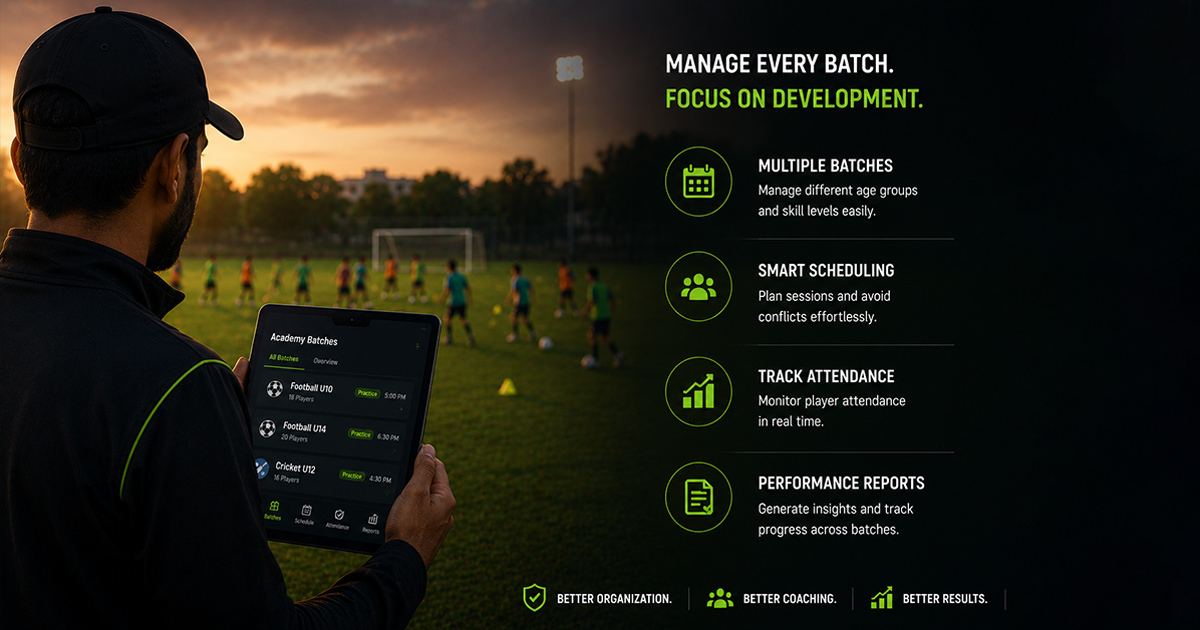 Read More about Managing Multiple Batches in a Sports Academy: A Practical Guide for Coaches and Owners
Managing Multiple Batches in a Sports Academy: A Practical Guide for Coaches and Owners
Latest Articles
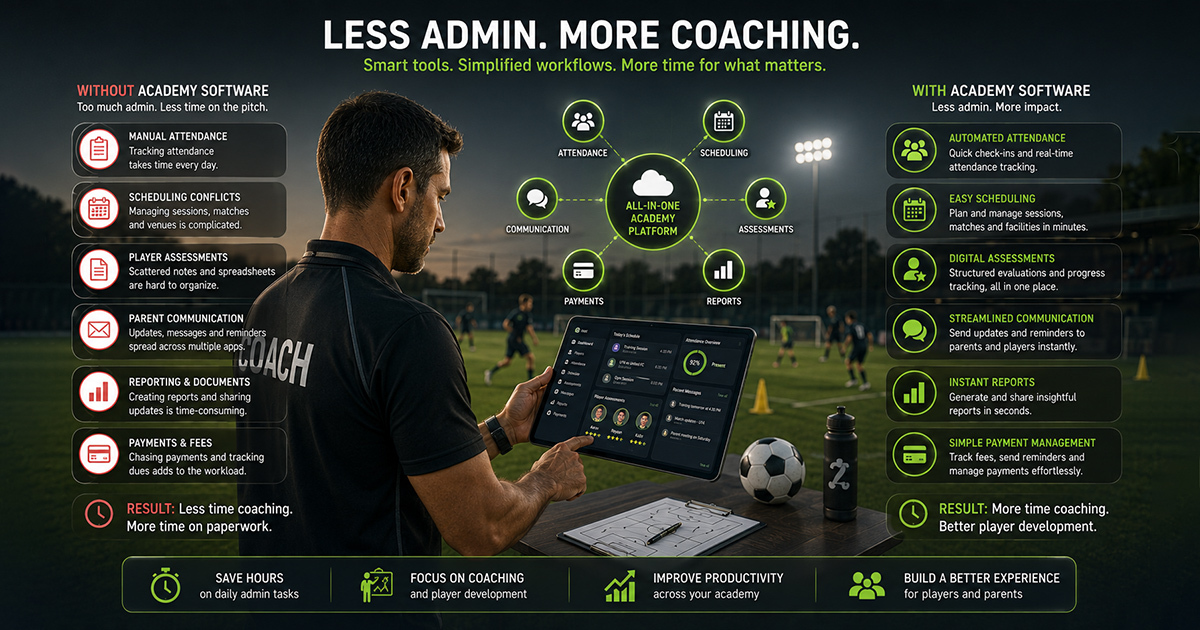 Read More about How Sports Academies Can Reduce Admin Work for Coaches
How Sports Academies Can Reduce Admin Work for Coaches
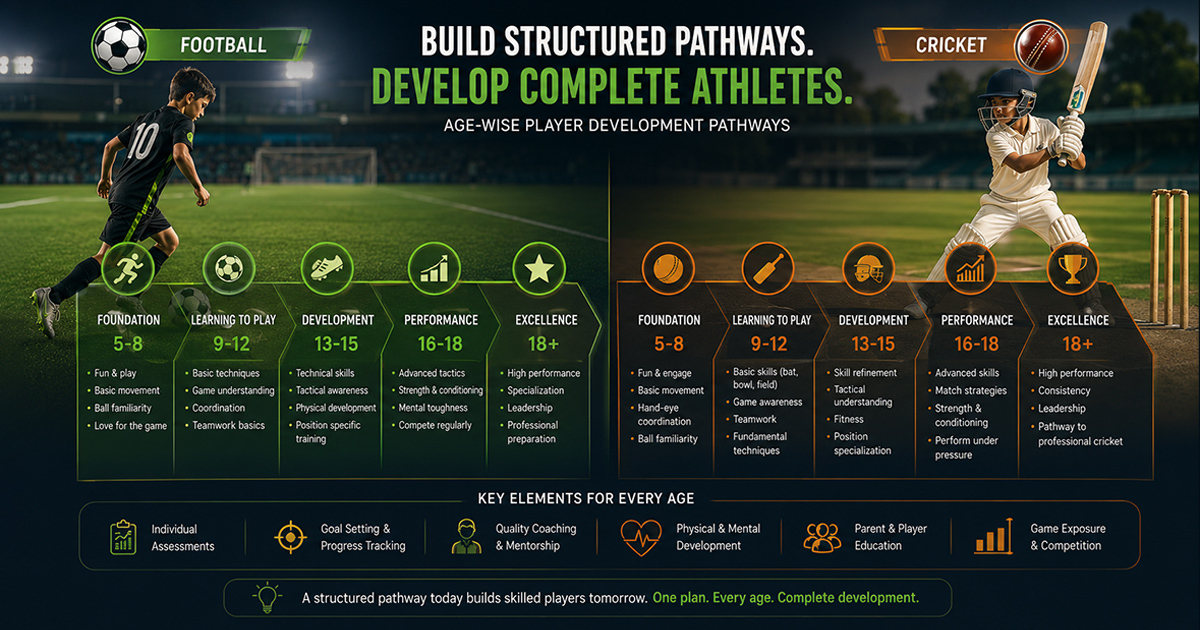 Read More about How to Build Age-Wise Player Development Pathways in Football and Cricket
How to Build Age-Wise Player Development Pathways in Football and Cricket
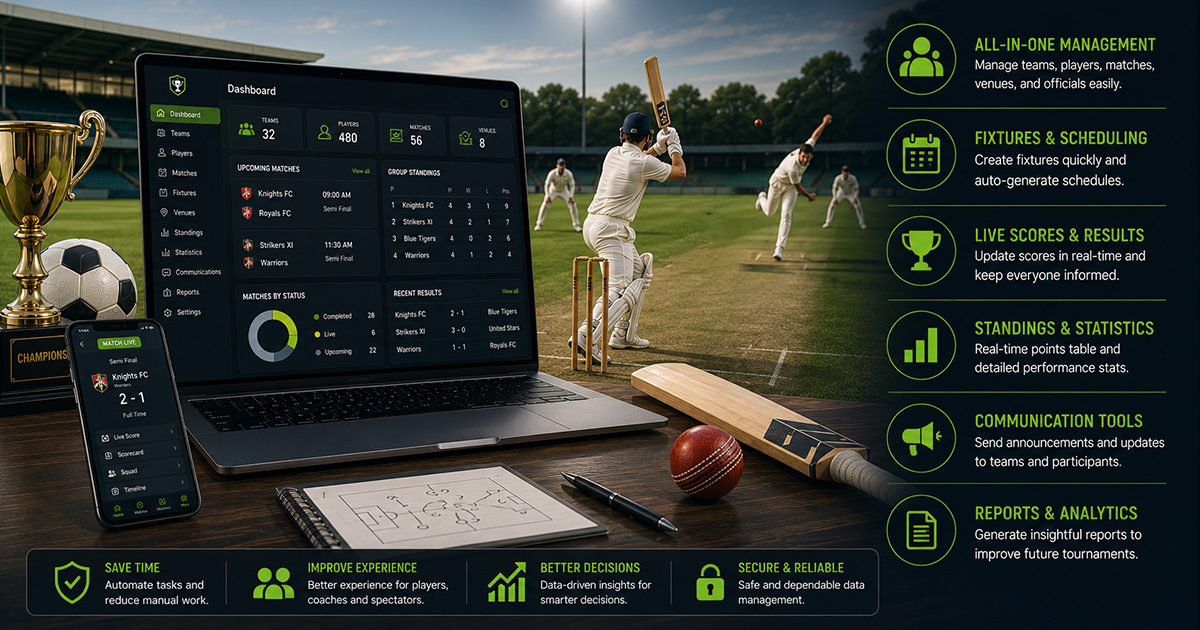 Read More about Tournament Management Software for Football and Cricket Organizers: A Practical Guide
Tournament Management Software for Football and Cricket Organizers: A Practical Guide
Ready to Bring Structure to Your Academy?
Let’s walk through your current setup and show you how 8lete can improve it.


