



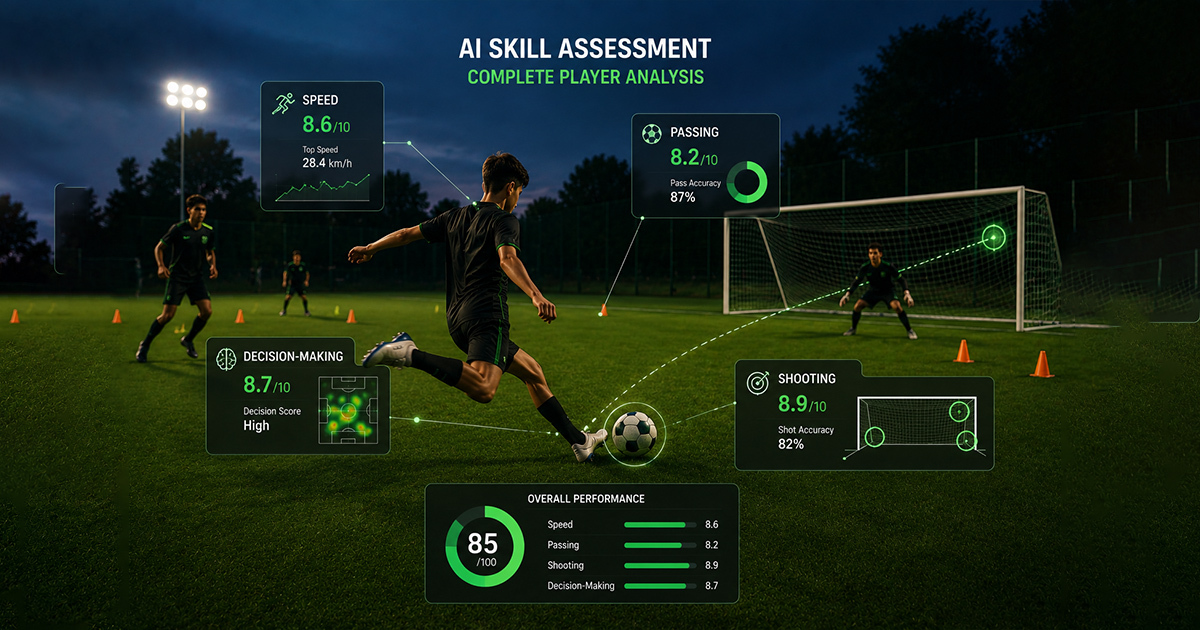
AI Skill Assessment in Football: Speed, Passing, Shooting and Decision-Making for Player Development
AI skill assessment in football is the use of artificial intelligence technologies to measure and analyze key player skills like speed, passing accuracy, shooting effectiveness, and decision-making quality. This approach addresses common challenges players, parents, and coaches face in objectively tracking progress and identifying improvement areas. Accurate assessment of these skills is critical for long-term development, helping grassroots players build habits and receive targeted feedback rather than relying on subjective opinions or sporadic observations. This article offers a practical guide to understanding AI skill assessment in football, how it supports player growth, and ways to implement it effectively.
What is AI Skill Assessment in Football?
AI skill assessment in football uses machine learning algorithms and sensor data to objectively evaluate player abilities such as sprint speed, passing precision, shooting accuracy, and in-game decision-making patterns. The technology collects detailed performance data during training or matches and translates it into measurable insights, which are impossible to capture consistently with manual observation alone.
By providing quantifiable metrics, AI allows coaches and players to track improvements over time, set realistic goals, and customize training plans based on strengths and weaknesses identified through this data.
A Practical Framework for AI Skill Assessment in Football
Implementing AI skill assessment successfully requires a structured approach that covers comprehensive skills relevant to football performance. Here is a practical 6-point framework:
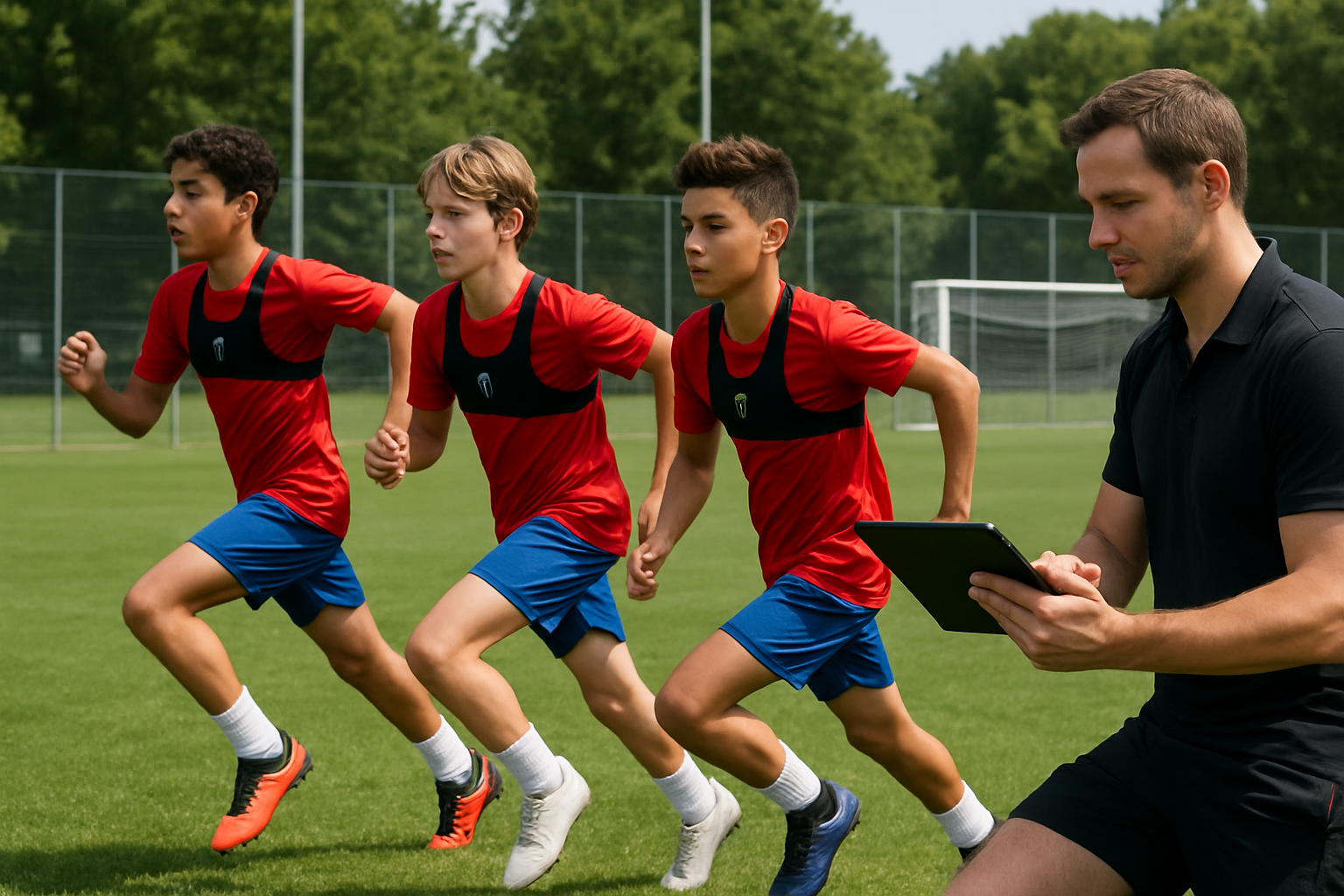
1. Speed Measurement: Use wearable GPS trackers or camera-based motion sensors during sprints to record metrics such as acceleration, peak speed, and recovery time. These insights help in tailoring conditioning drills and tracking fitness progress.
2. Passing Accuracy Evaluation: Employ computer vision or pass-tracking software that logs pass completion rate, distance, and decision timing. This data enables pinpointing technical flaws or poor timing in passing choices.
3. Shooting Performance Analysis: Capture ball trajectory, shot speed, placement, and success rate using AI-powered cameras or sensors to assess shooting technique and consistency under various conditions.
4. Decision-Making Assessment: Analyze player positioning, passing/receiving options chosen, and reaction time during simulated or real-game scenarios with AI video analytics to improve tactical understanding and game intelligence.
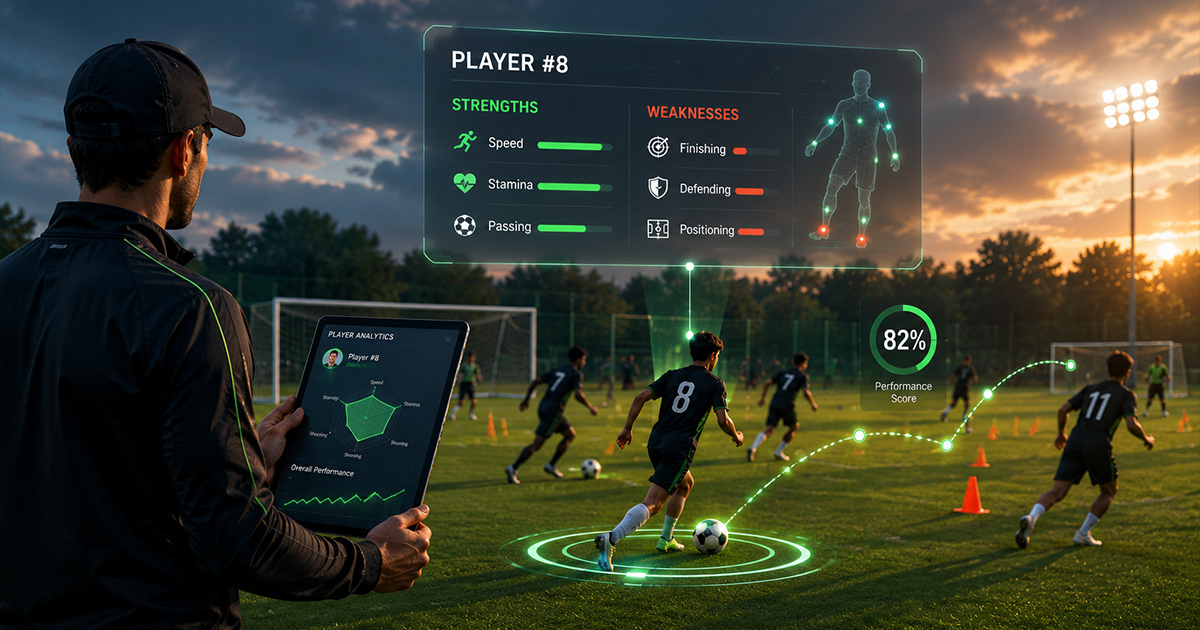
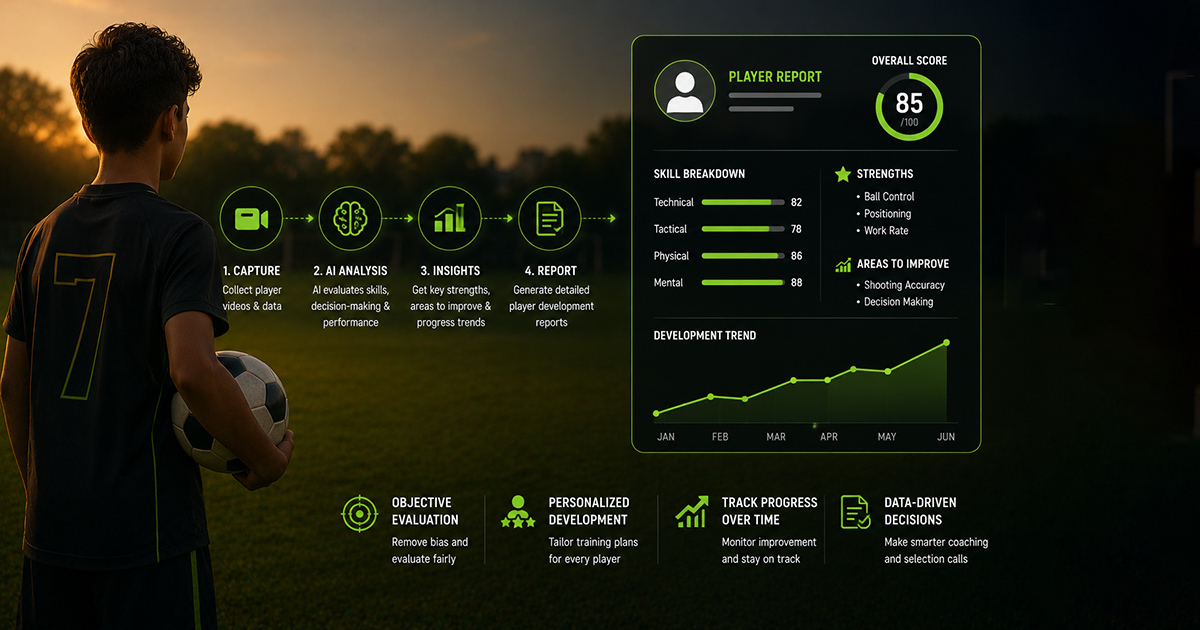
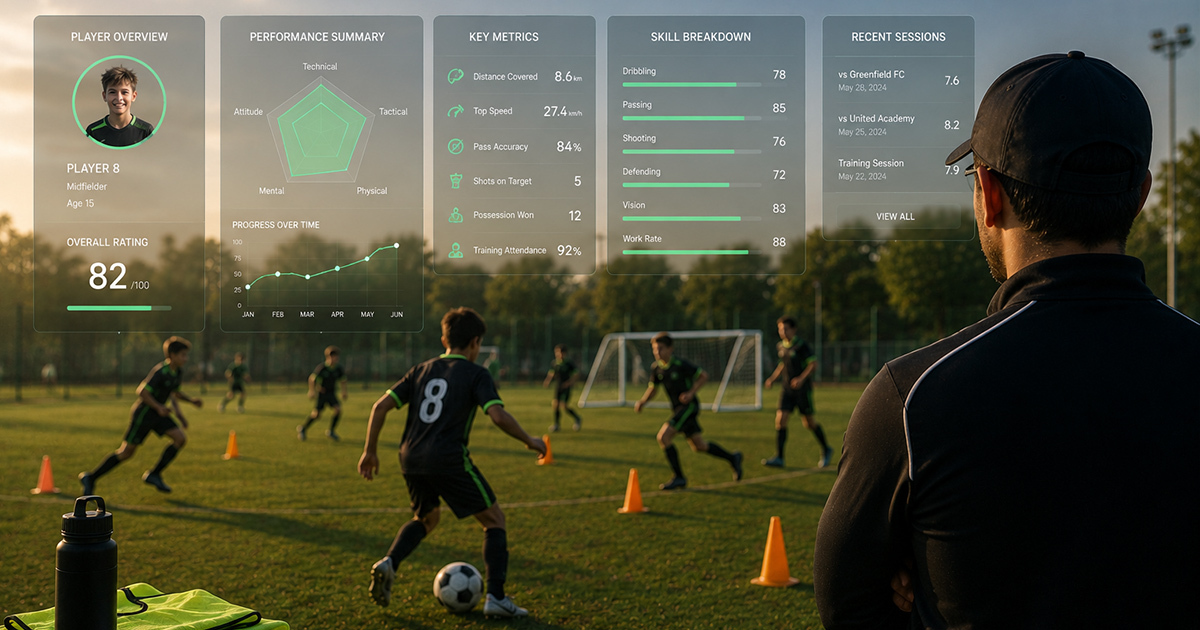
5. Data Integration and Reports: Aggregate all performance data into accessible dashboards for coaches, players, and parents, offering clear visual progress tracking and recommendations for focused improvement areas.
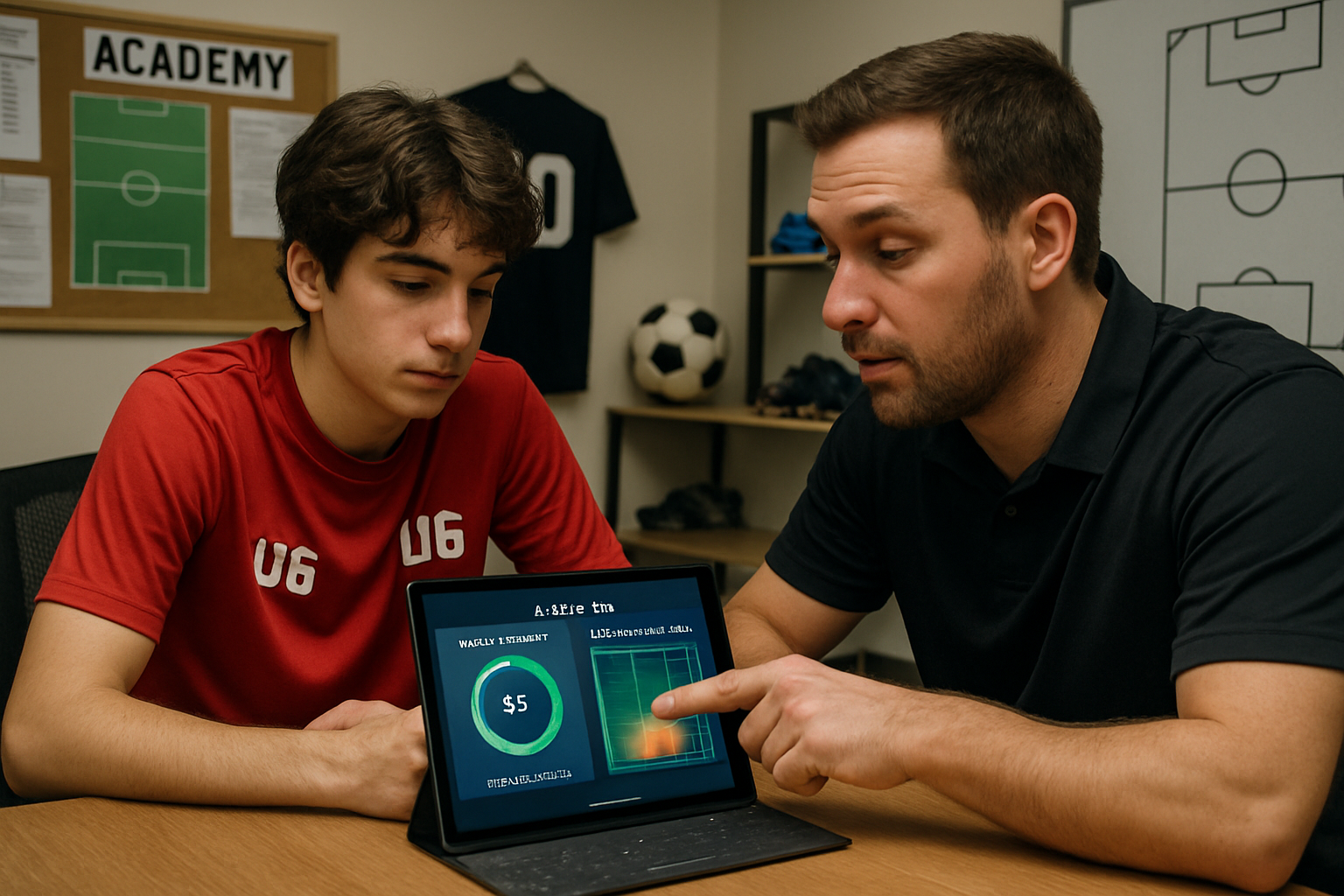
6. Feedback Loop: Establish regular review sessions where coaches discuss AI insights with players, ensuring continuous refinement of training plans and motivation based on objective evidence.
Understanding AI Skill Assessment Components
Speed assessment AI tools can capture split-second acceleration and max velocity, critical for wide players or forwards. For example, tracking a U15 winger’s sprint data over a month helps reveal stamina trends and need for speed endurance drills.
In passing evaluation, an AI-powered system identifies a midfielder’s passing accuracy and preferred foot use during small-sided games, highlighting inconsistent patterns that manual note-taking could miss.
Practical checklist
Use this checklist to ensure AI skill assessment adds real value to a grassroots football program:
- Does the AI system measure all critical skills: speed, passing, shooting, and decision-making?
- Are the performance metrics linked to clear technical or tactical training goals?
- Is there regular data collection during both training and match scenarios?
- Does the system allow easy review and feedback sessions with players and parents?
- Is data privacy and ethical usage of player information maintained?
- Can coaches customize drills and exercises based on AI-identified weaknesses?
- Is attendance and training load integrated with skill assessment for holistic tracking?
- Does the academy have a workflow for transforming AI insights into player development plans?
- Are parents provided transparent progress reports explaining the AI analysis?
Role-wise Insights for AI Skill Assessment Implementation
Players: Focus on understanding the data about your speed bursts, passing patterns, and shooting consistency. Use feedback to practice targeted drills and improve decision-making under pressure. Consistency in training and openness to data-driven feedback is key.
Coaches: Observe the metrics but also contextualize them. For example, use AI insights to spot a forward’s declining shooting accuracy after intense sessions, indicating a need for strategic rest or technique correction. Maintain detailed notes alongside AI data to enrich player development tracking.
Parents: Understand that AI assessments provide objective progress information. Ask for regular reports that explain trends and next steps without pressuring your child. Recognize improvement is gradual and requires patience, consistency, and clear communication.
Academy owners: Build structured workflows linking session planning, attendance, AI data capture, coach feedback, and parent communication. This integrated approach fosters trust and optimizes player retention while ensuring meaningful long-term development.
Consistent tracking and clear feedback turn AI data into real football skill development.
Age-wise Implementation: Using AI Assessment at Different Player Stages
U10–U12: Focus on fun-based speed and coordination tasks monitored by simple AI tools. Passing accuracy can be tracked through basic completion rates, while decision-making assessment focuses on choosing between two clear passing options during play.
U13–U16: Use advanced AI systems during small-sided games and drills to capture technical details. Detailed shooting performance metrics become critical, helping players develop consistency. Decision-making analysis evaluates game tempo reading and positioning.
U17–U21: AI assessment integrates with match video analysis, enabling tactical pattern recognition and advanced physical metrics. This stage benefits from comprehensive data-driven feedback to prepare for semi-professional or professional progression.
Common mistakes
1. Relying solely on AI numbers without context. Raw data can mislead if isolated from match situations or player conditions. Fix: Combine AI insight with coach observations and player feedback for balanced evaluation.
2. Overloading players with data. Bombarding young players and parents with complex metrics causes confusion and pressure. Fix: Share key actionable points and simple progress visuals regularly.
3. Ignoring technical aspects when AI shows poor performance. AI data highlights issues but doesn’t solve technique problems alone. Fix: Use AI insights to identify problems but follow up with focused technical coaching sessions.
4. Not integrating attendance and training load. Skill data without considering attendance or fatigue can create inaccurate conclusions. Fix: Use structured academy management tools to align attendance, training, and assessment data.
5. Failing to communicate AI findings with parents clearly. Lack of transparency breeds mistrust and misunderstandings. Fix: Schedule regular meetings or reports explaining AI results and realistic development plans.
Concrete Grassroots Examples of AI Skill Assessment in Football
1. A grassroots academy uses AI to measure the sprint speeds of its U14 players. One midfielder’s acceleration data shows steady improvement, prompting the coach to assign more focused endurance drills, which later reflects in better match stamina.
2. An AI-powered passing accuracy tool tracks U16 players in training matches and reveals that a forward consistently favors right-foot passes under pressure, limiting versatility. The coach then plans targeted ambidexterity drills.
3. Video analysis combined with AI identifies that a U18 player’s decision-making is slower in high-pressure moments. Coaches use this insight to simulate stressful game-like scenarios during practice to enhance cognitive speed and confidence.
An 8lete-Aligned Workflow for Implementing AI Skill Assessment
A practical workflow in an AI-enabled football academy could be:
Session Planning & Attendance: Schedule training modules focusing on speed, passing, shooting, and decision-making. Use attendance management to track player participation consistently.
AI Data Capture & Player Assessment: During sessions and matches, collect skill metrics through AI-powered tools integrated with wearable sensors and video analysis.
Coach Feedback & Notes: Coaches review AI data and add qualitative notes, identifying development points and motivational feedback.
Parent Communication & Progress Reports: Share structured monthly reports with parents explaining AI insights, progress, and next goals clearly.
Training Adaptation & Goal Setting: Update training plans based on assessment results and coach-parent-player discussions, focusing on targeted improvement areas for the upcoming cycle.
FAQ
Q: What is AI skill assessment in football and how does it work?
AI skill assessment uses technologies like sensors, cameras, and machine learning algorithms to objectively measure player abilities such as speed, passing accuracy, shooting quality, and decision-making by analyzing data collected during training and matches.
Q: How can players improve decision-making using AI analysis?
AI tools highlight decision-making patterns and reaction times under various situations. Players can work with coaches to simulate similar scenarios in training, focusing on faster, smarter choices backed by data-driven feedback.
Q: Why is integrating attendance with AI assessment important?
Attendance records help contextualize AI skill data. For instance, a drop in shooting accuracy might correlate with poor session attendance or fatigue, guiding coaches to adjust workload or provide recovery.
Q: How do parents benefit from AI skill assessment reports?
Parents receive objective insights into their child’s strengths and areas to improve, helping set realistic expectations and support structured development without relying on unverified opinions.
Q: What is the best age to start using AI assessments effectively?
Basic AI tools can assist U10–U12 players with coordination and simple skill tracking, but more detailed assessments and tactical analysis are most useful from U13 onwards when skills and game understanding start specializing.
Q: How long does it take to see improvement after AI-driven training adjustments?
Improvement timelines vary, but consistent practice guided by AI assessment combined with coach feedback can show measurable progress in 4–8 weeks, depending on the skill area and player commitment.
Q: Why do some players struggle with AI-monitored skills despite training hard?
Sometimes players miss key aspects like rest, mental recovery, or technique refinement. AI data can reveal plateaus or fatigue signs, prompting a holistic approach beyond just harder training.
Conclusion
AI skill assessment in football offers a transformative way to measure and improve essential skills like speed, passing, shooting, and decision-making through objective data and consistent tracking. For players, it means clear, actionable feedback beyond subjective opinions. Coaches gain a powerful tool to customize training and monitor player load. Parents receive transparent progress insights that encourage patience and informed support. Academy owners benefit by integrating AI with attendance and communication workflows to create a structured development environment that builds trust and long-term growth. The key to success is not just having data but embedding it in a holistic, disciplined system linking training, assessment, feedback, and parent engagement. This structured approach maximizes player potential while avoiding common pitfalls like data overload or isolated analysis. By adopting AI skill assessment thoughtfully, grassroots football programs can move from guesswork to evidence-based development, making every session count towards meaningful improvement and helping young players build solid foundations for their football journey.
What is AI skill assessment in football and how does it work?
AI skill assessment uses technologies like sensors, cameras, and machine learning algorithms to objectively measure player abilities such as speed, passing accuracy, shooting quality, and decision-making by analyzing data collected during training and matches.
How can players improve decision-making using AI analysis?
AI tools highlight decision-making patterns and reaction times under various situations. Players can work with coaches to simulate similar scenarios in training, focusing on faster, smarter choices backed by data-driven feedback.
Why is integrating attendance with AI assessment important?
Attendance records help contextualize AI skill data. For instance, a drop in shooting accuracy might correlate with poor session attendance or fatigue, guiding coaches to adjust workload or provide recovery.
How do parents benefit from AI skill assessment reports?
Parents receive objective insights into their child’s strengths and areas to improve, helping set realistic expectations and support structured development without relying on unverified opinions.
What is the best age to start using AI assessments effectively?
Basic AI tools can assist U10–U12 players with coordination and simple skill tracking, but more detailed assessments and tactical analysis are most useful from U13 onwards when skills and game understanding start specializing.
How long does it take to see improvement after AI-driven training adjustments?
Improvement timelines vary, but consistent practice guided by AI assessment combined with coach feedback can show measurable progress in 4–8 weeks, depending on the skill area and player commitment.
Why do some players struggle with AI-monitored skills despite training hard?
Sometimes players miss key aspects like rest, mental recovery, or technique refinement. AI data can reveal plateaus or fatigue signs, prompting a holistic approach beyond just harder training.
Related Articles
 Read More about Player Performance Tracking Software for Grassroots Sports Academies: A Practical Guide
Player Performance Tracking Software for Grassroots Sports Academies: A Practical Guide
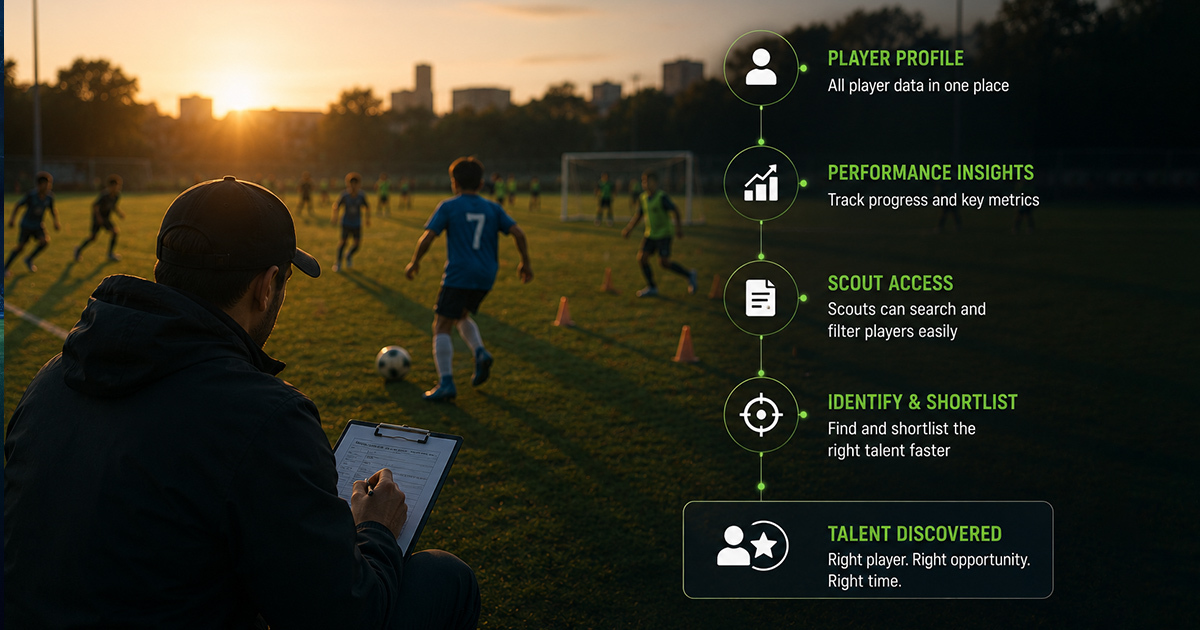 Read More about How Digital Player Records for Talent Scouting Transform Grassroots Football
How Digital Player Records for Talent Scouting Transform Grassroots Football
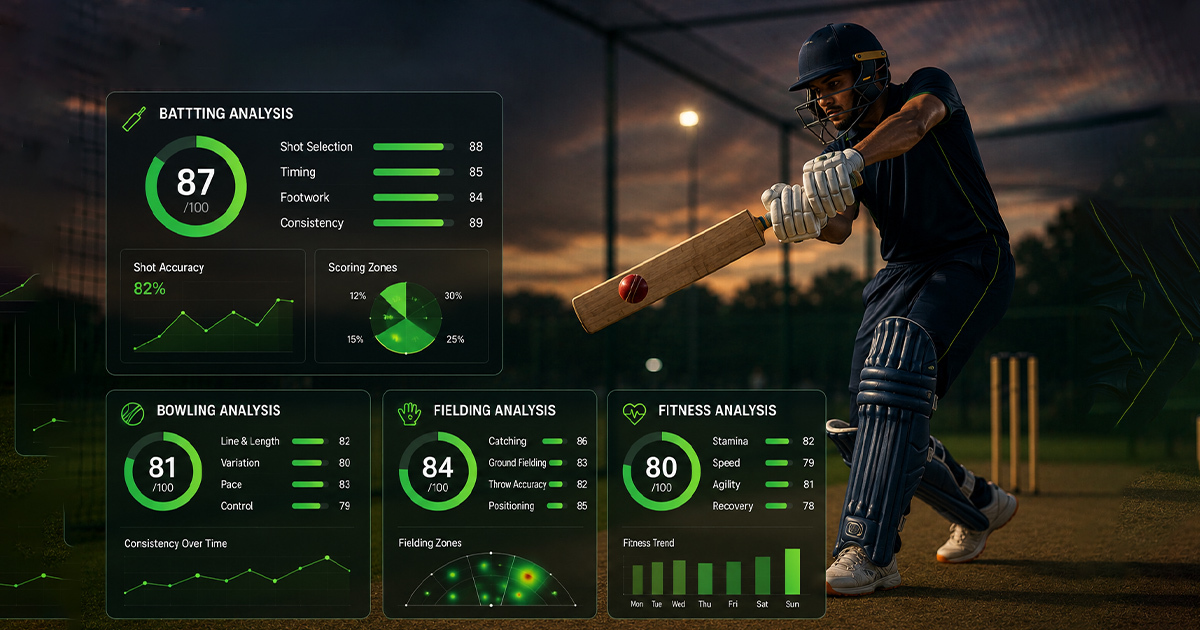 Read More about AI Cricket Skill Assessment: A Comprehensive Guide for Batting, Bowling, Fielding, and Fitness
AI Cricket Skill Assessment: A Comprehensive Guide for Batting, Bowling, Fielding, and Fitness
Latest Articles
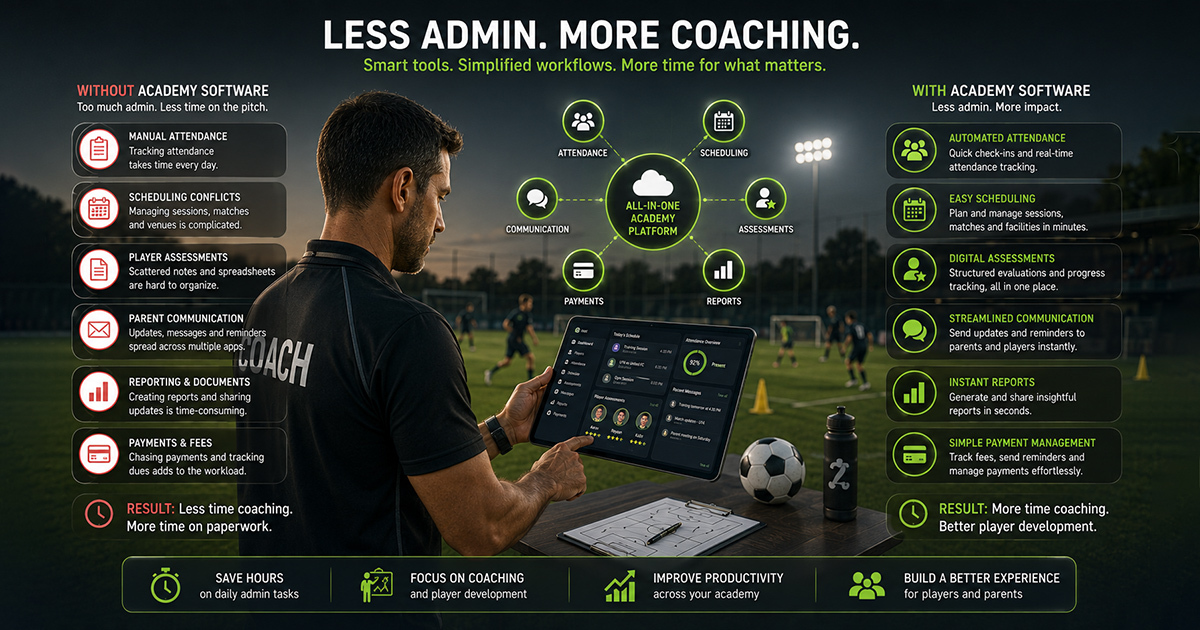 Read More about How Sports Academies Can Reduce Admin Work for Coaches
How Sports Academies Can Reduce Admin Work for Coaches
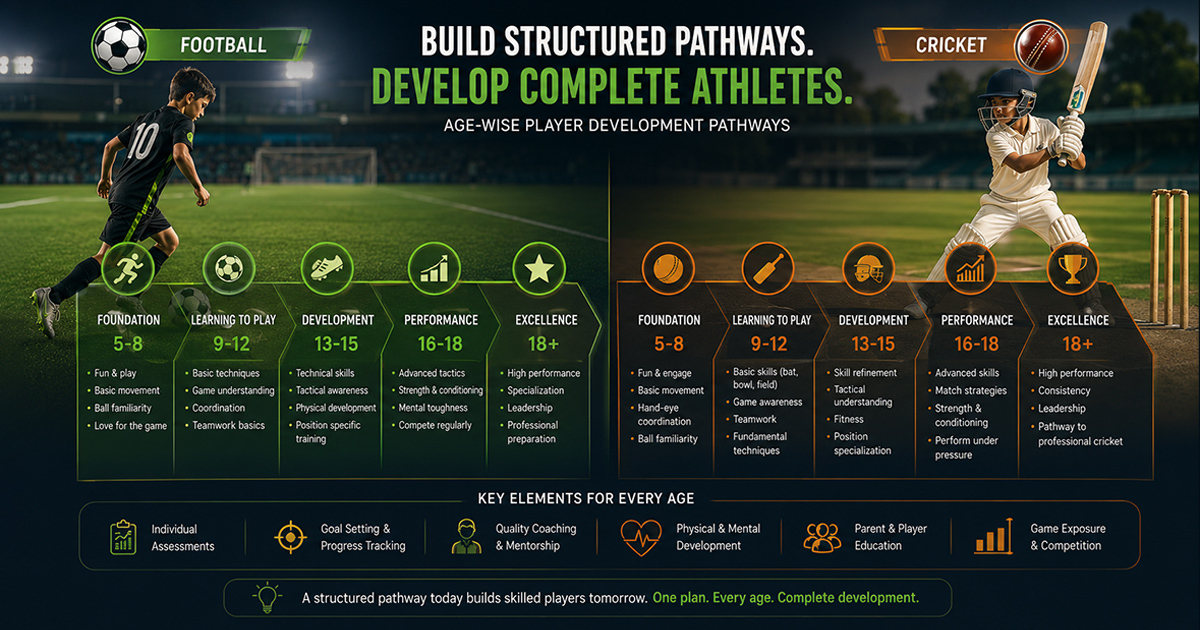 Read More about How to Build Age-Wise Player Development Pathways in Football and Cricket
How to Build Age-Wise Player Development Pathways in Football and Cricket
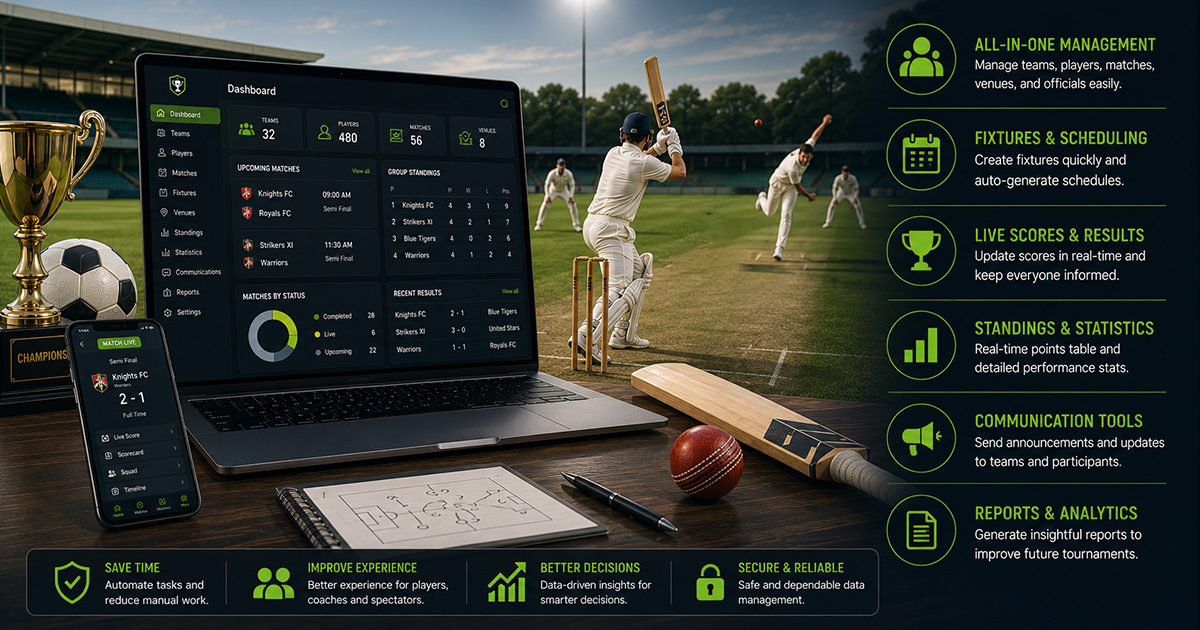 Read More about Tournament Management Software for Football and Cricket Organizers: A Practical Guide
Tournament Management Software for Football and Cricket Organizers: A Practical Guide
Ready to Bring Structure to Your Academy?
Let’s walk through your current setup and show you how 8lete can improve it.


